
The plant appeared to be doing well on Tuesday. On the patio, it stood erect, fully leafed out, and unmarked. The plant had collapsed by Friday, with a soft stem, drooping, grey-green foliage, and almost no resistance as it pulled away from the ground. On the outside, nothing revealed who had been eating silently in the dark for weeks.
This is how vine weevil damage usually manifests itself: all at once and much too late. Tiny, dull-brown adults appear at night to mark the edges of leaves in a pattern that most gardeners mistake for slug damage. The real work is done underground. Months before any visible symptoms appear, the larvae, which are creamy-white grubs, chew methodically through root systems. When a container plant suddenly wilts despite frequent watering, the roots are gone. An annoying aspect of gardening is a pest that announces its presence with a eulogy.
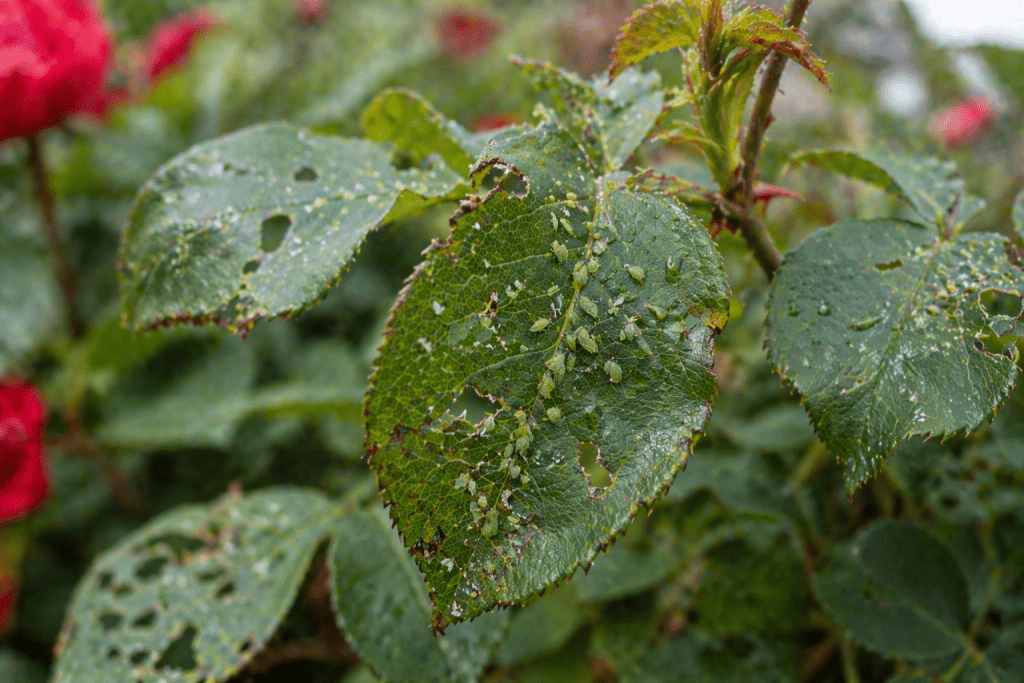
Vine weevils are arguably the most talked about of these hidden threats, but they don’t have unique strategies. Although mealybugs behave differently, they are just as annoying. While they are technically visible surface insects, their waxy white or cottony coating makes them look like fungal fluff, mineral residue, or nothing at all. A cursory glance would not notice the compressed folds where a leaf meets a branch, along leaf veins, or into stem joints. Gardeners tend to ignore the sticky, glossy honeydew they leave on leaves because it attracts sooty mold before they give it much thought. The population grows slowly at first, then appears to double overnight.
Thrips are even harder to spot. Their movements are quick, they are narrow, and they spend most of their time deep within flower buds and the latest, delicate growth at the tip of a stem. The damage they cause appears days or weeks after the insects feed-brown petal edges, twisted leaves, scarred fruit-by which time they have progressed to the next bud. Seeing sweet peas or dahlias develop crumpled, brown flowers without an obvious culprit is especially frustrating. Observation on any particular afternoon could not detect something unseen methodically moving through the garden.
Spider mites conceal their undersides for the same reasons. In large quantities, they colonize the undersides of leaves, making them appear dusty or slightly bronzed before fine webbing appears to confirm what is actually happening. A millimeter wide, they are almost invisible, reddish-brown specks. As the infestation progresses, it will require significant effort to stop by the time webbing is evident and the leaves have turned pale and stippled. Summer heat waves that stress out gardeners also provide perfect conditions for mites because they prefer hot, dry weather.
| Pest | Common Name | Hiding Strategy | First Visible Sign | Damage Type |
| Otiorhynchus sulcatus | Vine Weevil | Lives in soil, feeds on roots underground | Sudden unexplained wilting | Root destruction |
| Planococcus citri | Mealybug | Waxy white coating, hides in stem crevices | Sticky residue, cottony patches | Sap-sucking, sooty mold |
| Tetranychus urticae | Spider Mite | Underside of leaves, fine webbing | Silvery leaf stippling, webbing | Cell damage, dehydration |
| Thrips spp. | Thrips | Deep inside flower buds, new growth | Distorted, brown-edged petals | Scarring, virus transmission |
| Anasa tristis | Squash Bug | Under leaf debris, eggs on leaf undersides | Sudden vine collapse | Toxin injection, wilting |
| Detection Method | Check undersides, new growth, soil root ball, sticky residue on leaves | |||
| Organic Controls | Beneficial nematodes, neem oil, iron phosphate baits, insect mesh | |||
| Reference | UC Master Gardeners – Pest Tips |
For structural reasons, these pests are routinely undervalued. Generally, garden inspections are conducted at eye level or just above, observing color and general form. They have taken up residence in the exact spots that are overlooked by routine inspections: soil beneath the root ball, cracks in stems behind leaves, underneath every leaf in the garden, and the deepest folds of every budding flower. The problem isn’t that they can’t be found. Because finding them requires a different kind of searching-careful, close-up, and done before anything seems obvious.
Answers to the practical questions are straightforward. Flip leaves frequently and check the undersides. When caught early enough, vine weevil larvae can sometimes be removed by hand. Check the roots for white grubs if a container plant wilts despite receiving enough water. Honeydew deposits on leaf surfaces are a reliable indicator that something is feeding above and leaving honeydew behind. Inspect new growth carefully, paying special attention to young, delicate shoots where moths and thrips prefer to start rather than mature leaves that appear fine. The application of organic nematodes to moist soil in late summer and autumn is one of the more effective biological controls for vine weevil larvae.
Perhaps the most significant change is timing; instead of waiting for obvious damage, treat inspection as a routine part of gardening. Hidden pests don’t last forever. It is possible to detect traces, patterns, residues, and faint discolorations early on with a skilled eye. Almost always, it is those who are not sought out who wreak havoc.