
The process of propagating mint is almost embarrassingly simple. Remove the lower leaves from a healthy stem that is four to six inches long, place it in a glass of water on a bright windowsill, and wait. That’s all there is to it. In a week or less, thin white roots emerge from the base. There’s something magical about it. It’s just botany.
Mint’s reputation precedes any conversation about gardens. Meanwhile, gardeners who enjoy growing it will warn you against it. Spreads quickly. Control is taken over by it. Even a little encouragement will cause it to take over every inch of an exposed bed. The same invasive instinct that unnerves experienced gardeners makes it one of the most generous and forgiving plants you can grow. Expansion is its goal. Most of the time, you’re just pointing it in the right direction.
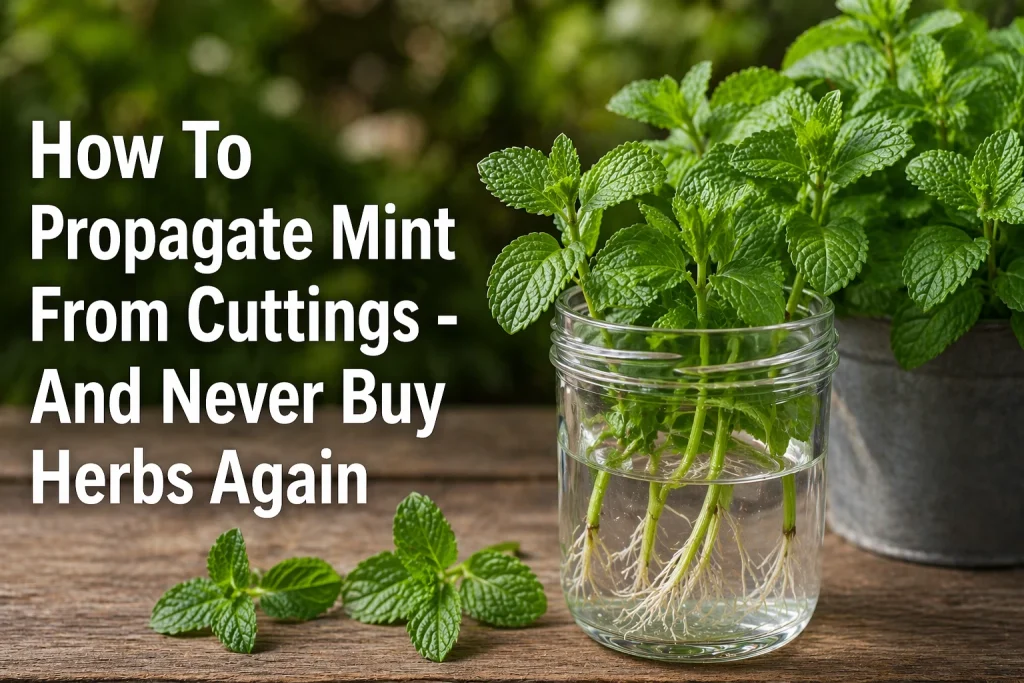
Water is generally regarded as the most reliable method. A non-flowering stem should be cut just below a leaf node, which is the bump or joint where a leaf meets a stem. Roots of newer, softer growth grow much faster than those of older, woody growth. The lower half of the cutting should be leafless. Submerged leaves rot, and rot quickly introduces bacteria to the water. In a week or less, thin white roots will emerge from the base if you place the stem in a clean container with fresh water, leave a few pairs of leaves at the top, and place it in bright light and away from the afternoon sun. There’s something magical about it. Botany is all it is.
Change the water every three or four days. Most people overlook this step because it seems insignificant. In stagnant water, bacteria grow more quickly than you might expect, and cloudy glasses are usually the first sign of trouble. If you keep it clear and fresh, the roots will emerge. When they are an inch or two long, the cutting can be planted in the soil after one to two weeks.
In and of itself, transplantation is a ritual. In a pot filled with moist potting mix, a hole was gently made with a finger or pencil, and the cutting was placed in the water at the same depth. In order to promote a bushier, fuller plant from the start, some gardeners press three or four cuttings into a single pot. As an instinct, it makes sense. Mint planted alone may look sparse for longer than you’d like. When cuttings are grouped together, the feeling of abundance is heightened.
If you’d rather skip the water stage altogether, soil propagation is also an effective method, but it takes a little more faith. Dip the trimmed cutting end in rooting hormone powder if you have it. It isn’t strictly necessary, but it does help. Put it straight into moist potting mix. During the rooting process, it is crucial to maintain constant soil moisture. Drying it out even once can significantly slow down the process. A glass of water is all it takes to check every morning, so there’s no need for guesswork or blind faith. The popularity of this method may be due to the fact that you can see what’s happening.
Timing is an important factor. The best time to plant is from March through May, when the plant is pushing out new soft growth and the light is getting better. August is also a good time to start hardening off the plants for autumn. Taking cuttings from fully grown, woody stems in the middle of summer can be difficult. In water, stiff, stick-like stems may barely root at all and require different treatment; soft, pliable green growth roots quickly. Even though some gardeners report great results from putting store-bought mint stems directly into a glass of water, it’s still unclear why some people report great results from this method.
Regardless of the method, source, or mint-loving gardener, growing mint in a container is the best advice. No matter how thoughtfully chosen the garden corner is, mint has a way of changing the plan. Its shallow underground runners spread quickly and widely, something most people don’t realize. A pot contains that ambition. Having two or three different kinds of mint growing in different containers is a satisfying little collection. In an open bed, two or three varieties of mint will eventually taste different.
It’s hard to ignore the joy that spreads among people over something so simple. A patch of spearmint that outlives the person who planted it by decades, cuttings shared from one garden to another. Plants that grow from virtually nothing have a generous, almost subdued radical quality. A few days of perseverance and a glass of water can grow one plant into twenty.