
Peonies seem to dominate the garden in late spring, between the first warm week and the last cool morning. There is almost a theatrical quality to the excess of blooms. Often as big as dinner plates, layers of petals carry a sweet scent that is difficult to describe without sounding like a perfume advertisement. It is not surprising that people want more of them. You’ll also get more peonies once you learn how to propagate them.
Propagation involves creating new plants from existing ones. The methods for growing peonies include division, cuttings, grafting, and seed sowing. There is a rhythm to each method, and patience is required. Slow growth is characteristic of these plants. If you’re hoping for immediate results, you may want to try something else. When properly propagated, a peony can outlive its gardener for decades. Currently, gardens are blooming with peonies planted before World War II. Achieving that level of longevity requires some effort.
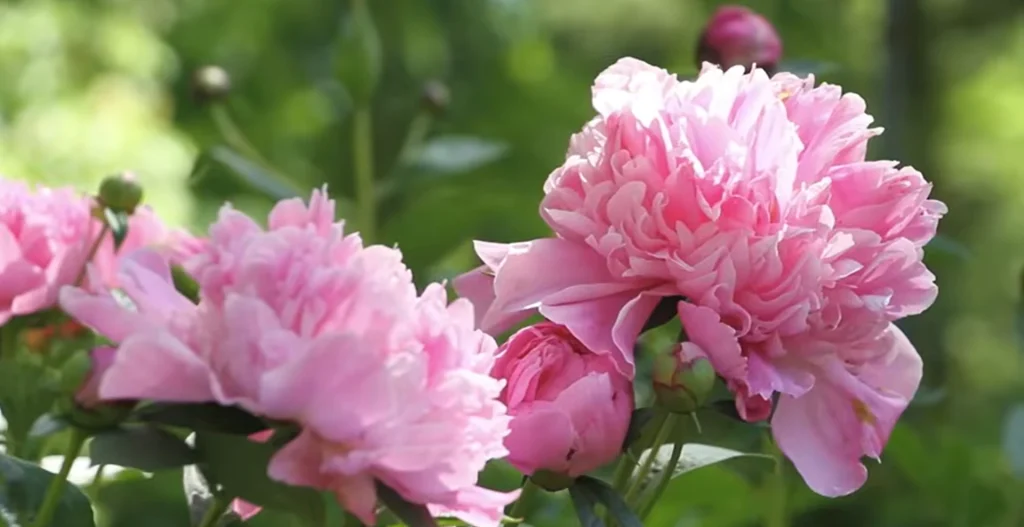
For herbaceous varieties, crown and root division is the most practical and popular technique. Plants should be at least three years old before you try it. Make sure not to cut through the long, meaty roots that extend farther than you might expect when removing the root ball. After lifting the dirt off the ground, use a garden hose to remove it. Underneath, each cultivar has a distinctive crown structure resembling a fingerprint. Before making any cuts, examine it carefully. To achieve this goal, growers create divisions with three to five buds, or “eyes,” and enough healthy roots to support the new plant during its first year or two of establishment.
Many gardeners are surprised to learn that you can’t dig up a mature peony clump, move it across the yard and expect it to continue growing. The plant will gradually deteriorate when replanted as a whole, undivided clump. By encouraging the growth of new roots, division gives a plant a second lease on life. A healing process appears to be initiated by cutting. Eventually, the plant reorganizes itself, grows new roots, and resumes its activities.
There are slightly different regulations for woody, tree-like varieties of shrub peonies. They can have much larger and heavier root balls than their above-ground branches, and their above-ground branches are surprisingly brittle. Branches can break if you pull too hard when digging. Once the ball has been removed from the ground and cleaned up, it can be divided with a saw, a sharp spade, or even by hand if the structure permits. Before replanting, the above-ground shoots should be cut back to about half their original height. Even though the plant appears healthy, balancing the roots to shoots gives the division the best chance of succeeding.
By cutting shrub peonies, young woody shoots should be taken from the base, kept between 10 and 15 centimeters long, stripped of their lower leaves, and planted three centimeters deep in moist growing medium. Instead of years, this requires weeks of maintaining the medium’s moisture content while monitoring it nearly every day for signs of root growth. You should probably resist the urge to plant them outside right away. It is a good idea to place a plant on a windowsill. Allow a tiny root ball to form first.
Even seasoned gardeners occasionally fail at grafting on their first attempt, despite it being a truly challenging technique. It involves attaching a young shoot of the desired variety to the root of a hardier peony, planting the entire plant, and allowing it to grow together. For the majority of home gardeners, the effort required is greater than the benefits of this commercial technique, especially for mass-producing new cultivars.
It is a unique experience to grow peonies from seed. After the pods open, usually in August or September, the seeds can be harvested and sown one to two centimeters deep in moist soil. Peonies are cold germinators, which means they require a complete winter cycle before they germinate; therefore, the germination timeline ranges from twelve to eighteen months. After germination, the seedlings remain there for a few more years. The first flowers may not appear for six years or longer. Moreover, the seeds may not produce plants that are exactly like the parents, so there is an element of surprise involved. It is entirely possible that the resultant plant will be completely unremarkable. In addition, something truly lovely may appear, such as a new color scheme or slightly altered shape. Unpredictability can either be pleasing or annoying depending on one’s temperament.
In deciding between division and seed sowing, it really depends on your goals. In addition to maintaining the exact characteristics of your beloved plant, division is faster and more reliable. Although sowing carries the romantic possibility of something new, it is also slow and uncertain. In order to share a cherished heritage peony, such as one that has been in a family garden for generations, division is clearly the best option. The act of sowing seeds has its own silent benefits, whether the purpose is experimentation or enjoyment.
Clearly, peonies reward a specific type of gardener-one who doesn’t need quick results and finds fulfillment in tending to the same plant year after year and seeing it grow bigger and more intricate with time. They should not be used by the impatient. Most worthwhile things, however, aren’t.