
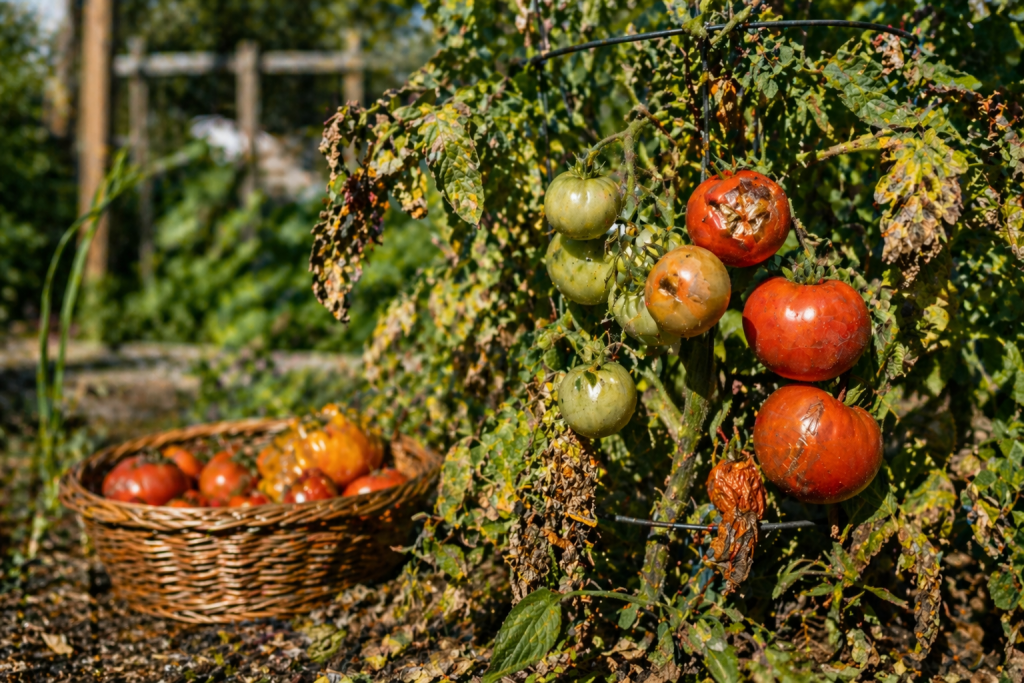
In every backyard vegetable plot, a gardener sees a tomato plant that isn’t performing well. There is a break in the fruit. There are brown specks on the lower leaves, which are yellow in color. Under the weight of the vines, the cage, the thin wire structure from the garden center, has folded under the weight of the plant. The tomatoes are technically there. The season has already taken a strange turn.
It is so widespread that it has its own category of gardening discourse. Any tomato grower who has grown tomatoes for a few years will have an unprompted list of things they wish they had done differently. The spacing is incorrect. Disasters caused by watering. Everyone was unaware that hornworms had taken over. Due to their consistency across climates, garden sizes, and levels of experience, the regrets seem to be less about bad luck. It is about repeatable and correctable habits.
Timing errors are the most common. The warmth of springtime makes it seem like permission to plant tomatoes early, and having seed packets on the counter does not help. Even if the soil appears workable, young plants can be stalled in ways that delay the entire season when transplanted into cold soil. Due to the drier, more regulated conditions in the Andes, tomatoes are highly sensitive to cold roots. Waiting until the nighttime temperature consistently reaches 50°F and the soil reaches 60°F isn’t overly cautious; it can mean the difference between a plant that thrives and one that just sits there and pouts.
Planting depth is another regret that keeps coming up, and it is especially preventable since the solution is so simple. Seedlings are usually transplanted at the same depth as they were in their pots. Planting the tomato seedlings two-thirds deep, with only the top two or three leaves above the ground, will result in a root system that will be much more anchored and capable than one that was handled like a delicate annual. Tomatoes produce roots along any part of their stem that is buried. Deeper plants are more upright, drink more effectively, and bear fruit earlier. Once grasped, the previous approach appears to be a clear mistake.
Spacing is usually the regret that has the most dramatic impact. The tiny seedlings in their six-packs in April seem to fit comfortably at eighteen inches. By July, two indeterminate vines have united into a single impenetrable mass with no airflow between them, so a separation of two to three feet makes sense. Illness is also accelerated by inadequate spacing, which makes management difficult. During a rainstorm, soil-borne pathogens bounce upward and land on already stressed foliage and wet leaves that cannot dry. It is simple: remove the leaves from the lower eight to twelve inches of each plant and maintain a mulch layer of one to two inches around the base, says Frank Hyman, a garden designer from North Carolina and author of Ripe Tomato Revolution. As a result of the bare lower stem, the target is removed, while the mulch acts as a barrier.
It is common for gardeners to cause problems during watering that are later misdiagnosed. Known as blossom end rot, the dark, sunken area on the underside of a fruit appears to be a disease. No, it isn’t. As opposed to a lack of calcium in the soil, it is a calcium deficiency caused by uneven moisture. It is possible for tomatoes to be ruined weeks later when a dry spell is followed by flooding, or when a sprinkler is used overhead rather than at the roots. A soaker hose that runs at the base delivers water gradually and consistently resolves most of this before it starts.
The overcorrection of fertilizer is also worth mentioning. Throughout the growing season, many gardeners use nitrogen-rich fertilizer to take advantage of tomatoes’ reputation as heavy feeders. Nitrogen promotes vegetative growth rather than fruit production, so they produce modest fruit and lovely, dark green foliage. Insects are also attracted to lush, leafy plants. During transplant time, Hyman recommends applying organic fertilizer to the planting hole once. That’s all I have to say. Let the plant take care of itself.
| Category | Details |
| Crop | Tomato (Solanum lycopersicum) |
| Origin | Andes mountains, South America |
| Global Popularity | Most widely grown home vegetable in Europe and North America |
| Ideal Soil Temp for Transplanting | Minimum 60°F (15.5°C) |
| Safe Night Temperature | Consistently above 50°F (10°C) before transplanting |
| Recommended Plant Spacing | 2–3 feet apart minimum |
| Weekly Water Target | 1–1.5 inches per week, deep and consistent |
| Mulch Depth Recommended | 1–2 inches around base at all times |
| Crop Rotation Gap | At least 2–3 years between tomato plantings in the same spot |
| Disease Resistance Codes | V (verticillium), F (fusarium), N (nematodes), T (tobacco mosaic), A (alternaria) |
| Key Expert Source | Frank Hyman, author of Ripe Tomato Revolution (2026) |
| Reference | University of California Master Gardener Program – Tomatoes |
Most gardeners who have lost a season to a collapsed cage express regret. The majority of garden centers sell wire cylinders that appear to be made for modest or determinate plants. In August, a vigorous indeterminate variety bears several pounds of fruit. It is durable to construct welded-wire cages from concrete reinforcing mesh or heavy-gauge stakes driven deep into the ground. When they are installed during planting, before the plant requires them, they become invisible infrastructure. This retrofit was installed after the plant had already spread out in July.
Most regrets exhibit a pattern: choices made in the spring, when the plant is small and forgiving, that turn out poorly in the summer, when each error has compounded for three months. It’s fortunate that they’re all early-season selections, which are the easiest to modify.