Small, shrink-wrapped greenhouse kits are stacked near the entrance of any garden center in early spring, promising longer growing seasons and abundant harvests. The two appear similar from the outside. When you remove the packaging, the real question becomes: what exactly holds this thing together, and how long will it last?
When purchasing a small greenhouse, the frame material is perhaps the most crucial decision. Buyers don’t give it nearly enough thought, and it’s not glamorous. The price is the first thing that catches your attention, followed by the size. What about the frame? That is usually an afterthought. After two winters, many gardeners are left staring at crumpled plastic skeletons that were once greenhouses.
Most novices end up with polyvinyl chloride, or PVC. Since it is inexpensive, lightweight, and easy to assemble, it is appealing in the same way that anything that is accessible is. A simple PE sheeting covers the pipes, which can easily be slotted together. In March, someone wants to start seeds and shield a few tomato transplants from a late frost. PVC fulfills this promise. The problem is time and weather. UV light gradually deteriorates plastic, making it brittle. A strong gust of wind in late spring could cause the entire structure to skid across the yard. PVC greenhouses can be used reliably for one to five years with care and good weather, making them a short-term investment. Renters, novices, and anyone who hasn’t committed yet should consider PVC. Everybody else uses it as a stand-in.
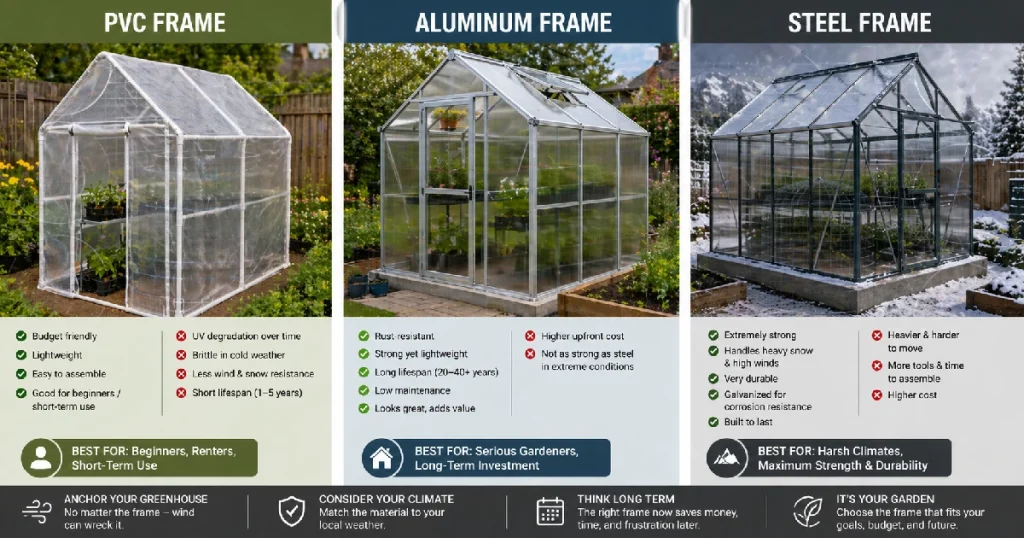
For decades, aluminum has been considered a sensible middle ground. Drive through any suburb with serious gardeners, and you’ll see powder-coated aluminum frames buried in garden beds and fixed to patios. It is evident that these structures have existed for a long time and will continue to do so. In combination with polycarbonate panels, the material creates something truly durable, non-rusting, and low-maintenance. Due to the fact that aluminum frames last for two to four decades, the higher initial cost is completely justified. When something is used for thirty years, it becomes nearly cost-effective. Moreover, it is lighter than steel, which is more important than most people realize for general handling, anchoring, and repositioning. Aluminum is preferred by serious home gardeners for a reason. If you accept the initial price, it is difficult to find a significant flaw.
It’s a different story with steel, especially galvanized steel. There is no attempt to make it attractive or practical. The purpose of it is to hold. You want steel underneath glazing in an area that experiences heavy snow loads or where wind comes from a persistent, angry pressure rather than gusts. If the galvanized coating is damaged or scratched, moisture eventually seeps in. Putting together steel frames takes more time and tools because they are heavy and difficult to move. In spite of this, they remain in place despite weather conditions that would disperse a PVC frame among three nearby residences. In harsh regions like the northern Rockies, the Upper Midwest, and exposed coastal headlands, steel isn’t a luxury. That’s probably the only reasonable response.
Many gardeners purchase PVC with the intention of upgrading within a season or two, but they never do. The PVC frame barely survives one winter before being repaired with cable ties and hope the following spring. As a result of inertia, a transient purchase subtly becomes permanent. In contrast, aluminum greenhouses are typically viewed as architectural features of a garden. Placement, color, and alignment with the fence line are all considered. Most steel buyers just want something that won’t make them look foolish.
| Material | Lifespan | Advantages | Disadvantages | Upfront cost | Best for |
| PVC | 1–5 years | Cheap, lightweight, slots together easily — no tools needed. Quick to assemble and move. | UV degrades plastic over time; brittle in cold; vulnerable to wind — can skid across a yard in a strong gust. | Low | Renters, first-time growers, or anyone not yet committed to a permanent structure. |
| Powder-coated aluminum | 20–40 years | Non-rusting, low-maintenance, lighter than steel. Pairs well with polycarbonate panels. Subtly elegant as a permanent garden feature. | Higher initial cost than PVC; not suited to extreme snow load or persistent high-wind regions. | Medium–high | Serious home gardeners wanting a permanent, low-maintenance structure that becomes part of the garden. |
| Galvanized steel | Decades (with coating intact) | Maximum structural strength — stays put in heavy snow, persistent wind, and harsh exposed conditions where other frames would fail. | Heavy and difficult to move; needs tools to assemble; coating scratches allow moisture in and can lead to rust over time. | High | Growers in harsh climates — heavy snowfall regions, exposed coastal headlands, or persistent high-wind areas. |
No matter what material is used, anyone in a windy area should consider anchoring from the start. For long-term steel structures, sandbags, stakes, or even concrete footings will hold the frame in place. It’s always the little things that go unnoticed that turn a nice greenhouse purchase into a costly repair.
It depends on the person asking the question which material prevails. If the budget is limited and the commitment is unclear, PVC can accomplish the task without financial hardship. If this is a permanent garden feature that will outlast the current vegetable beds for decades, aluminum is the obvious choice. It is low maintenance, genuinely durable, and subtly elegant. If the yard is located in an area where the weather serves a purpose, steel is worth every pound. Frames are the choice. Rest of the details are minor.
As a Senior Editor at Mini Greenhouse Kits, Hannah Kinsley is a passionate supporter of small-space gardening and urban gardening. Hannah, who is currently majoring in Environmental Policy through the University of Michigan’s Environmental Studies program, infuses her writing with a solid academic foundation and a sincere enthusiasm for the environment. You can find her playing soccer or exploring the city’s green areas with friends when she’s not researching the newest trends in city gardening or creating content for minigreenhousekits.com.