Skip to content
Mini Greenhouse Kits
  • Home
  • All
  • Interesting
  • Greenhouse and Gardening
  • Plants
Search
Mini Greenhouse Kits
  • Home
  • All
  • Interesting
  • Greenhouse and Gardening
  • Plants
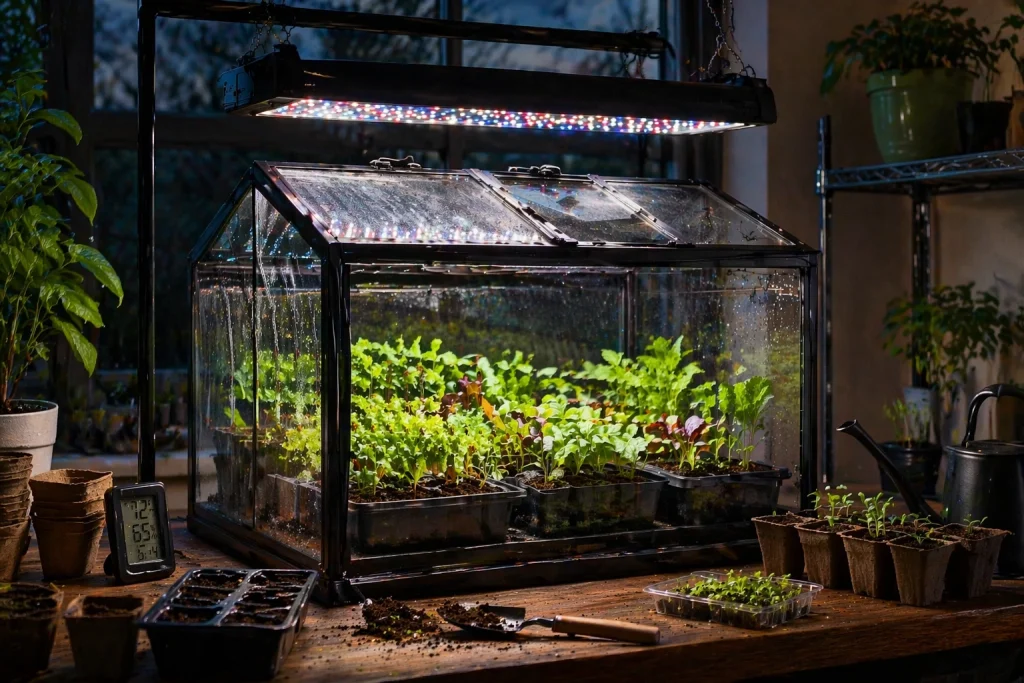
The Mini Greenhouse Lighting Setup That Keeps Seedlings Thriving Even in the Darkest Months
Greenhouse and Gardening, All

The Mini Greenhouse Lighting Setup That Keeps Seedlings Thriving Even in the Darkest Months

By Hannah / April 14, 2026

When you pull back the cover of your mini greenhouse in late January, expecting progress, and find a tray of […]
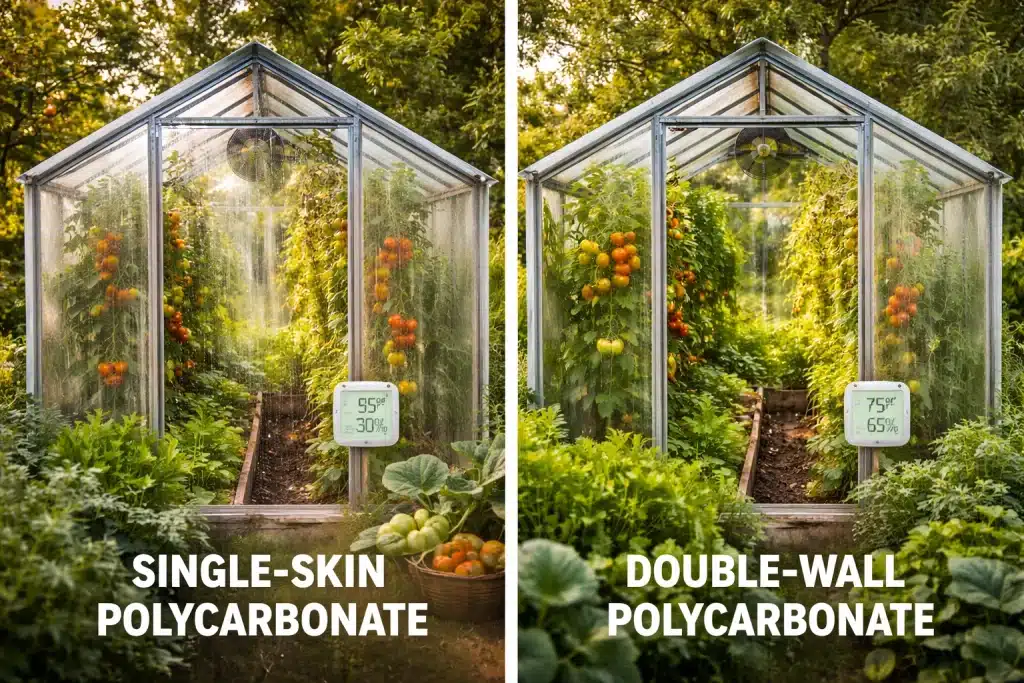
Single-Skin vs. Double-Wall Polycarbonate: The Decision That Will Define Your Mini Greenhouse's Performance
Greenhouse and Gardening, All

Single-Skin vs. Double-Wall Polycarbonate: The Decision That Will Define Your Mini Greenhouse’s Performance

By Hannah / April 14, 2026

You can find flat-packed mini greenhouses leaning against the wall in any garden center in the spring, marked with bold

The Forgotten History of Greenhouses — And Why It Matters Today
Greenhouse and Gardening, All

The Forgotten History of Greenhouses — And Why It Matters Today

By Hannah / April 14, 2026

As with many bizarre historical chapters, it begins with an irrational desire and a strong man. Around 30 CE, Tiberius,
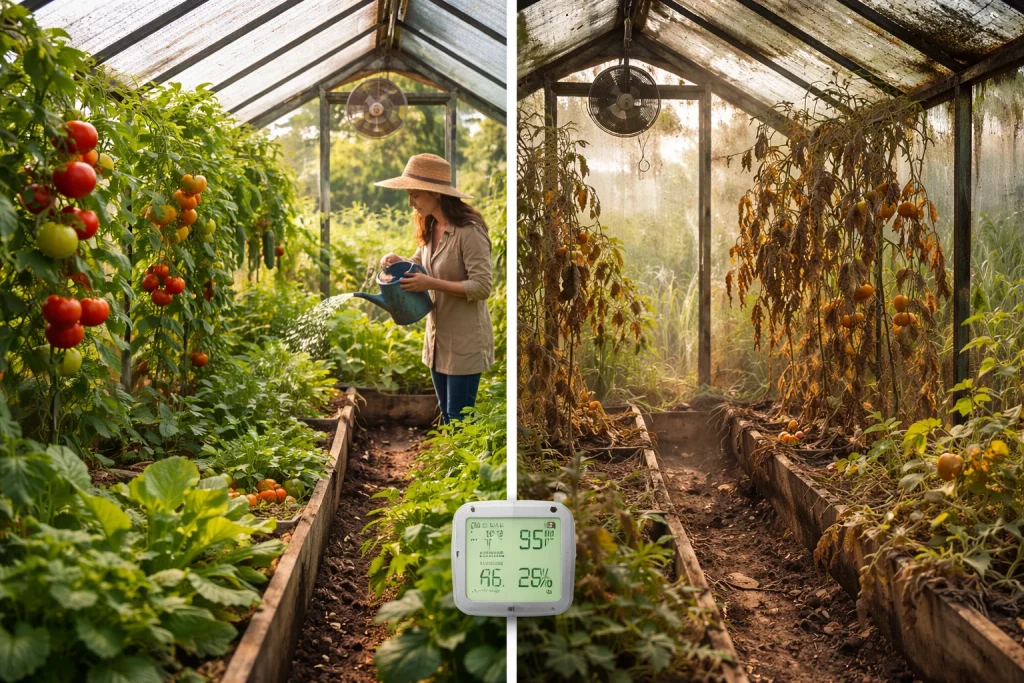
The Hidden Science Behind Why Some Greenhouses Thrive and Others Die
Greenhouse and Gardening, All

The Hidden Science Behind Why Some Greenhouses Thrive and Others Die

By Hannah / April 14, 2026

I’ve been reporting on a greenhouse that grows tomatoes in January. In July, you can expect red, fat, and structurally
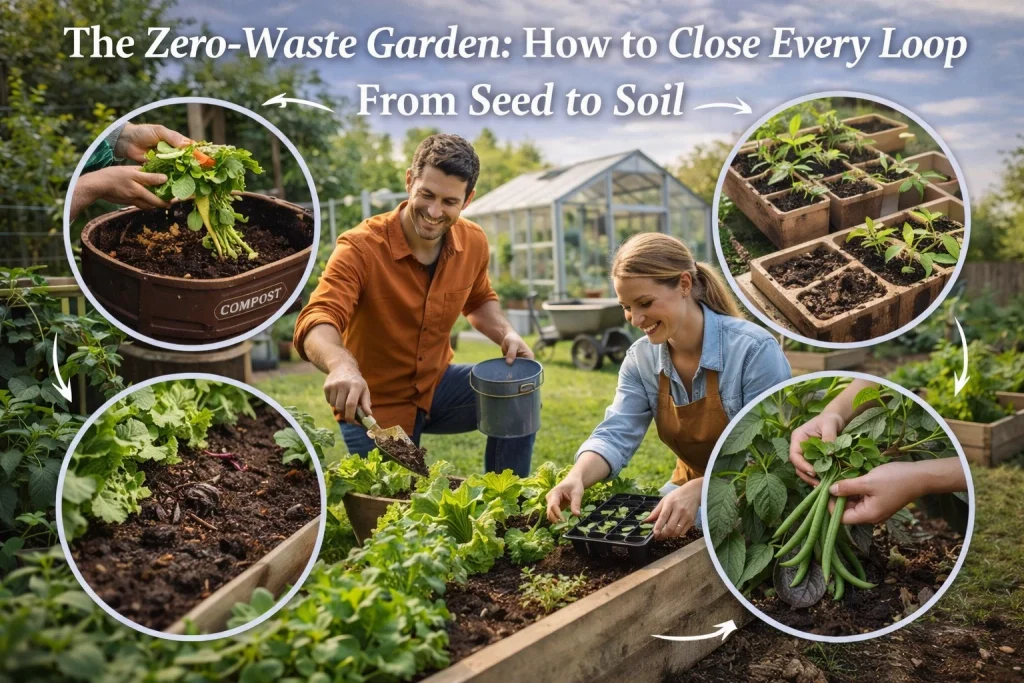
The Zero-Waste Garden: How to Close Every Loop From Seed to Soil
Greenhouse and Gardening, All

The Zero-Waste Garden: How to Close Every Loop From Seed to Soil

By Hannah / April 13, 2026

There is a certain kind of silence created by a well-kept compost bin. There is microbial and worm activity there,
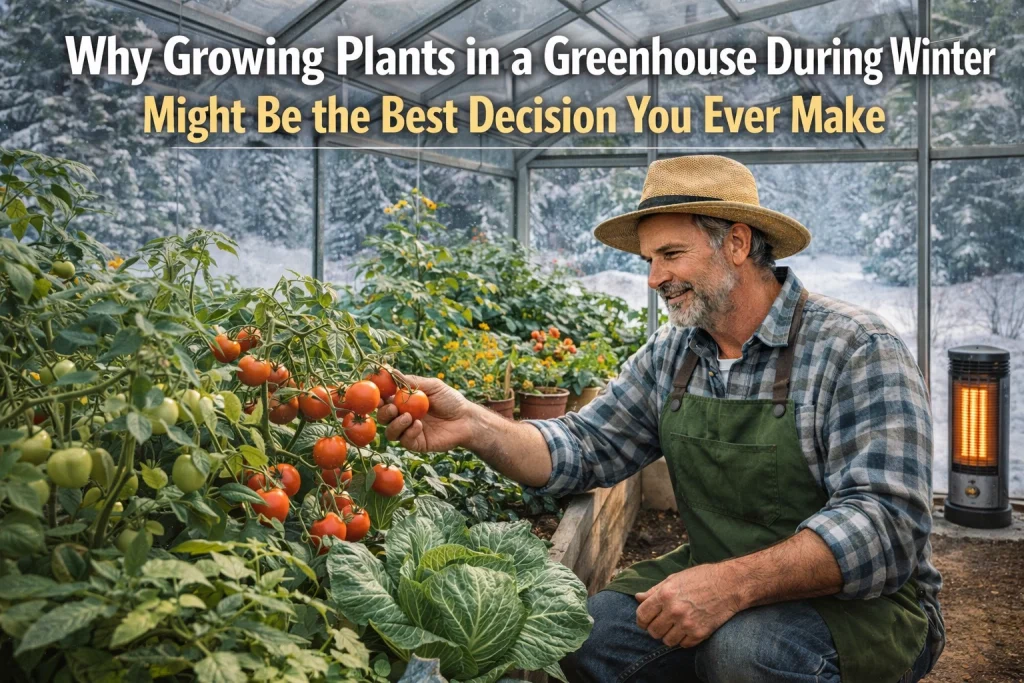
Why Growing Plants in a Greenhouse During Winter Might Be the Best Decision You Ever Make
All, Greenhouse and Gardening

Why Growing Plants in a Greenhouse During Winter Might Be the Best Decision You Ever Make

By Hannah / April 13, 2026

When you enter a functioning greenhouse on a gloomy January morning, the contrast is almost overwhelming. The garden is bare
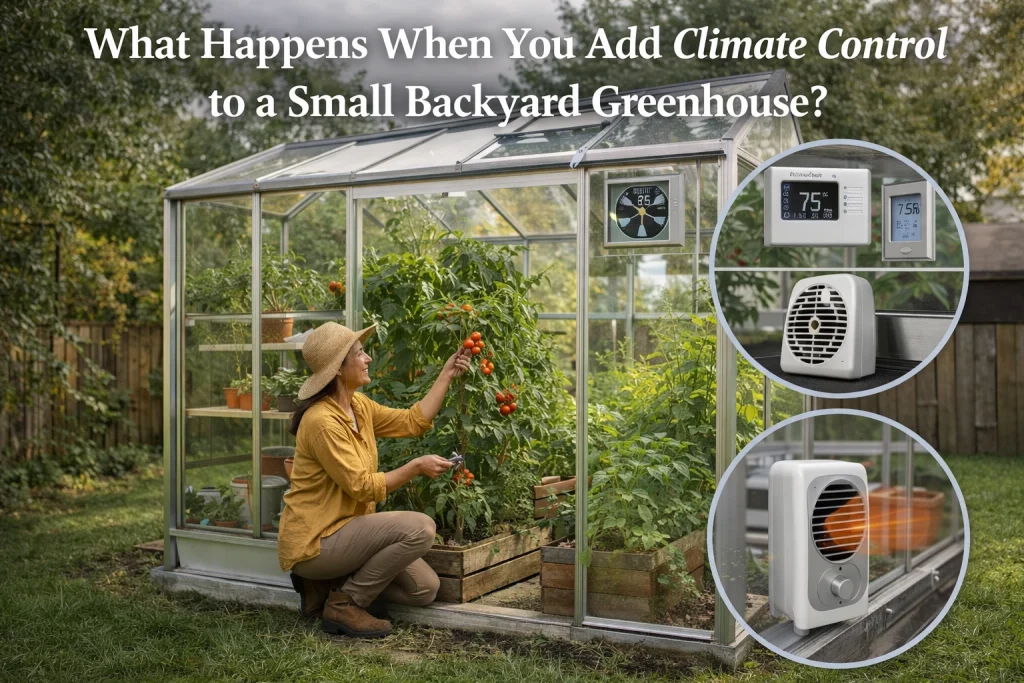
What Happens When You Add Climate Control to a Small Backyard Greenhouse?
Greenhouse and Gardening, All

What Happens When You Add Climate Control to a Small Backyard Greenhouse?

By Hannah / April 13, 2026

There’s a certain kind of frustration when you walk into a backyard greenhouse in late July and discover it has
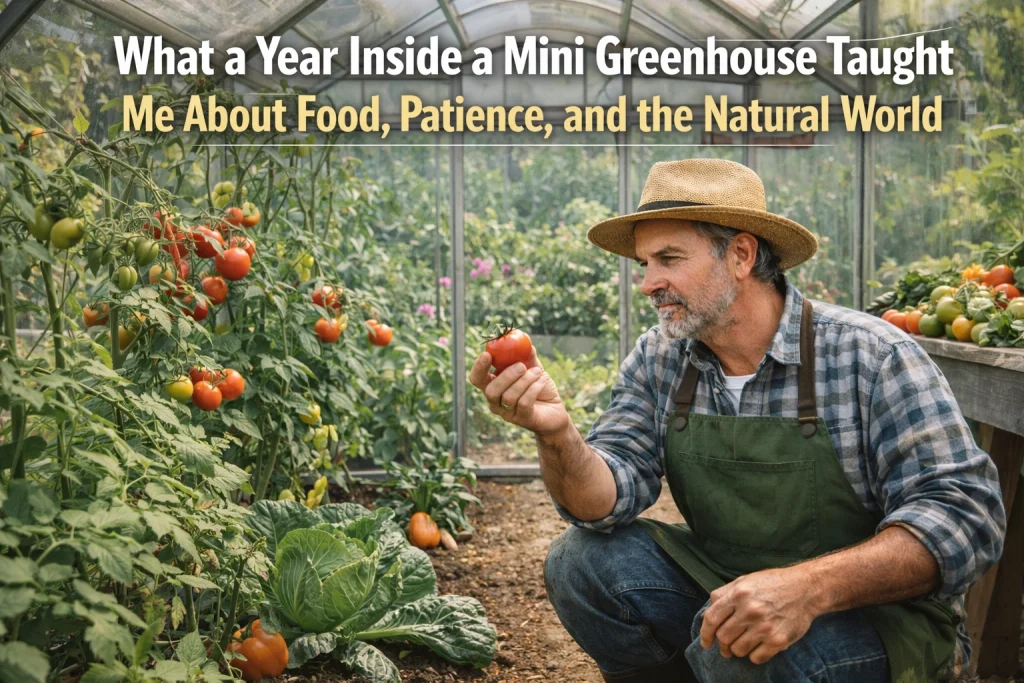
What a Year Inside a Mini Greenhouse Taught Me About Food, Patience, and the Natural World
All, Greenhouse and Gardening

What a Year Inside a Mini Greenhouse Taught Me About Food, Patience, and the Natural World

By Hannah / April 13, 2026

There is something incredibly humble about the building itself. On the edge of an unremarkable backyard are eight feet by
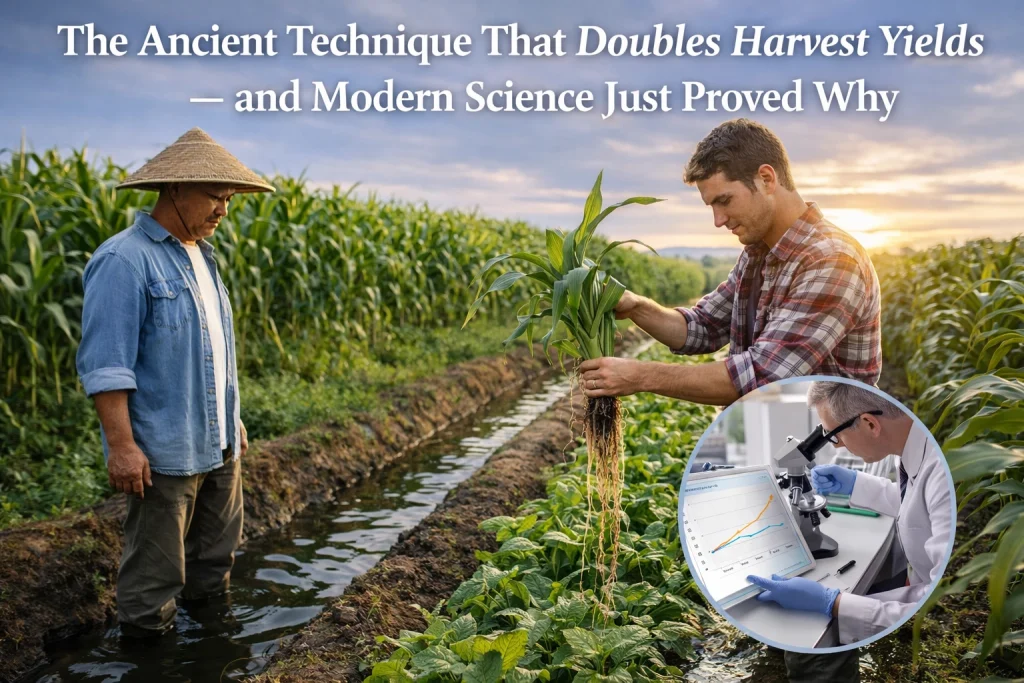
The Ancient Technique That Doubles Harvest Yields - and Modern Science Just Proved Why
Greenhouse and Gardening, All

The Ancient Technique That Doubles Harvest Yields – and Modern Science Just Proved Why

By Hannah / April 13, 2026

Morgan Ruelle, an environmental scientist researching food diversity in Ethiopia in 2011, noticed something that didn’t quite fit his framework.
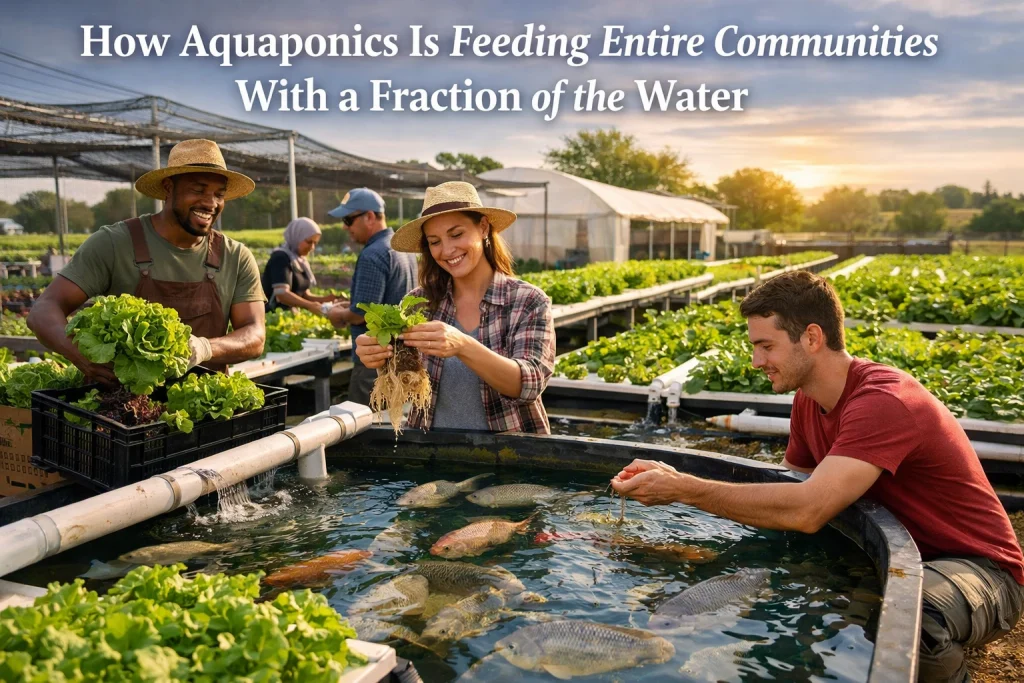
On the roof of a Brooklyn housing complex, something that doesn't seem to work continues to function. Leafy greens grow in channels fed by water circulating from tanks below, where tilapia swim. Waste is generated by the fish. Bacteria convert that waste into nitrates. Plants absorb nitrates from the water to purify it. Fish get their water back. There is no waste. There is very little added. As a former nutrition counselor from Lagos, Yemi Amu started Oko Farms as a way to feed formerly homeless people who refused to leave their building for groceries. Amu's journey to aquaponics is not unusual. A simple search for farming options rarely leads to finding the right system. The solution appears out of nowhere as a solution to a particular problem in a particular location, but it ends up addressing a much wider range of problems than the one for which it was initially intended. An initial rooftop project has evolved into an effective demonstration of how food can be produced in places where soil agriculture is simply not feasible, such as rooftops, abandoned warehouses, flood-prone river deltas, and—increasingly—the kinds of water-scarce areas where conventional agriculture is failing as climate stress and increased demand combine. As a result of industrial agriculture, centuries of precedent were essentially eliminated. The Aztecs created chinampas, floating farms that extended their growing capacity onto lake surfaces, around the year 1000 AD. Fish waste from the water below fed the crops above. Fishermen in Southeast Asia have raised rice and fish in the same paddies for generations, intuitively understanding what modern aquaponics formalizes with pumps and pH meters: that fish and plants are mutually supportive. During the industrial revolution, crop production and animal husbandry were divided into separate, optimized operations. Aquaponics reunites them, and the efficiency increases are significant and quantifiable. The water figures initially frighten most people. Over 70% of freshwater used worldwide is consumed by conventional agriculture, and most of that water is lost to evaporation, runoff, and soil absorption. With an aquaponics system recirculating continuously within a closed loop, plant transpiration and evaporation account for only 1% to 2% of the total volume lost daily. Producing the same amount of food requires 90% less water. It is not an environmental preference in areas that already have water restrictions, and the number of these areas is growing. This is an actual calculation of what is feasible. In aquaponic systems, plant growth occurs 30 to 50% faster than in soil because nutrients are continuously delivered directly to root zones rather than extracted by roots from soil particles in a less reliable process. Through a system that produces tilapia and lettuce simultaneously, two food sources from a single operation, nutritional diversity is provided that neither one could provide alone. An aquaponic kit donated by a group of students feeds over 200 children in Haiti every day through a school lunch program. Refugee camps in Uganda have implemented programs that have significantly reduced child malnutrition while providing families with food and income. In Bangladesh, where seasonal flooding makes conventional agriculture unreliable, floating aquaponic gardens grow crops above rising water instead of drowning beneath it. There are real challenges that need to be stated clearly. Many communities cannot afford the initial setup costs without outside assistance. The system requires sufficient technical knowledge to maintain fish health, control pH levels, and prevent collapse in the event of a power outage. Consequently, aquaponics projects have failed after the founding organizations left, leaving communities with unmaintainable equipment. Companies like Atlas Aquaponics, Oko Farms, and similar organizations emphasize local capacity building and training more than hardware. In general, systems that are installed and handed over do not survive; systems that are understood and owned by the people operating them do. The aquaponics thread from Bangladeshi flood plains to Ugandan camps to Brooklyn rooftops makes it difficult to ignore the fact that who controls the technology is nearly as important as the technology itself. Yemi Amu describes her workshop model this way: rather than distributing food, it distributes the knowledge of how to grow it. To her, food sovereignty means empowering people to manage their own food supply rather than being permanently dependent on aid programs. Aquaponics, which is constructed from locally available materials and maintained with locally held knowledge, makes it possible for food to be imported in a way imported food cannot. There is still a question as to whether the strategy can scale to address food insecurity at the level required. Nevertheless, where it is effective, lettuce grows, fish swim, and results are evident.
Greenhouse and Gardening, All

How Aquaponics Is Feeding Entire Communities With a Fraction of the Water

By Hannah / April 11, 2026

On the roof of a Brooklyn housing complex, something that doesn’t seem to work continues to function. Leafy greens grow
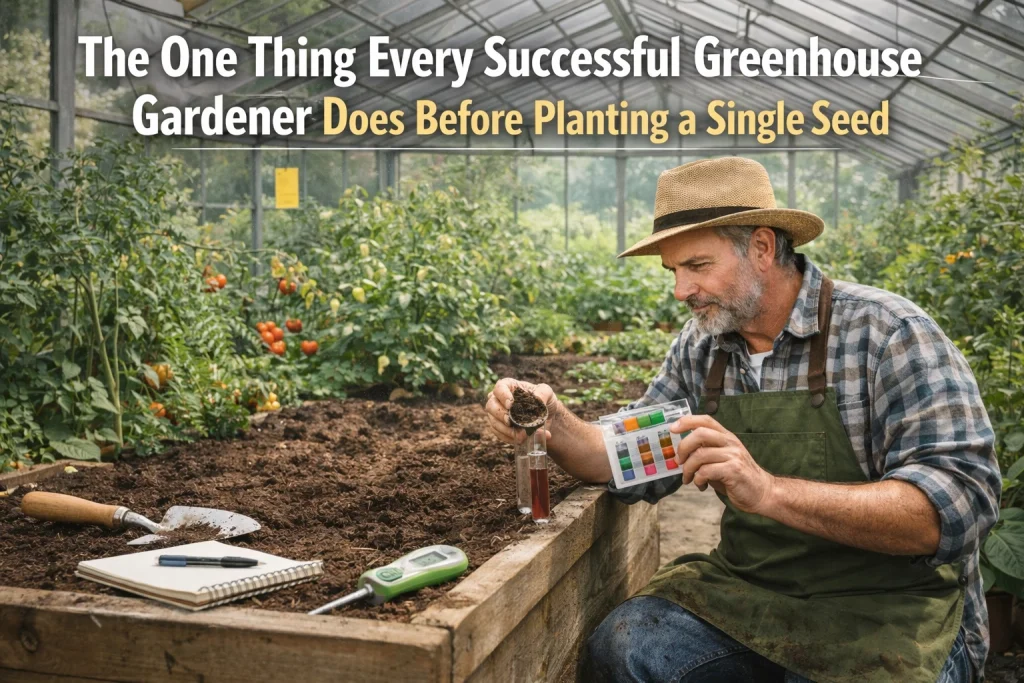
The One Thing Every Successful Greenhouse Gardener Does Before Planting a Single Seed
Greenhouse and Gardening, All

The One Thing Every Successful Greenhouse Gardener Does Before Planting a Single Seed

By Hannah / April 11, 2026

A seasoned greenhouse gardener does something that most novices never consider before the seed packets are distributed and the propagator
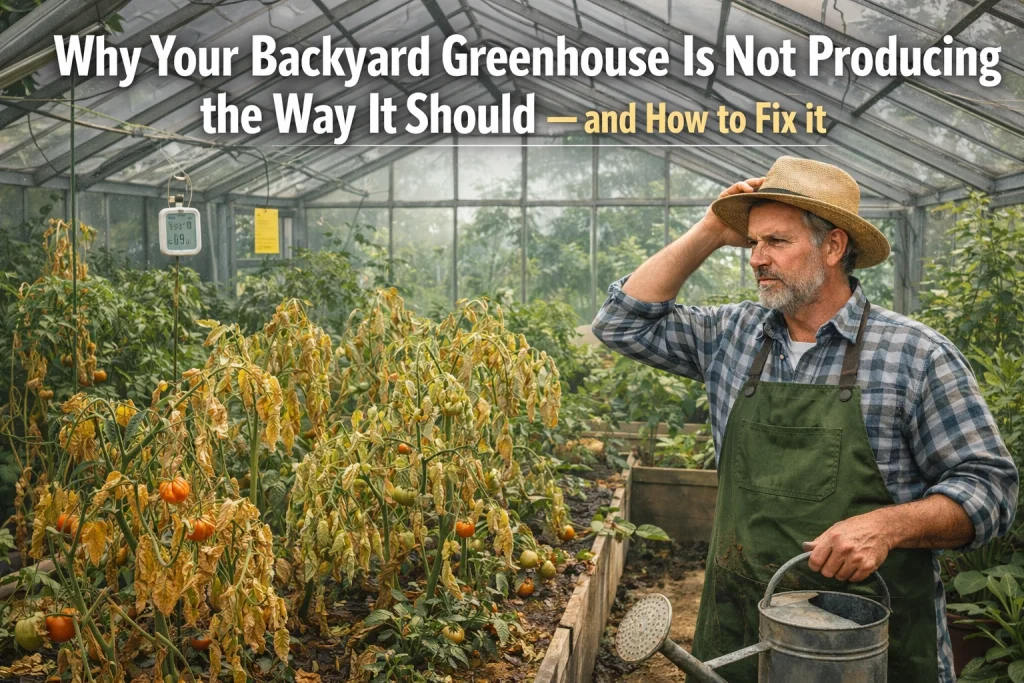
Why Your Backyard Greenhouse Is Not Producing the Way It Should — and How to Fix It
Greenhouse and Gardening, All

Why Your Backyard Greenhouse Is Not Producing the Way It Should — and How to Fix It

By Hannah / April 11, 2026

An outdoor greenhouse that was supposed to produce abundantly in July instead produces thin yields, yellowing plants, and flowers that

← Previous 1 … 6 7 8 … 13 Next →
  • I Apologize to My Rosemary Every Time I Prune It - Because Science Cannot Tell Me Whether Plants Feel Anything
    I Apologize to My Rosemary Every Time I Prune It – Because Science Cannot Tell Me Whether Plants Feel Anything
  • My Apartment Could Not Breathe - The Best Indoor Plants for Air Quality Changed That Without a Single Filter or Fan
    My Apartment Could Not Breathe – The Best Indoor Plants for Air Quality Changed That Without a Single Filter or Fan
  • Everything I Know About Gardening I Learned After I Stopped Trying to Control It
    Everything I Know About Gardening I Learned After I Stopped Trying to Control It
  • I Couldn't Keep a Single Plant Alive - Until These Indoor Gardening Ideas Finally Changed That
    I Couldn’t Keep a Single Plant Alive – Until These Indoor Gardening Ideas Finally Changed That
  • How To Propagate Boston Fern the Right Way - And Stop Killing Baby Plants Before They Start
    How To Propagate Boston Fern the Right Way – And Stop Killing Baby Plants Before They Start

Disclaimer: All information on Mini Greenhouse Kits, including news from the industry, third-party opinions, and details about well-known horticultural figures, is provided solely for informational purposes. Based on this content, we do not support or advise any particular course of action. Before acting on any information found on this website, always consult a licensed expert, certified horticulturist, or qualified greenhouse professional.

  • Privacy policy
  • About us
  • Contact us
  • Terms of Service

Copyright © 2026 Mini Greenhouse Kits | Powered by Astra WordPress Theme