
There are certain gardens that are consistently two weeks ahead of the rest of the street. While the neighbors’ plants are still in pots, the tomatoes are already blooming. Salad leaves are thick and lush in late March. The beans are planted before anyone else considers the soil’s temperature. Caretakers of these gardens are not necessarily more talented or diligent. Whether on purpose or through trial and error over multiple seasons, they have designed the small-scale climate surrounding their plants to be warmer, more sheltered, and more productive than the surrounding environment. A microclimate, then. Constructing one is also much easier than it seems.
Specifically, it is about retaining heat longer than open air and bare soil can. In spite of the fact that all gardens receive the same amount of sunlight, not all surfaces react the same way to it. Solar radiation is reflected by light surfaces, while it is absorbed by dark materials and stored as heat. As a result, applying black plastic mulch directly over a bed in early March can increase the soil temperature by several degrees. Germination dates can sometimes be pushed back several weeks because of this. In the same way, dark rocks, concrete pavers, or even black jugs filled with water are used to surround seedlings. During the day, these items absorb heat, releasing it gradually at night, keeping the air around the plant noticeably warmer than the open garden nearby. Raised beds and container gardens are examples of thermal mass-the same principle that keeps rooms with stone floors warm after the sun goes down.
South-facing walls are one of the most underutilized resources in home construction. As a passive radiator, brick or stone walls exposed to the south absorb heat during the day and release it at night, extending the growing season by four to six weeks in either direction by creating a microclimate along their base that is noticeably warmer. Kitchen gardens in old country homes were well aware of this; the beds facing south were set aside for the earliest crops and most delicate plants. Physics remains the same. Raised beds located against the south face of a house or garden wall improve the growing conditions for whatever is planted there.
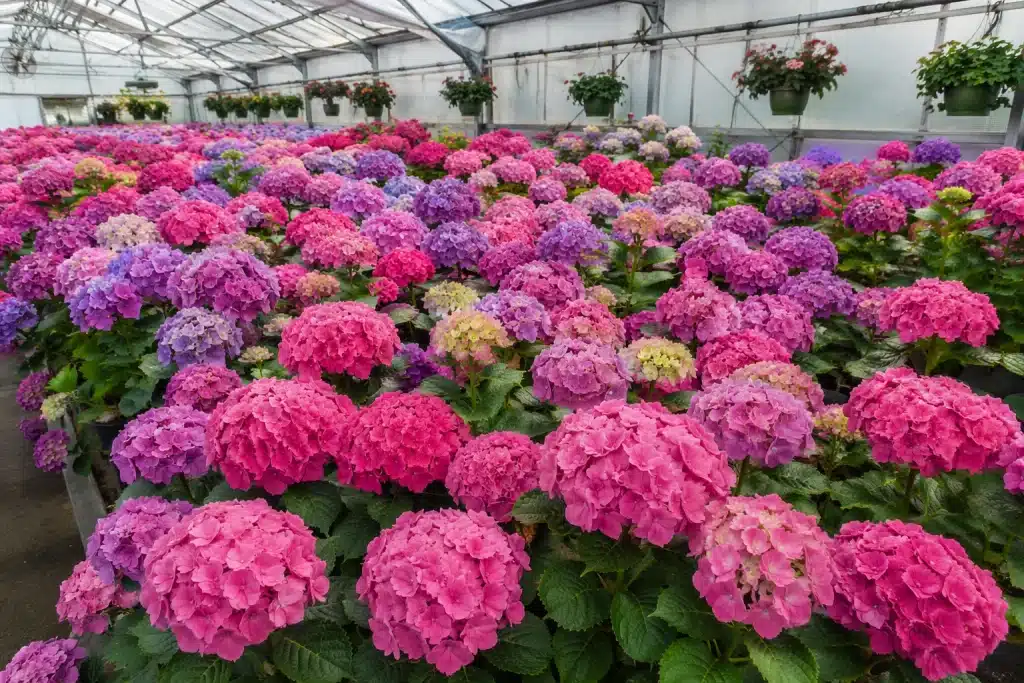
This is further explained in the enclosure. A straightforward hoop house, which consists of PVC pipe bent into arches over an elevated bed and covered with three to six mil clear plastic sheeting, produces an enclosed air volume that warms more rapidly than open ground, retains that heat longer, and increases humidity around the plants to lessen transpiration loss and water stress. Due to the effect, plants growing in a hoop house in early April are experiencing conditions that would normally arrive in mid-May in much of the UK and northern United States. Cloches, cold frames, and even recycled plastic bottles placed over individual seedlings work on the same principle: they create a localized, warm, humid environment that signals plant growth.
Despite its importance, wind is often overlooked when discussing microclimates. Through convection, wind removes heat from plant surfaces, accelerates the loss of water from leaves, and can physically harm delicate growing tips, causing plants to regress for days at a time. A windbreak, such as a fence, a thick hedge, a row of taller plants, or even a stack of straw bales during the most vulnerable weeks, does more than protect plants from mechanical harm. In addition to reducing water management energy, it creates a zone of still air that retains heat better, freeing up more resources for growth. A sheltered garden usually performs better than an exposed one at the same latitude and soil quality. The wind is responsible for most of the difference.
Light amplification is the least expensive component. White-painted fences or walls behind growing beds reflect more sunlight back onto the plants during the lower-intensity morning and evening hours, extending their effective light hours. By reflecting light upward through the lower leaf canopy, reflective mulches perform a similar function at the soil level. Together with soil warming, enclosure, and wind protection, these small interventions create an environment that can conceivably accelerate plant growth in a way that most growers would find difficult.
A carefully planned bed combining these methods results in a growing environment that continuously outperforms its surroundings. Several of these factors may explain why seasoned gardeners seem to harvest earlier and more abundantly than novices—not because they have better seeds or more time, but because they have learned, whether intentionally or unintentionally, to stack these minor advantages to their benefit.