
As with many bizarre historical chapters, it begins with an irrational desire and a strong man. Around 30 CE, Tiberius, an elderly, suspicious, and apparently ill Roman Emperor, was prescribed a vegetable that resembled a cucumber every day by his doctors. Eventually, his gardeners discovered that the plant was not available year-round in Rome. Furthermore, crop seasonality cannot simply be explained to an emperor. Due to this, they had to improvise. Wheeled garden carts. An oiled cloth was used to cover the plants. The structures were moved into heated rooms at night and into sunlight during the day. According to most contemporary standards, it was ridiculous. It was also the first greenhouse in the most basic sense.
There’s something striking about that origin story, which is worth pondering, and that’s how the underlying impulse hasn’t changed. Take control of the weather. When the plant is not in its natural season, keep it alive. It is inappropriate to grow something in an inappropriate location. Vertical farms and climate-controlled growing operations from the Netherlands to the Arizona desert have the same goal, even though the tools have changed completely.
Tiberius and the modern greenhouse have a complex and fascinating relationship that most people are unaware of. Korea is frequently omitted from Western narratives, which is a serious oversight. As early as 1438, records from the Joseon Dynasty show fully heated greenhouse structures in operation. In the design, an Ondol underfloor heating system was used, which distributes heat through channels under the floor and walls covered in oil-coated paper. This sophisticated piece of engineering was created when European growers were still debating whether or not they could keep out the cold. The innovation gap between Korea and Europe during this time is rarely discussed in gardening history classes. Most likely, it should be.
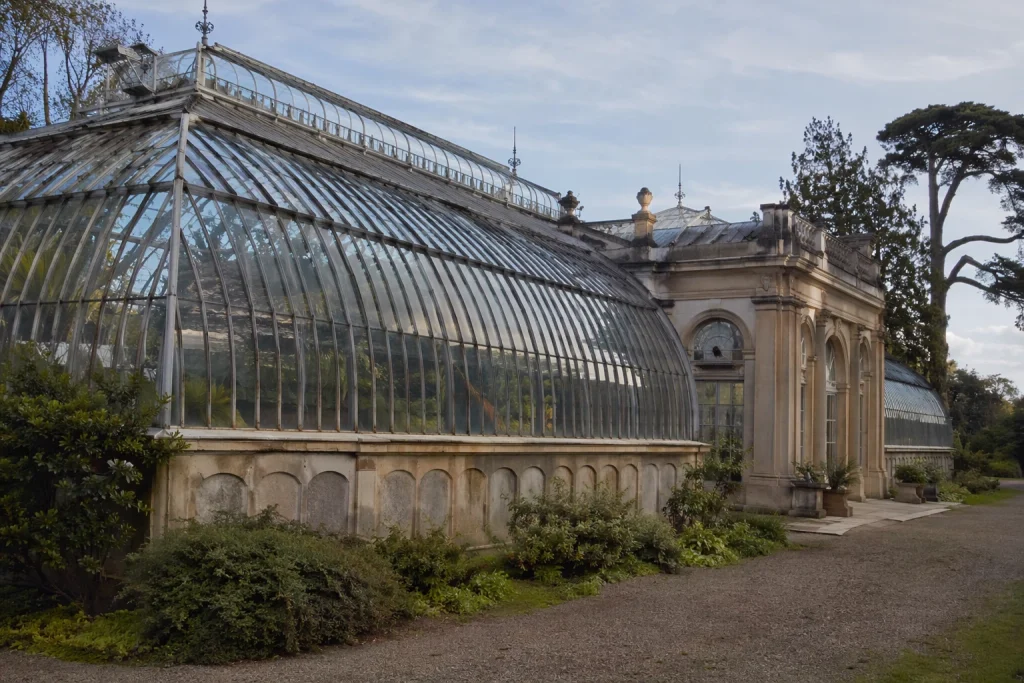
Due to social competition and citrus fruit, Europe’s greenhouse story accelerates dramatically in the 17th century. Those massive, sturdy, south-facing orangeries still present on the grounds of historic English country homes weren’t really about fruit. No, not mostly. They were about proving that you had the resources – money, land, and labor – to cultivate something that had no business surviving a northern winter. At Ham House in Surrey, you can see what that ambition looked like in stone and glass in the orangery, which is still standing and remarkably intact. As much as it is designed to grow, it is ostentatious and large. As William III ascended to the English throne in 1689 from the Dutch Republic, the trend for greenhouses accelerated.
Things became truly bizarre when pineapples arrived. A tropical fruit that is difficult to grow in northern Europe, expensive, and tropical, the pineapple became the status symbol of the Georgian period. Sometimes it was rented out by the night and used as a decorative centerpiece at aristocratic dining tables. A “pinery” or “stove house” was required for cultivating, which kept temperatures and humidity high using progressively complex heating systems that used hot air flues and eventually water and steam pipes. Those pipes are directly responsible for central heating today. In addition to providing food for the nobility, the greenhouse contributed one of the most widely used household technologies in the modern world.
In the Victorian era, glass had become more affordable, window and glass taxes had been eliminated, and middle-class families were now able to build their own homes. It caught the attention of manufacturers. It was in smaller gardens that the once exclusive domain of dukes and botanical institutions began to emerge. For the first time, smaller, prefabricated versions made the concept accessible to the general public, while the massive iron-framed glasshouses at Kew and the Crystal Palace demonstrated its technical feasibility. In a matter of centuries, a technology that was once considered an imperial luxury became a common tool.
All of this brings us to the present and its significance. The history of greenhouses is often overlooked as an obscure aspect of horticulture. This framing, however, shortens the story. Food security, climate unpredictability, shrinking arable land, and growing urban populations all contributed to the development of greenhouses today. There is a difference in scale. The stakes are higher in some respects. Hydroponic systems, vertical farming, or solar-powered growing facilities do not alter the greenhouse tradition. A continuation of two millennia of people trying to grow the wrong thing at the wrong time and place. In part, it is important to understand that history because the issues it was subtly resolving have persisted.