

The same thing happens in backyard after backyard in late October: exposed, empty raised beds with gray, cracked soil that is waiting for winter without any protection. After removing the spent tomato cages and hauling off the last of the zucchini, the gardener has gone inside, happy that the season is over. As an instinct, it makes sense. Harvest has been completed. Is there anything else that can be done? There is a noticeable difference between gardeners who care and those who don’t the following July.
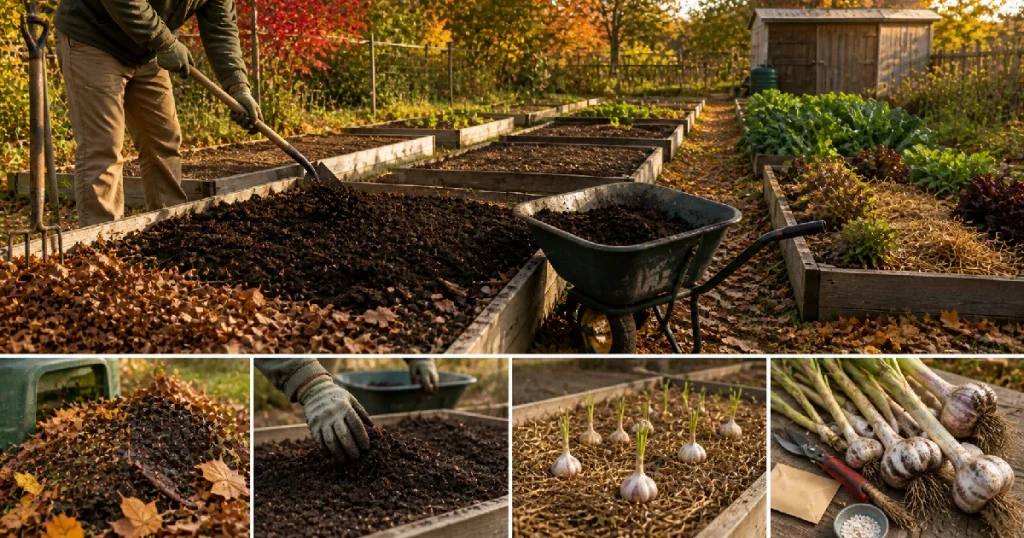
Many home gardeners neglect to apply a thick layer of organic matter to bare beds before winter arrives and let it sit there, silently decomposing until spring. The spread of compost, aged manure, and leaf mold over emptied beds between now and planting time will do more for the following year’s plants than almost any other intervention. The mechanism is simple. It is during the cold months that organic matter decomposes, providing nutrients to plant roots through bacteria, fungi, and earthworms. By the time seeds are planted in March, the soil beneath has changed; it is now richer, looser, and more biologically active.
This task is often neglected due to timing and invisibility. During the end of the season, when the days are getting shorter and enthusiasm is waning, it doesn’t yield any immediate benefits. Compost is spread on bare ground and mulched with straw or shredded leaves. It’s not possible to observe a flower, harvest a vegetable, or share a before-and-after. Because the payoff is underground and months away, it’s easy to put it off. The quiet, cumulative nature of soil building is the whole point, which is why seasoned gardeners consider autumn amendment nearly non-negotiable.

Why winter soil care affects spring soil care
As a whole, the arguments for protecting beds during the winter are based on a number of compounding effects, none of which are particularly noteworthy on their own. Winter rainfall exposes compacted bare soil. In heavy rains, soil particles on exposed surfaces come together, destroying aeration and decreasing drainage well into the growing season. A mulch-top layer of compost mitigates this effect by keeping the soil structure open and loose during months of weather that otherwise gradually compact it. You can feel the difference in texture when spring arrives – one bed crumbles easily with your hand, while the other requires a fork.
Wintertime bare soil encourages weed growth in addition to compaction. Early in the spring, dormant seeds that have been lying dormant in the top inch of soil for the entire summer sprout, becoming established before a gardener has had a chance to plant anything. Mulch blocks that light from reaching them. Despite not completely eliminating weeds, it delays germination in a way that significantly reduces weeding time in March and April, when a gardener is better off planting. When you’ve been doing this regularly for a few seasons, it’s hard to ignore the difference in workload.
In spite of the fact that it goes against what many gardeners were taught, the no-dig method is worth considering. Turning the soil every fall, breaking up hardpan, adding amendments, and aerating it, felt like good stewardship for many years. Tilling disrupts beneficial microbial communities and mycorrhizal networks that have developed throughout the season. During the winter, earthworms will do the incorporation work themselves if there is enough organic matter on the surface. Natural aeration channels will be created as they move downwards. The soil you leave undisturbed is much more biologically and structurally complex than anything produced by a tiller.
Gardeners add a few other late-season tasks to amending beds, each of which subtly prepares the following season. In beds that have already been amended, garlic planted in October or November will overwinter and emerge as one of the first crops ready for harvest in midsummer if it is pushed an inch or two below the mulch surface. Garlic harvested from your own soil in late June tastes sufficiently different from store-bought varieties to justify the effort, and it requires very little maintenance between planting and harvesting.
Testing the soil in the fall instead of the spring is another habit worth developing. As an example, adding lime to adjust pH takes weeks before it significantly changes the soil’s chemistry, and doing so in spring gives you very little time to react before planting. By sending a sample to a local extension service in October, you can make adjustments in the winter rather than rushing before the first seed is planted. The price is reasonable. This information can reroute fertilization expenditures in a more focused and efficient manner when compared to the general strategy most gardeners use.
| Task category | Autumn soil amendment and winter bed protection |
| Core action | Apply 2–4 inch layer of compost, aged manure, or leaf mold to bare beds; top with mulch |
| Key benefits | Feeds soil microbes, prevents compaction, suppresses weeds, retains spring moisture |
| Method approach | No-dig / no-till — let earthworms incorporate compost; avoid disturbing soil structure |
| Best mulch options | Straw, shredded leaves, wood chips — applied over the compost layer |
| Companion autumn tasks | Plant garlic (Oct–Nov), take soil test, clean and oil tools, save open-pollinated seeds |
| What to avoid | Leaving soil bare over winter; tilling; leaving diseased plant material in beds |
| Irrigation savings potential | Drip systems combined with compost/mulch can cut water needs 60–80% vs. bare beds |
Cleaning and sharpening tools is more important than people realize. During the winter, blades left with soil and plant matter harbor fungal spores and bacterial pathogens that can enter the following season’s beds. A cool November afternoon spent with a wire brush, linseed oil, and a whetstone. It feels satisfying and free to save seeds from open-pollinated crops in a way that closes the loop between one season and the next.
Physically, these fall chores are not strenuous. In a few concentrated weekend afternoons, the entire set can be completed before the ground freezes. When it seems like the season is over, they need self-control to take action and to put in work that won’t show results for months. Those who adopt that habit usually notice that their soil feels different after a few years of consistent practice. The summer heat makes it more friable, darker, and takes longer to dry out. Those are the autumns that weren’t wasted on bare ground.
As a Senior Editor at Mini Greenhouse Kits, Hannah Kinsley is a passionate supporter of small-space gardening and urban gardening. Hannah, who is currently majoring in Environmental Policy through the University of Michigan’s Environmental Studies program, infuses her writing with a solid academic foundation and a sincere enthusiasm for the environment. You can find her playing soccer or exploring the city’s green areas with friends when she’s not researching the newest trends in city gardening or creating content for minigreenhousekits.com.