True growth occurs in the ground, according to gardening culture. Potted plants are somehow getting by, raised beds are a compromise, and containers are for beginners or those without gardens. For a particular variety of vegetable, it proves to be genuinely incorrect. It’s not just acceptable as a substitute, but quantifiably and empirically incorrect. When given the right container and care, certain vegetables grow faster, more abundantly, and with fewer problems than they would in an in-ground bed. You completely change your perspective on container gardening once you know why.
The mechanism relies on heat. In the spring, container soil warms more quickly than ground soil for heat-loving crops. Dark pots are heated by the sun’s rays in a way that open ground cannot. A dark-colored container placed on a south-facing patio effectively creates a microclimate weeks ahead of what the open garden can provide, especially for peppers, which sulk in cold soil and thrive in heat. As the summer progresses, the plants grow with a vigor infrequently seen in in-ground peppers.
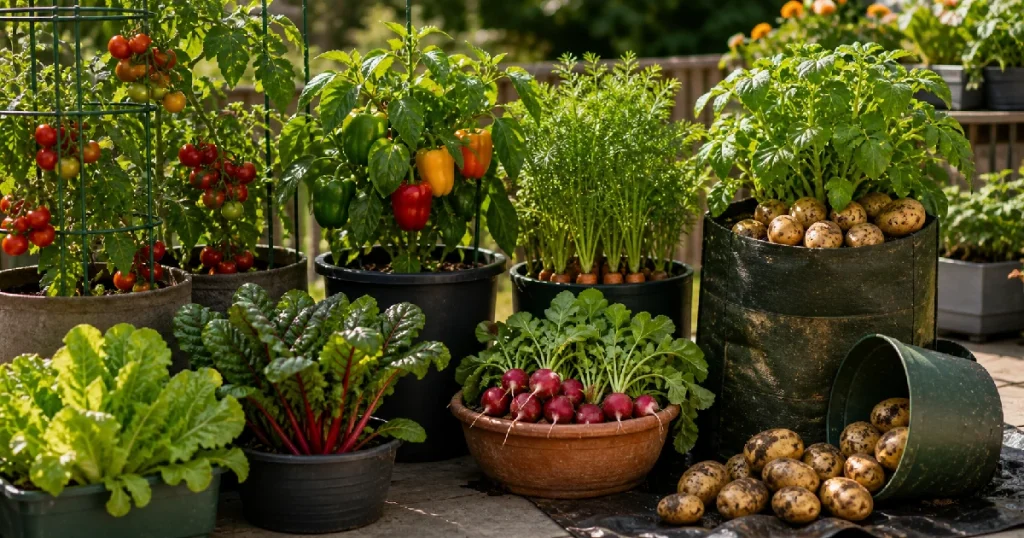
Those who have lost multiple tomato crops to fusarium wilt or potato plants to blight tend to be very concerned about the disease factor. Fresh potting mix in a clean container eliminates the soil-borne pathogens that accumulate over time in ground beds. With fresh compost every season, cherry tomato varieties in five-gallon containers consistently avoid the bacterial and fungal problems that plague ground-grown tomatoes. Seeing the difference in practice, it seems plausible that container cherry tomatoes produce twenty to thirty percent more fruit than their in-ground counterparts. In addition to cleaner plants, growers report higher yields after switching.
Crops that benefit most from containers
Carrots make the strongest argument. Most gardens, especially well-established ones on older properties, lack the loose, stone-free, deeply cultivated soil necessary to grow carrots successfully. Rocky soil produces forked roots. Compacted soil completely stunts growth. Clay soil cracks and heaves around growing roots, resulting in crooked, unsightly results that taste great but look awful. In a container filled with a sandy, free-draining potting mix, carrots grow smooth and straight, a consistency almost impossible to achieve in the ground. Cultivars with shorter roots, such as Paris Market and Thumbelina, perform well in shallower pots and produce nearly flawless roots.
The radishes argue similarly, but even faster. In loose container mixes, they germinate and grow with a directness that compacted ground inhibits; roots grow without resistance and reach harvestable size much more quickly than in the ground. By successively sowing every two weeks, you can keep radishes productive for a long time. Space is not a problem. One of the best reward-to-effort ratios is found in container gardens.
Potatoes deserve more attention than they usually receive in this context. Planting potatoes in the ground requires earthing up, waiting through the growing season without knowing what’s happening underground, and digging. The process almost certainly damages some tubers and leaves others unharmed. In a container, the process is much more fulfilling. The bottom third of a large pot should be filled with compost, the chitted tubers planted, and more compost added as the foliage grows. During harvest, you tip the entire container onto a tarp or into a wheelbarrow and collect the clean, undamaged potatoes without using a fork. There are no green patches from light exposure, no soil-borne pests, and no unintentional cuttings.
Why mobility is more important than you think
Being able to move a plant has practical implications that cannot be overstated. The summer heat causes leafy greens like lettuce, spinach, and Swiss chard to bolt, turning bitter and going to seed quickly. The only thing that can be done in the ground is to pull the plants and accept the timing. When you pick it up in a container and move it into afternoon shade, the harvest window is extended by weeks. In reverse, you bring the pepper plants inside on a surprisingly chilly spring evening. When hailstones arrive, you slide the containers under an overhang. On the ground, there is no such flexibility. The container, despite its reputation as a limited medium, allows you to control growing conditions unlike open soil. A good harvest for some crops depends precisely on that control.
As a Senior Editor at Mini Greenhouse Kits, Hannah Kinsley is a passionate supporter of small-space gardening and urban gardening. Hannah, who is currently majoring in Environmental Policy through the University of Michigan’s Environmental Studies program, infuses her writing with a solid academic foundation and a sincere enthusiasm for the environment. You can find her playing soccer or exploring the city’s green areas with friends when she’s not researching the newest trends in city gardening or creating content for minigreenhousekits.com.