
The majority of people learn gardening skills the same way they learn most household routines: they watch someone else do it, absorb the routine without questioning it, and then repeat it for decades. Run the hose over the beds every night for a few minutes, and enjoy the satisfaction of having accomplished something worthwhile. That makes sense. The plants appear renewed, and the ground becomes moist. In reality, “nothing appears immediately dead” is a very low bar, so most gardeners blame the weather, the soil, or the plant when actual damage manifests itself, such as yellowing leaves, stunted growth, or softly rotted roots.
Sitting with the evidence is rather uncomfortable. Overwatering is the most common cause of plant death in home gardens. The combination of neglect, pests, and poor soil kills more plants than overwatering. Water-clogged pore spaces cause roots immersed in continuously wet soil to suffocate; roots deteriorate from the tips inward because they lack oxygen. Plants often appear listless, drooping, and thirsty on the surface. The well-intentioned gardener then waters again, exacerbating the problem. Every backyard experiences this annoying cycle throughout the summer.
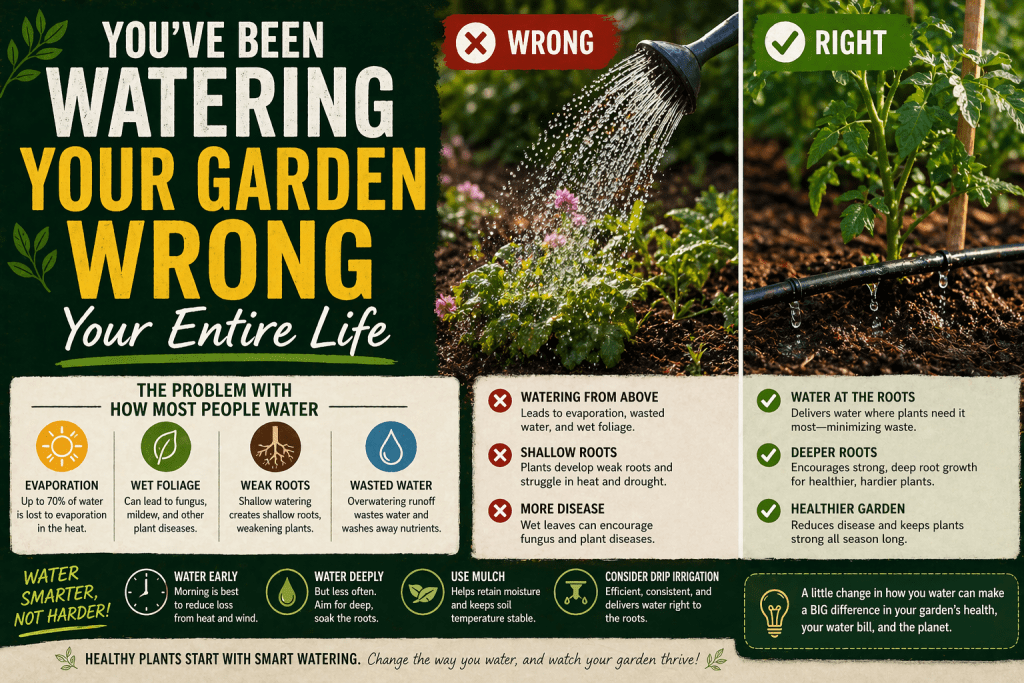
One of the simpler issues to resolve is the timing question, which causes a lot of damage. Despite the fact that many people do so on the grounds that the ground appears dry and the plants appear stressed, watering in the middle of a hot afternoon is almost always ineffective. A large portion of the water evaporates before it reaches the root zone. When something penetrates the soil, it usually does so unevenly, leaving the deeper root layer dry and the surface moist. In general, horticulturists recommend watering in the morning, preferably before eight o’clock, for several reasons: any moisture left on leaves dries during the day rather than remaining overnight, and the water passes through the soil before the heat peaks.
Watering at night seems intuitively gentle because of the cool air, the peaceful garden, and the thought of rejuvenating plants before bedtime, but it actually has the opposite effect. In damp foliage that remains damp throughout the night, fungi thrive. Powdery mildew, black spot, and various leaf blights spread more quickly when foliage remains damp overnight. Especially in humid climates where fungal conditions are already favorable, most gardeners may not realize how much evening watering increases disease pressure.
Another issue is where the water actually lands. Watering widely is the natural tendency, covering the entire garden in a single pass and moistening the soil, leaves, and stems. Despite this, plants do not drink through their leaves, but rather through their roots. Whenever water falls on leaves above the root zone, it quickly evaporates, adding nothing to the plant’s actual moisture intake while creating ideal conditions for pathogen growth. Directing water to the roots at the soil line, where roots are actively absorbing water, is more effective and better for plant health. In addition to drip irrigation and soaker hoses, which provide water directly to the root zone without wasting any, this reasoning is further extended by drip irrigation.
One of the more subtle issues is shallow-watering, which feels like it is a responsibility. In order to maintain consistency, many gardeners water a small amount each day – a quick pass in the morning, just enough to dampen the soil. Rather than penetrating deeper into the soil, regular light irrigation encourages roots to remain close to the surface, reaching for the consistent moisture. Plants with shallow roots become much more vulnerable when the surface layer dries out since they have less access to moisture stored deeper in the soil. The plant becomes more self-sufficient as a result of deep, infrequent watering, which is done less frequently, but thoroughly enough to wet the soil.
It almost seems embarrassingly simple, but experienced gardeners swear by the finger test. Then, dig a finger about two inches deep, or two knuckles deep. If the soil feels moist at that depth, the plant doesn’t need water regardless of how the surface appears. There may be substantial amounts of moisture in the soil below the surface, even if it appears completely dry on the surface. Home gardeners often water based on surface appearance rather than root-zone moisture, which is completely preventable with a ten-second check.
| GARDEN WATERING — KEY FACTS & INFORMATION | |
| Topic | Common Garden Watering Mistakes |
| Primary Expert Source | joegardenerTV / Joe Lamp’l |
| #1 Cause of Plant Death | Overwatering — more than drought, pests, or disease |
| Ideal Watering Time | Early morning (reduces fungal risk) |
| Weekly Water Requirement | Approx. 1 inch per week (including rainfall) |
| Soil Moisture Test | Insert finger two knuckles deep — water only if dry |
| Watering Target | Base of plant (roots), not foliage |
| Key Prevention Tool | Mulch — reduces evaporation and watering frequency |
| Reference: joegardener.com — Joe Lamp’l’s Gardening Resource | |
Wilting is the most misunderstood symptom in the garden. Drooping plants are thought by many gardeners to be thirsty, and it is almost instinctive to water them. However, wilting can occur for a variety of reasons. During intense afternoon heat, many plants wilt, reducing the surface area of their leaves to minimize moisture loss. Plants naturally recover when evening temperatures drop. Overwatered plants with compromised roots will also wilt, sometimes severely, since their roots are unable to transfer water efficiently. Watering an overwatered plant is the last thing it needs.
All of these problems can be solved by paying attention rather than using techniques. Allow the soil to dry between treatments by watering thoroughly. Examine the root zone before grabbing the hose. Slowing evaporation from the soil’s surface can reduce the frequency of actual watering with a two to three-inch layer of organic mulch. If you notice any signs of overwatering, such as yellow leaves, mushiness at the base of the stem, or a foul odor, water them sparingly rather than more. These modifications do not require additional time or equipment. The only thing they need to do is break habits that were likely formed without much thought and have operated automatically.
Olivia Murphy is a Senior Editor at Mini Greenhouse Kits and a fervent supporter of small-space and urban gardening. Alyssa, who is currently majoring in both literature and biology at Michigan State University, infuses her writing about city gardening and small-space growing with a unique blend of scientific curiosity and storytelling instinct. Her love of literature influences how she tells the stories behind the plants, and her background in biology gives her content a grounded, research-informed edge. When she’s not working on her next gardening piece, you can find her curled up with a good magazine or watching a movie that she’s been meaning to watch for weeks. She writes with passion at minigreenhousekits.com.