
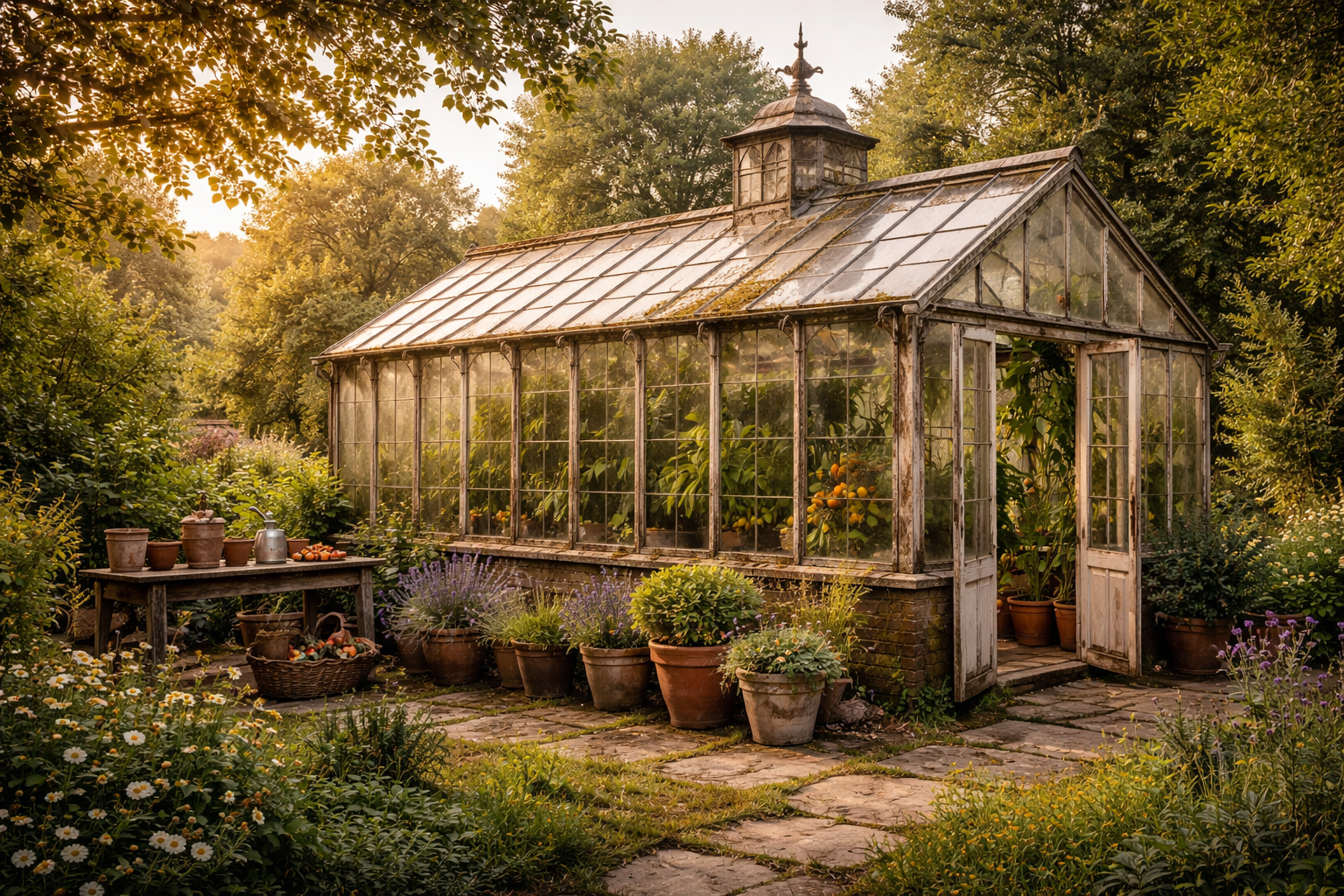
There is no origin of the greenhouse concept in glass walls and well-designed garden beds. It all begins with an emperor’s appetite. Gardeners in ancient Rome were discreetly growing a vegetable that resembled a cucumber every day during Tiberius’ reign. In the past, it forced people to experiment with controlled environments, move plants in and out of the sun, cover them with oiled cloth, and, according to some stories, put entire garden beds on wheels. Retrospectively, it appears that necessity drove this rather than creativity.
The early systems were rudimentary, practically homemade. No glass, no exact temperature control, just sunlight, fabric, and movement. Yet they produced enough to satisfy one man’s daily needs. Without that obsession, greenhouses might have taken a lot longer to develop. After that point, development unexpectedly slowed. It was as if the concept existed but had not yet convinced people that it was worth pursuing. Centuries passed with only minor advances.
During the Joseon Dynasty in 15th-century Korea, heated greenhouses were described in remarkable detail. Rather than being experimental buildings, these were purposeful constructions with ondol systems, which radiate warmth upward through heated floors. Walking through one of those areas, one could imagine the faint aroma of medicinal plants, the soft light filtering through oil-coated paper walls, and the subtle warmth underfoot. Considering how long it took other regions to catch up, it is difficult to ignore how sophisticated this way of thinking was. It remains unclear why these concepts did not spread more quickly.
| Category | Details |
|---|---|
| Origin Period | Ancient Rome (approx. 30 AD) |
| Early Innovator | Emperor Tiberius (daily cucumber demand) |
| First Heated Greenhouse | Korea, Joseon Dynasty (1450s) |
| European Expansion | Netherlands, England (17th century) |
| Notable Site | Chelsea Physic Garden (1681) |
| American Adoption | Andrew Faneuil (1737), Boston |
| Famous Owner | George Washington (pineapple greenhouse) |
| Modern Materials Shift | 1960s (polyethylene plastics) |
| Today’s Innovation | Smart, climate-controlled systems |
| Reference Source | https://en.wikipedia.org/wiki/Greenhouse |
Especially in the Netherlands and England, Europe started creating its own versions by the 17th century. A certain prestige was attached to these greenhouses, which were often used to cultivate exotic plants returned from far-off expeditions. The Chelsea Physic Garden used heated greenhouses to grow medicinal plants that couldn’t survive the local climate. Outside those buildings, it was wet, chilly, and unpredictable. Inside, it was managed, practically curated. Structures like these seem to have been more about controlling nature, knowledge, and status than they were about necessity.
Orangeries and enormous glass structures like those at Versailles transformed greenhouses in France into architectural statements. There was nothing typical about these gardening tools. Statements were made. Long halls of stone and glass shielded citrus trees that represented wealth more than sustenance in thoughtfully planned landscapes. It is still unclear whether these initiatives significantly improved agriculture or merely demonstrated what was feasible in an era of limitless resources.
When greenhouses arrived in North America in the 18th century, they were both useful and symbolic. When pineapples weren’t in season, rich people such as George Washington built pineries to grow them. Winter guests can enjoy tropical fruit grown nearby in a well-kept enclosure. There was more to it than just food. Perception played a role in it.
Gradually at first, then suddenly, something changed. The introduction of materials in the 20th century changed everything. With the introduction of plastic sheeting, aluminum frames, and eventually polycarbonate panels, greenhouses became more affordable, lighter, and more accessible. You can see large expanses of reflective surfaces as you stroll through contemporary agricultural zones in places like the Netherlands, capturing light, retaining warmth, and producing food at a scale those early innovators probably could not have imagined. As climates become less predictable, farmers and investors seem to view these systems as essential rather than optional.
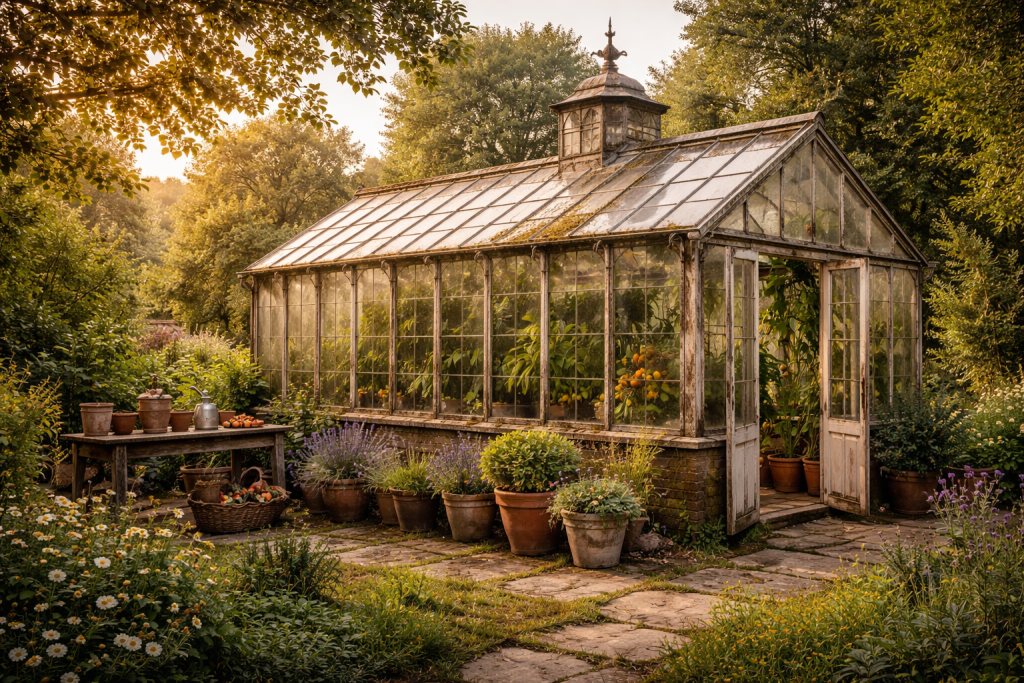
Over the years, different types of greenhouses have evolved, each reflecting a different need or constraint. Botanical gardens or upscale businesses still use conventional glass greenhouses. Although they provide durability and clarity, they are expensive. Increasingly, small farms are using hoop houses, which are constructed from flexible plastic stretched over curved frames. In spite of their fleeting nature, they work surprisingly well. There are also cold frames, which are low, straightforward constructions that sit near the ground and retain just enough heat to extend the growing season. Even smaller setups, such as backyard hobby greenhouses, are influenced by Charley Yaw’s designs of the 1970s, when portable and reasonably priced models became accessible to regular gardeners.
Recent developments in smart greenhouses have subtly altered expectations. Automatic adjustments are made based on light, humidity, and temperature sensors. Subtle screens track plant growth in real time in these areas. Despite its slight tension, it is effective-maybe even essential. Gardening’s unpredictability has faded as the environment has become more controlled.
The history of greenhouses is not linear in retrospect. Short bursts of movement are interspersed with long pauses and abrupt leaps. From European glass palaces to plastic tunnels to digital systems, from Roman carts to Korean heated floors, each step seems both logical and coincidental. I can’t help but speculate about how the next iteration will look and whether it will resemble a garden or something entirely different.