
When you pick up a handful of garden soil, you are holding something far more complicated than it appears. It’s the right kind, the dark, crumbly, slightly earthy kind that crumbles easily between your fingers. There are more living things on Earth in a handful than there are people. I wouldn’t say it more metaphorically. Numbers are higher. Healthy topsoil contains up to a billion bacteria, a million fungi, protozoa, nematodes, and hundreds of other organisms. In the soil, these organisms interact in a way that soil scientists have studied for decades and still refer to as a “black box.” Most gardeners concentrate only on what is visible, such as leaves, stems, and fruit, while the real engine of their garden operates silently beneath their feet, mostly unnoticed and rarely regarded.
The most important work is performed by organisms that can be seen under a microscope. The various forms and functions of soil bacteria can’t be fully replicated by synthetic fertilizers. The nitrogen-fixing bacteria convert atmospheric nitrogen into a form that plants can absorb. These bacteria are particularly associated with legume roots, where they produce visible nodules. This process, which occurs continuously in healthy soil, has allowed farmers to cultivate crops for centuries before synthetic nitrogen fertilizers were invented. By extending their thread-like structures, known as hyphae, far beyond the roots of plants, mycorrhizal fungi increase the capacity of plant roots to obtain water and phosphorus. Using root exudates, the plants provide carbon to the fungi, making the relationship truly symbiotic. Both parties benefit. Both are ineffective without the other.
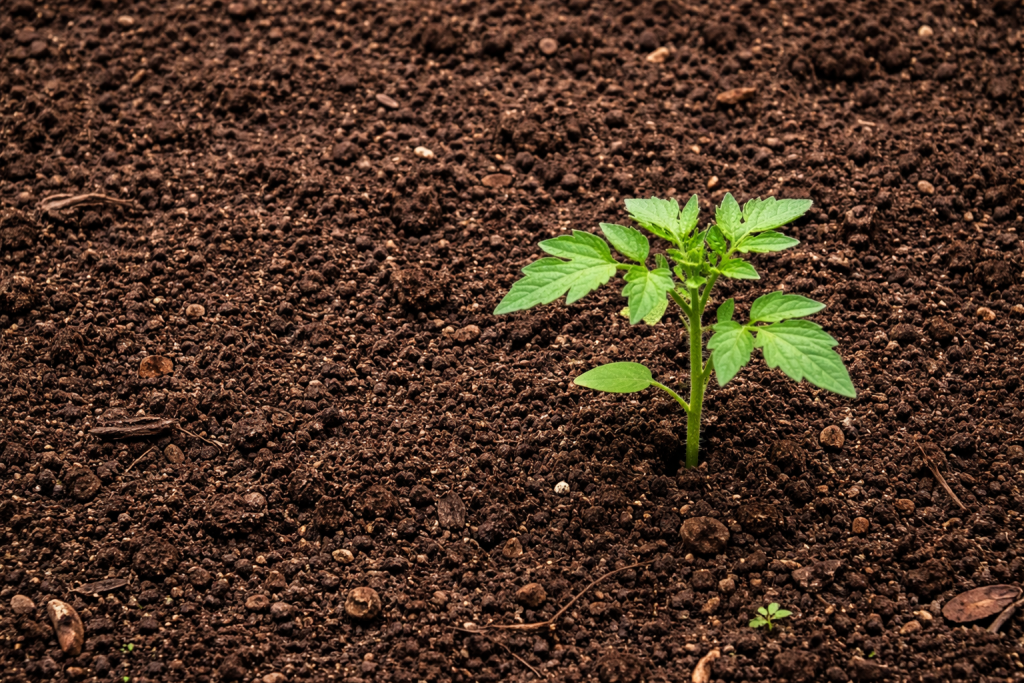
In the rhizosphere, which is the area of soil immediately surrounding living roots, microbial activity is greatest. There may be 1,000–2,000 times more microorganisms in this narrow band of soil than in the bulk soil a few inches away. A plant’s roots don’t just sit in the ground waiting for nutrients to be absorbed. Their constant release of substances feeds particular microbial communities and influences the biochemistry of the soil around them. Sugars, amino acids, organic acids, and enzymes are some of these substances. Monocropping creates a more resilient and diverse soil microbiome compared to growing a variety of plants in one area. Different plant species release different compounds. The plant chooses its bacterial partners based on what it secretes. These partners ultimately determine how well the plant grows.
Structure of soil is primarily determined by microbial activity rather than intrinsic geology. Gardeners instinctively assess soil quality by the way it crumbles, drains, and feels. Extracellular polymeric substances, or biological glues, are secreted by bacteria and bind soil particles into aggregates. By weaving like a net through the soil, fungal hyphae physically bind those aggregates into wider clusters. This results in true porosity in the soil. Plants are able to breathe, drain, and grow unhindered by air pockets, water channels, and root pathways. When compact, poorly structured soil puddles after rain and cracks when it dries, its microbial community is almost always destroyed. Structure follows biology. Structure usually follows biology when biology is restored.
It is a lesser-known benefit of a healthy soil microbiome that seasoned farmers highly value. A diverse microbial community is not a neutral presence; instead, it actively competes with pathogenic organisms for resources and space, produces compounds that resemble antibiotics and inhibit harmful bacteria and fungi, and triggers defensive reactions in plant roots that increase plant resistance to disease. Pathogen pressure in soils that are consistently low despite the presence of disease-causing organisms is termed “disease-suppressive soil.” The pathogens are not absent, but rather the beneficial microbial community controls them. This type of soil is a long-term endeavor, but there is ample evidence that it is feasible and significantly lowers crop losses.
Conventional gardening practices pose a threat to soil microbiology, which is unsettling. Using a spade or rotary tiller to turn the soil breaks up the structural networks that formed over seasons by physically destroying fungal hyphae and upsetting bacterial colonies. A single deep tillage can negatively impact a soil microbiome for months. Because of repeated annual tillage, heavily tilled soils eventually become compacted and nutrient-depleted despite frequent fertilizer applications. Some bacteria are favored by synthetic chemical fertilizers, while others are suppressed, and they also introduce salts that are directly toxic to some soil organisms. Pesticides and herbicides intended to eradicate surface organisms often seep into the soil and impact microbial communities in ways that are poorly understood but consistently linked to a decrease in biological diversity.
A garden that has been maintained with soil health in mind for a number of seasons—compost is added every year, there is little tillage, cover crops are grown throughout the winter, and a variety of plant families grow together—is hard to ignore how the soil differs in appearance and behavior from a nearby conventionally managed plot. It’s darker now. It crumbles instead of clumping. It drains after rain but does not dry. As soon as the soil is watered, earthworms appear in large numbers, indicating that a population is not just surviving but is actively reproducing. It is not magic, but biology—a microbial community that efficiently cycles nutrients, builds water holding capacity through aggregation, and provides the biochemical support that makes a plant truly resilient rather than merely alive—that explains why plants in that soil typically require less water and fertilizer than comparable plants in depleted ground. Success in gardening always begins below the surface rather than above.