

When you watch your cat chew on a leaf and realize you don’t know what plant it is, you feel a certain kind of dread. Miso, a three-year-old tabby named after my friend, had been batting at the trailing vines of a pothos for weeks. She thought it was harmless. No, it wasn’t. Miso survived a costly and terrifying veterinary visit. The incident, however, left a lasting impression on her. It was a beautiful plant. Additionally, the plant was hazardous. She had no idea.
It is surprising how common this is. The lush greenery that has filled living rooms and apartments in recent years has largely come from garden centers and Instagram stores, without much consideration for the animals who live with them. The pothos falls gracefully from the shelves. Philodendrons grow in corners. Snake plants stand erect near the bookcase like sentinels of green. It appears that they are harmless. Some of them aren’t.

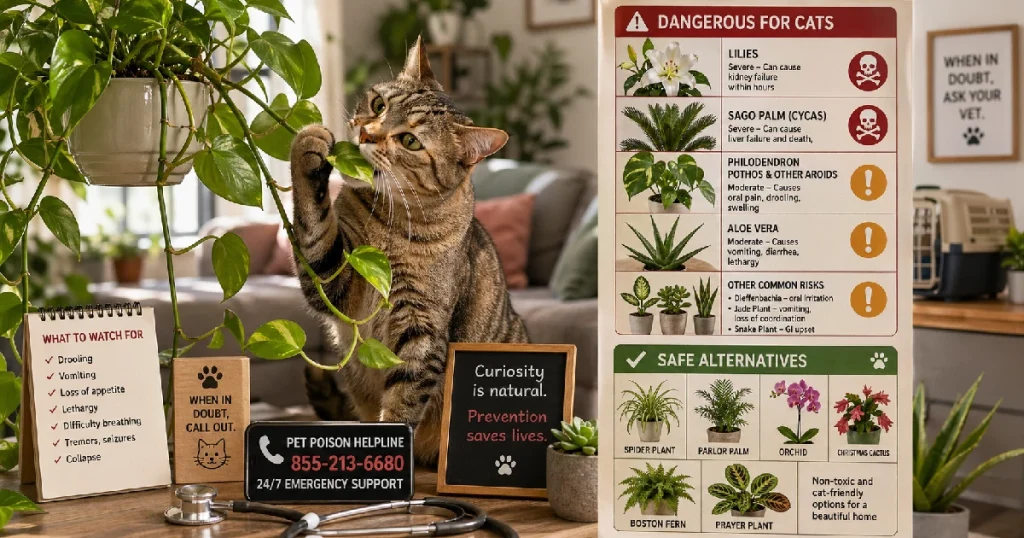
The Most Dangerous Indoor Plants for Cats, Ordered by Severity
A veterinarian’s list of concerns about the lily is long. Lilies of all kinds, including daylilies, tiger lilies, and Easter lilies, are extremely toxic to cats for reasons that aren’t fully understood. Even a small amount of pollen, a leaf, or water from a lily vase can cause rapid kidney failure. It is a harsh timeline. The damage becomes irreversible without prompt veterinary care, and symptoms may appear within hours. It seems unfair that such a common, widely gifted flower poses this kind of risk.
It ranks second, if not in terms of how often it appears in homes, then at least in terms of how severe its effects are. Cycasin, a substance found in the plant, attacks the liver with remarkable effectiveness. Even a small amount of seeds can cause liver failure and death in cats. It is less likely to find sago palms on a kitchen windowsill than lilies, but their attractive architectural shape can sometimes lead people to bring them inside without realizing what they are. There is a possibility that this one does more harm because it is less talked about.
Next, we explore the world of aroids, including philodendron, pothos, and their relatives. Calcium oxalate crystals found in these plants cause excruciating oral pain and irritation as soon as a cat chews on a leaf. An immediate and upsetting reaction includes swelling, difficulty swallowing, pawing at the mouth, and drooling. Even though it usually doesn’t progress to organ failure, it’s not much consolation when your cat is clearly in pain at two in the morning. Particularly pothos is ubiquitous these days, hanging from ceiling hooks in rental apartments, offices, and bedrooms. The public’s awareness of its potential has not kept pace with its widespread use.
Due to its reputation as a therapeutic and healing plant, aloe vera is given special attention. For minor cuts and sunburns, aloe vera is kept on kitchen counters and bathroom shelves. There is a healthy vibe to it. Aloe, however, contains substances that can cause vomiting, diarrhea, and lethargy in cats; even if these symptoms do not progress to organ failure, a veterinarian must be consulted. It is rare for a plant’s effects on cats to differ significantly from its association with humans.
When a plant poisons a cat, what happens?
Watching this unfold in real time can be terrifying because the early warning signs are easy to ignore. In an unusual day, a cat might drool a little, appear quieter than usual, or turn away from food. Symptoms such as breathing difficulties, tremors, seizures, and a complete loss of energy appear later. By then, time is already against you. Veterinarians believe that the rate of intervention is crucial to the outcome of plant poisoning.
Cats may also encounter poisonous plants in unexpected ways. A lily’s fur is groomed after it has been rubbed against. Drinking water from a vase. Rather than chewing on a leaf because they are hungry, they chew on a leaf because they are curious, bored, or just feel like it. It’s not always a good idea to assume that cats will leave something alone when it comes to plants.
The mouth is severely irritated and swollen with dieffenbachia, also known as dumb cane. Jade plants cause loss of coordination and vomiting. Those low-maintenance favorites of novice gardeners, snake plants, contain saponins that cause gastrointestinal distress. Many of the most popular and recommended beginner houseplants are on the list, which is somewhat ironic.
Here are some safe substitutes that won’t harm your cat
Cats can consume a wide range of plants that are safe. Though spider plants are generally considered non-toxic, they are occasionally listed with a caution flag due to their slightly hallucinogenic properties. The lush, tropical appearance of parlor palms can be achieved without the risk. Inquisitive cats are not at risk from orchids, Christmas cacti, Boston ferns, or prayer plants. In contrast to popular belief, there is less of a design sacrifice involved.
| Topic | Houseplants dangerous to domestic cats |
| Most dangerous plants | Lilies, Sago Palm, Pothos, Philodendron, Aloe Vera, Snake Plant, Dieffenbachia |
| Common symptoms | Drooling, vomiting, diarrhea, lethargy, breathing difficulties, seizures |
| Worst outcomes | Kidney failure (lilies), liver failure (Sago Palm), death |
| Safe alternatives | Spider Plant, Parlor Palm, Boston Fern, Prayer Plant, Orchids, Christmas Cactus |
| Emergency contact | Pet Poison Helpline (24/7) or nearest veterinarian |
| Key compound (lilies) | Unknown nephrotoxin — even pollen contact can cause kidney failure |
| Reference authority | ASPCA Animal Poison Control — Toxic Plant List ↗ |
The trend appears to be changing, although it is unclear if the typical houseplant buyer considers pet safety thoroughly before making a purchase. Nurseries are increasingly labeling plants with pet safety information. Online communities have created crowdsourced, comprehensive guides. ASPCA’s extensive toxic plant database is a useful resource for cat owners. Despite slow and imperfect expansion, awareness seems to be expanding.
If your cat has already gotten into something suspicious, don’t wait for symptoms to worsen. You can reach the Pet Poison Helpline 24 hours a day, 7 days a week. It is also done by the emergency veterinarian. Waiting costs far more than making a phone call or even visiting.
Alyssa Bennet is a Senior Editor at Mini Greenhouse Kits and a passionate advocate for urban gardening and small-space growing. Currently pursuing her major in Arts at the University of California, Alyssa brings a distinctly creative eye to the world of city gardening – blending artistic sensibility with a genuine love for green living. She writes regularly at minigreenhousekits.com, and when she’s not crafting her next gardening piece, you’ll find her with a paintbrush in hand, watching sports, or exploring the city with friends.