

In the spring, it usually begins at the garden center on a warm Saturday. A display table is filled with seedlings in small four-packs, the lighting is good, and the excitement of the season creates a logic that seems perfectly reasonable. As a result, the cart is full. Add some marigolds for the borders, tomatoes, peppers, zucchini, herbs, and perhaps a cucumber? A bag of potting soil. Stakes. Gardening trip that includes everything you need for a successful garden.
The zucchini have occupied half of the bed after two months. The tomatoes are crowded, there is no airflow, and the first symptoms of blight are surfacing. Cucumbers ran wild in the July heat. On a sweltering Tuesday afternoon, as the weeding pile seemed insurmountable, the project began to feel more like a duty than an adventure. Those are not the results of bad luck, poor soil, or strange weather. A typical first-year gardening experience is described.

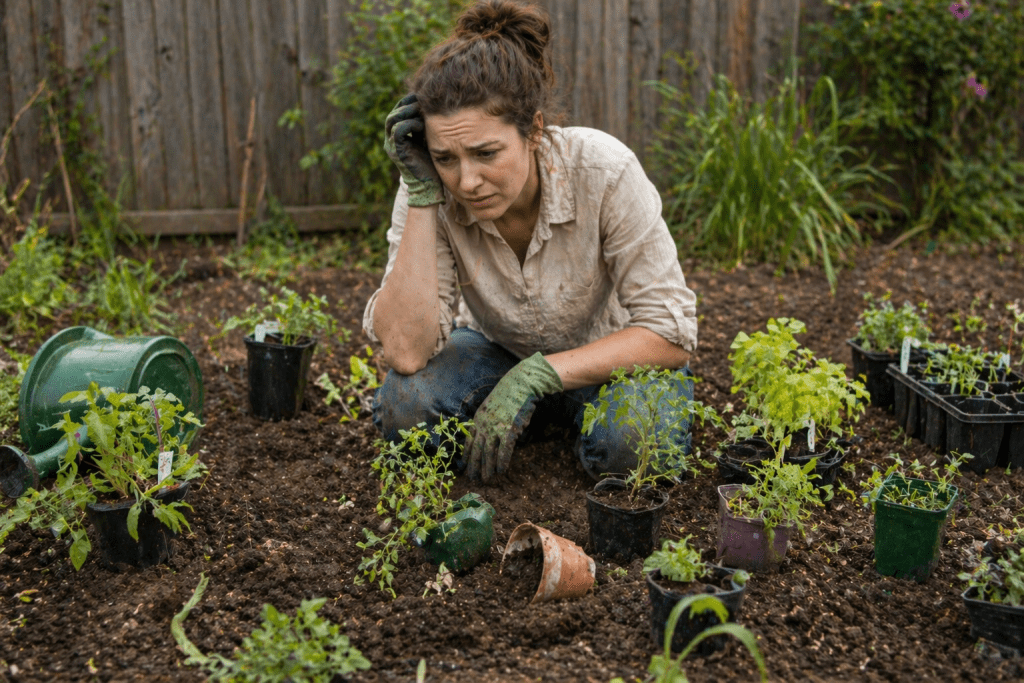
Enthusiasm is not the problem. A garden begins with enthusiasm. Planting feels like progress, while planning feels like a delay, so channeling that enthusiasm into doing before thinking is a mistake. According to Nicole Burke, who founded Gardenary and has worked with thousands of new gardeners over the past ten years, rushing the setup is the most common and expensive error. It’s not the watering, it’s not the pests, it’s not the soil. Arrangement. Choices are made before the first seed is sown that will affect the entire growing season.
Most novices underestimate sunlight because it is invisible, like drainage or soil fertility. Vegetables require six to eight hours of direct sunlight each day to grow optimally. Even more water is needed for squash, peppers, and tomatoes. In what appears to be a bright corner of the yard, a garden bed may receive four hours of sunlight when the nearby fence or tree line is considered. It will be a success for the plants. There will never be a true flourishing; they will produce fewer and later than they should, grow weak stems, and never produce the yield that appeared so promising in March. Watching the light move across a potential garden location for a few days before building anything is one of those preparatory steps that requires patience and saves an entire season.
There are two common approaches to watering that are incorrect for novice gardeners. In summer, the desire to water submerges roots in soil that never dries out because roots require both moisture and oxygen, and saturated soil lacks both. Conversely, inconsistent watering during heat waves causes blossom drop, cracked tomatoes, and plant stress that leads to disease. Gardeners find that deep, infrequent watering encourages roots to grow downward rather than hovering just beneath the surface. One thorough watering early in the morning, before the sun reaches the leaves, is more effective than three hurried waterings at noon.
Most seed packets do not consider spacing adequately. Squash, pumpkins, and melons, which grow up to four feet in diameter, can suffocate anything in their way. All members of the vegetable family are affected by the spacing problem. Tomatoes planted 18 inches apart in April will look good for two months before turning into a tangled mass of foliage by July. Planting bell peppers and hot peppers next to each other will cross-pollinate and affect both of their flavors. By reading the plant label or seed packet as factual information rather than as a formality, the outcome of the growing season is altered.
| Category | Details |
| #1 Beginner Mistake | Rushing the setup — starting too big without a plan |
| Recommended Starting Size | 4×4 foot raised bed, or a few containers |
| Sun Requirement (Most Vegetables) | 6–8 hours of direct sunlight daily |
| Sun Requirement (Cool-Season Crops) | Minimum 5–6 hours daily |
| Weekly Water Target | 1 inch per week; water deeply and less frequently |
| Best Time to Water | Early morning, before direct sun hits |
| Mulch Recommendation | At least 1 inch of organic mulch (shredded leaves or straw) |
| Plant Spacing | Always follow seed packet instructions; varies by crop |
| Compost Tip | Work compost into top layer at planting; improves all soil types |
| Fertilizer Caution | Avoid lawn fertilizer — too much nitrogen, promotes foliage not fruit |
| Companion Planting | Research before placing; incompatible neighbors reduce yield |
| Crop Rotation | Rotate plant families each year to reduce disease and replenish soil |
| Tainted Compost Warning | Test outside compost; persistent herbicides can pass through horse manure |
| Resource | Gardening Know How – Beginner Tips |
First-time gardeners neglect mulch because it doesn’t feel like gardening. The process does not involve plants or seeds. It is imperceptible until the soil that was watered on Monday is completely dry by Tuesday, or until the weeds that took a week to eradicate return in ten days. A layer of shredded leaves or straw at least two inches deep retains moisture, inhibits weed growth, regulates soil temperature, and feeds the worm population that quietly maintains the system. There’s nothing exciting about it. Fundamentally, it is important.
Every person who reflects honestly on their first garden shares a certain quality. There was too much space in the bed. Plants were too numerous and too numerous. Something wasn’t done when it should have been watered. Another plant was overwatered. There was a pest that was ignored until significant damage had been done. Somehow, something grew. There were a few tomatoes in the garden. Herbs were effective in fact. The garden briefly resembled everything we had imagined in the spring one August afternoon. As a result of that afternoon, people usually return the following year with a better plan.
As a Senior Editor at Mini Greenhouse Kits, Hannah Kinsley is a passionate supporter of small-space gardening and urban gardening. Hannah, who is currently majoring in Environmental Policy through the University of Michigan’s Environmental Studies program, infuses her writing with a solid academic foundation and a sincere enthusiasm for the environment. You can find her playing soccer or exploring the city’s green areas with friends when she’s not researching the newest trends in city gardening or creating content for minigreenhousekits.com.