
In the middle of summer, deadheading becomes a habit. It’s the kind of low-cost garden maintenance that makes a border look noticeably better by snipping off faded heads here and there. When spent flowers are removed, a plant’s energy is redirected from producing seeds to producing more blooms. For many plants, that reasoning makes perfect sense. In contrast, if it is applied carelessly to every dying flower in every bed every week of the season, it becomes a habit that subtly undermines the garden it is meant to enhance.
Excessive deadheading mostly affects self-cleaning plants, such as impatiens (the most obvious example), lobelia, and sprawling annuals. As their spent blooms fall naturally and new buds continually form without help, these plants are unusable for intervention. It’s not particularly harmful to deadhead them since they’ve already mastered the process. For twenty minutes, cutting through a bed of impatiens requires time that could be better spent elsewhere.
Deadheading biennials like foxgloves, hollyhocks, and forget-me-nots at the wrong time not only does not help but actively prevents them from returning. Foxgloves are the most obvious example. During their first year, they produce only a rosette of leaves, but in their second year, they bloom from a tall spike. If the spike is severed before the seeds develop, the plant cannot recover. It’s the end of the cycle. Gardeners who deadhead their foxgloves promptly each autumn might wonder why the plants disappear every other year; scissors are usually the answer. Either save those seeds or let the spent spikes stay until they release their seeds to maintain foxglove presence year after year.
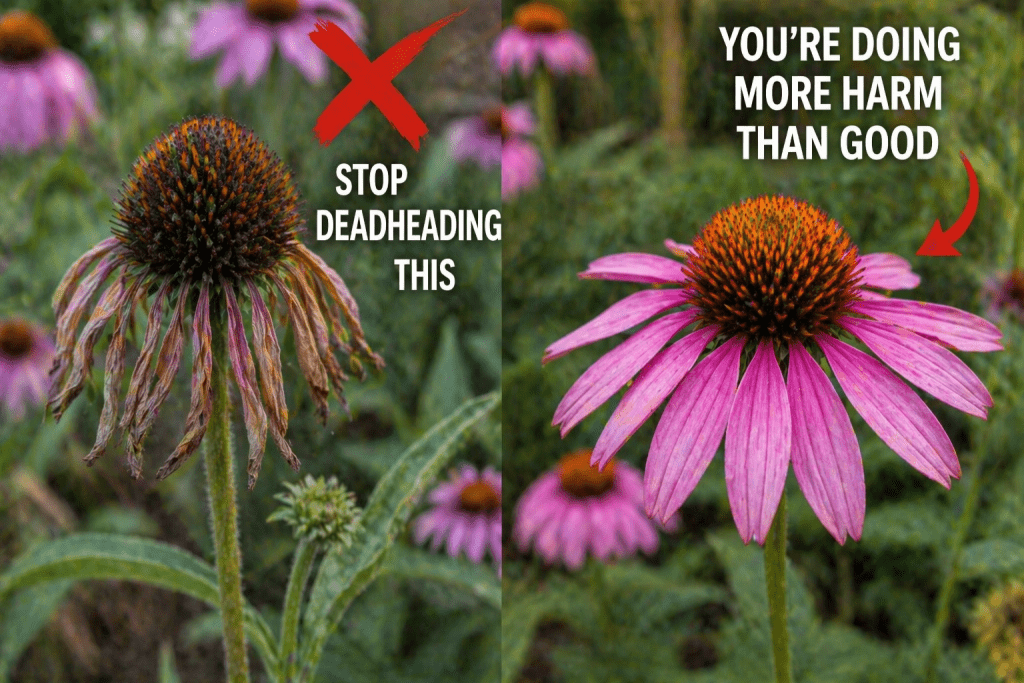
The wildlife case against autumn deadheading tends to change people’s minds more than any other argument. Coneflowers, black-eyed Susans, rudbeckia, and sunflower seed heads provide birds with a legitimate food source during the months when other options are limited. Goldfinches pick at coneflower seeds with an almost contemplative focus on chilly mornings. By chopping off those heads in late August, you remove a bird’s reliance on you. In November, the garden with the fewest visitors appears to be well-maintained.
Hydrangeas deserve special attention since the error is so frequent and the result is so delayed that most gardeners never catch it. The brown, papery blooms do appear exhausted, so it makes sense to remove the dried flower heads in the fall. On varieties that bloom on old wood, such as many of the most famous mophead varieties, those dried heads protect the delicate buds just beneath them from early frost damage. If the covering is removed in September, the buds that would have developed into flowers the following summer can be killed by a cold snap in October. After four months, the plant produces very little after appearing healthy throughout the spring.
| Plant | Deadhead? | Reason to Leave |
| Coneflower (Echinacea) | Early season only; stop by late summer | Seed heads feed goldfinches through winter; self-seeds for new plants |
| Black-Eyed Susan (Rudbeckia) | Not in autumn | Critical winter bird food; adds structural interest to winter garden |
| Foxglove (Digitalis) | Not while blooming; only after spike finishes | Biennial — cutting prevents self-seeding; no seeds = no return next year |
| Sedum (Stonecrop) | Rarely needed | Self-sufficient; seed heads attractive through winter; doesn’t rebloom |
| Hydrangea | Not in autumn | Dead flower heads protect tender new buds from frost damage |
| Sunflower (single-stem varieties) | No | Will not rebloom after head is removed; seeds feed birds and squirrels |
| Impatiens | Never needed | Self-cleaning; spent blooms fall naturally; rebuds without intervention |
| Hollyhock | Not early | Biennial; cutting too soon prevents seed pods from forming and returning |
| Forget-Me-Not | Not during bloom | Opens in succession; cutting is tedious and unnecessary mid-season |
| Viburnum | No | Produces stunning clustered berries after flowering for bird habitat |
| Blanket Flower / Lantana / Astilbe | Stop by late summer | Late deadheading triggers new growth vulnerable to early frost |
| Key Principle | Timing matters as much as the decision itself | Season, plant type, and wildlife value all factor into the choice |
| Reference | RHS – Deadheading Flowers |
In addition, there is the general issue of timing in late summer. In order to produce more seed, deadheading encourages new growth, which tells a plant that it still has work to do. In the spring and early summer, that’s exactly what you want. Late August and early September are different. New growth appears fragile and vulnerable as nighttime temperatures drop, and even a mild early frost can damage it. The cold prevents delicate perennials from hardening off, such as blanket flower, lantana, astilbe, and hibiscus, which are forced into late growth by late-season deadheading.
The instinct to deadhead is hard not to sympathize with. Compared to other gardening tasks, such as watching and waiting, building compost, and amending soil, it results in an immediate, noticeable improvement in the garden’s appearance. In October, the most attractive garden may not be the most productive. All of these things require tolerance for imperfection, which, it turns out, has been relied upon by the other garden inhabitants all along, including allowing foxgloves to seed freely into the border, letting a few coneflower stalks stand through the winter, and resisting the urge to trim the hydrangeas before the first hard frost.
As a Senior Editor at Mini Greenhouse Kits, Hannah Kinsley is a passionate supporter of small-space gardening and urban gardening. Hannah, who is currently majoring in Environmental Policy through the University of Michigan’s Environmental Studies program, infuses her writing with a solid academic foundation and a sincere enthusiasm for the environment. You can find her playing soccer or exploring the city’s green areas with friends when she’s not researching the newest trends in city gardening or creating content for minigreenhousekits.com.