
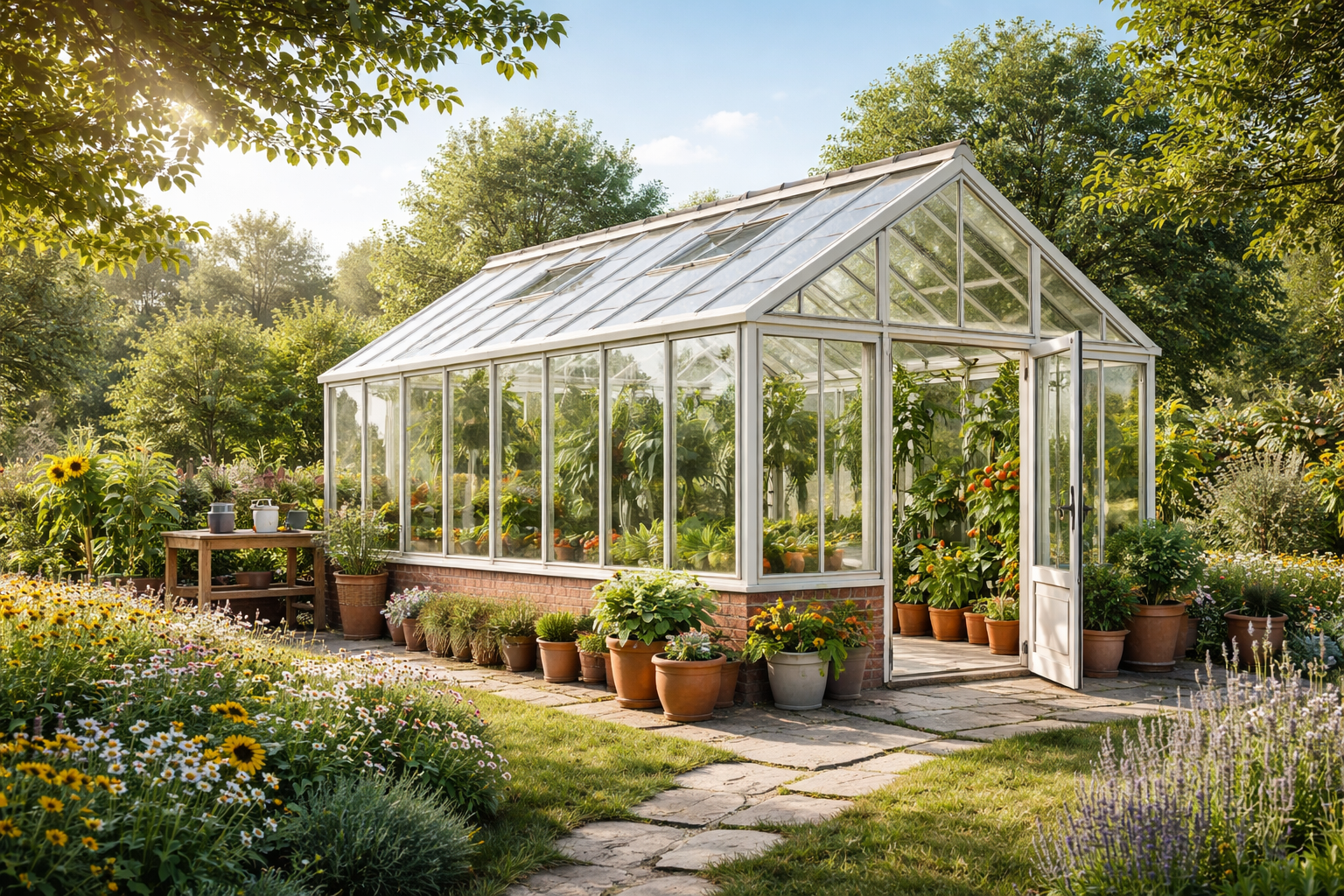
Backyards, narrow patios, and even sides of houses are seeing a quiet shift. The sunlight hits this spot just right for a few hours each day. Small greenhouses are popping up in places that don’t look like farms at all. An area of a garden. Strips of concrete. There are times when it is just a wall with a lean-to structure attached. Yet something surprisingly productive happens inside these modest frames.
It’s easy to assume that more space means more food. The bigger the structure, the better the results. This assumption seems outdated when you walk past a compact greenhouse, especially one with shelves, hanging baskets, and narrow walkways. The heavy lifting here is being done by efficiency, not size. Plants are stacked, trained upward, and rotated rapidly. There is no waste.
| Category | Details |
|---|---|
| Typical Size | 6×8 ft to 10×12 ft (small-scale backyard use) |
| Ideal Users | Urban gardeners, homeowners, hobby growers |
| Core Advantage | Space efficiency and climate control |
| Popular Methods | Vertical gardening, succession planting |
| Common Crops | Leafy greens, herbs, tomatoes, strawberries |
| Key Benefit | Year-round growing in limited space |
| Modern Trend | Compact, modular greenhouse systems |
| Productivity Insight | High yield per square meter possible |
| Reference Source | https://en.wikipedia.org/wiki/Greenhouse |
Almost overlapping lettuce rows grow low to the ground in one small backyard setup, barely eight by ten feet. Herbs spill from the shelves above them, catching light that would otherwise go unused. Their vines twist with quiet determination as they climb thin strings toward the roof. Everything feels deliberate. Every inch is taken into account. There was no gap left unfilled. Instead of traditional gardening, it’s more like a constantly changing system.
The idea isn’t original, but it’s gaining traction. Intentional choices are becoming more common among small greenhouses, which are often thought of as entry-level or temporary solutions. Many gardeners realize that controlling a smaller environment isn’t just easier, it’s also more effective. The temperature stabilizes faster. The ventilation system responds more quickly. When problems arise, they are spotted early. There is less chaos and more control. Although it’s still unclear whether this approach can fully replace larger-scale growth, expectations are clearly shifting.
Crop selection plays a part in the appeal. People grow differently because they realize not everything belongs in a small greenhouse. When harvested correctly, leafy greens, for instance, can produce continuously in tight spaces. Herbs tucked into corners or hung overhead increase yield without taking up space. Vertically grown strawberries create this layered effect—fruit appears almost unexpectedly at eye level. This is a different way to think about gardening, less horizontal, more vertical, more dynamic.
It’s also practical, almost economical. Smaller spaces require fewer materials, less heating, and less maintenance. Sunlight or supplemental heat is used more efficiently. Scaling up is often discussed by investors in large agricultural systems, but here the logic seems reversed. The gains come from scaling down, refining the space, and tightening the system. The growing of small greenhouses may be more in line with urban living realities, where space is limited and demand for fresh food keeps growing.
Then there’s the rhythm. Larger gardens may have empty patches between seasons that need to be replanted. Downtime is unacceptable in a small greenhouse. As soon as one crop is finished, another follows. Radishes are out, spinach is in. Herbs moved forward, spinach harvested. Constant turnover creates a steady flow of produce, small in quantity but consistent over time. In watching this cycle repeat, it seems productivity is no longer measured in bulk harvests, but in continuity.
There are, however, some limitations to it. Due to space constraints, choices must be made. There isn’t a place for every plant. There are some crops that simply require more space than a compact structure can provide. The risk of overcrowding, pushing the system too far, reducing airflow, and inviting disease is also present. If attention slips, even the most carefully arranged greenhouse can become unbalanced. The setup may look efficient, but it requires ongoing awareness that larger, more forgiving spaces might not.
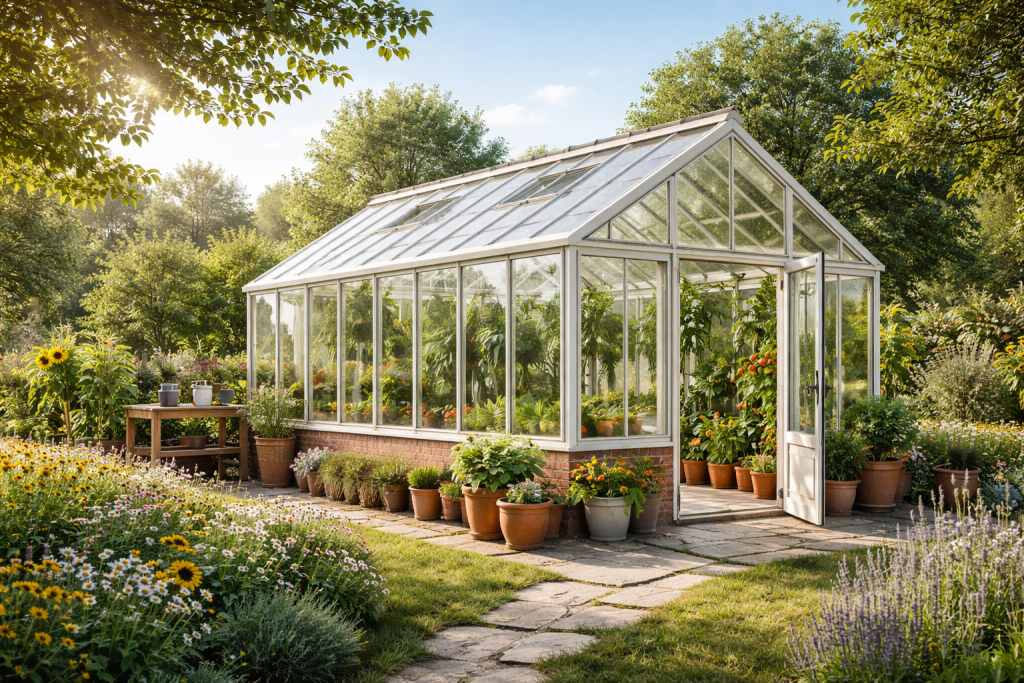
Despite this, the appeal remains strong. This is especially true now. There is a renewed interest in growing at least part of what ends up on the table as food prices fluctuate and supply chains are uncertain. The small greenhouses that sit quietly in backyards seem to offer a middle ground—not full self-sufficiency, but something closer than most people think. Greens are always available. Herbs are readily available. Just a few steps from the kitchen, tomatoes are ripening.
It’s hard not to notice how personal these spaces are. In contrast to larger operations, where production becomes abstract, a small greenhouse remains close to ordinary life. Every morning, you see it. Every day, you adjust it. As time goes on, it becomes less of a project and more of a routine. There’s a subtle satisfaction in that, though it’s difficult to describe. Perhaps it’s the scale. Perhaps it’s a matter of control. Maybe it’s just the realization that a small space can accomplish far more than expected when used properly.
It is unclear whether this trend will continue to grow or if it will become a niche approach. However, small greenhouses are quietly challenging a long-held assumption. Despite what many believed, size isn’t the limiting factor.