A person stands in a garden center every spring with a bag of seed potatoes in one hand and a rough mental calculation in the other. The cost of potatoes is low. You might pay four or five dollars for a ten-pound bag at the grocery store. Instead of excavating a section of your backyard and spending a Saturday hilling and watering, why not grab a sack from the produce aisle?
It’s a legitimate question. It goes beyond the upbeat gardening blog promises and is more nuanced than either side usually acknowledges.
When it comes to actual numbers, most discussions about growing your own potatoes fall apart. A few pounds of certified seed potatoes will cost you between $10 and $15, depending on the variety and source. Investing in a seed potato can yield five to eight large tubers and occasionally ten or twelve smaller ones. With good soil and regular watering, a ten-foot row can produce six to fifteen pounds. In addition, the early “new” potato varieties, the tiny, waxy ones that cost significantly more per pound at upscale grocers, are exactly the ones that are worth growing yourself.
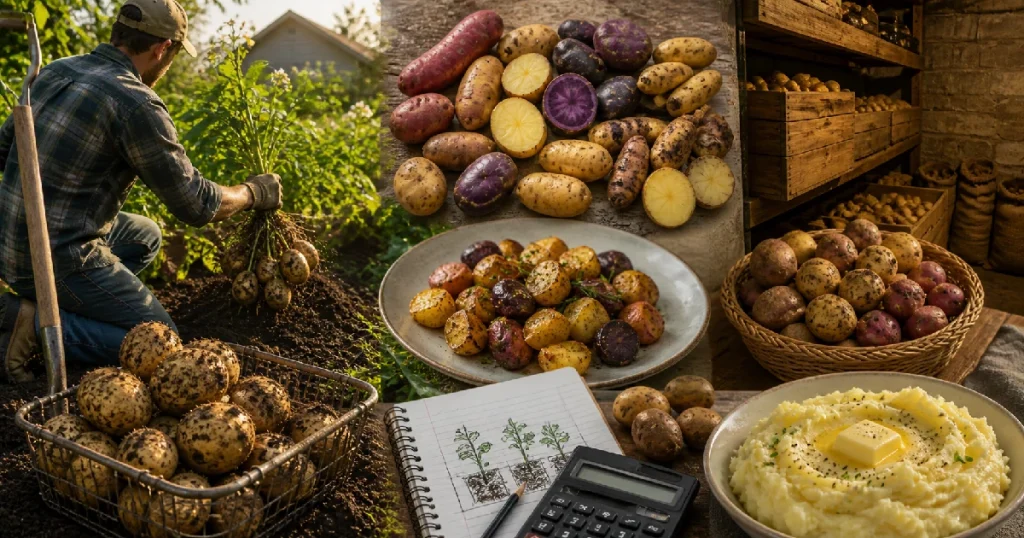
It depends on what you’re really trying to achieve, however, how the calculation is done changes. In spite of the financial savings, serious home gardeners believe they aren’t the main objective. Taste is more difficult to quantify, which is what makes everything unique. Potatoes bought at a supermarket are usually kept at temperatures close to freezing for weeks or even months before they are placed on the shelf. While cold storage preserves their appearance, it alters their flavor and texture irreversibly. Potatoes harvested from your garden that afternoon, boiled, and mashed with butter taste different. This is noteworthy. There is no doubt in the minds of those who have done both that this is true.
You should also consider what you can buy versus what you can grow. A richly flavored, almost nutty variety of German Butterball with a naturally creamy texture is rarely found in American grocery stores. Several heritage fingerlings and dry-fleshed varieties that roast beautifully and retain their structure in a soup aren’t either. Grocery stores carry what survives industrial shipping and storage. The pursuit of something closer to actual flavor by home growers is a subtle kind of culinary freedom that isn’t discussed enough outside of food-obsessed circles.
The cultivation of your own potatoes may not be feasible in certain circumstances, however. If your objective is solely financial-minimizing cost per pound, nothing more-and you have access to bulk discounts at a local farm stand or warehouse store, the labor-intensive tasks of digging, hilling, watering, curing, and storing may not be worth your time. That’s not a failure in gardening. A sincere evaluation of priorities is all it is. Observing this on gardening forums, people who are most satisfied with growing potatoes at home are usually those who desire something they cannot get at the market, such as a particular variety, a sense of knowing exactly what touched their food, or even just the satisfaction of eating something that they grew.
When it comes to planting, some factors are more important than others. Certified seed potatoes are essential since grocery store potatoes are frequently treated with sprout inhibitors and can harbor diseases for years. Also, it’s important to plant early because some varieties reward patience and the newer growth has a longer growing season. With regular watering, about one to two inches per week, you can avoid the hollow hearts and cracked skin that make harvests frustrating. In addition, hilling increases the number of tubers produced by the plants as they grow, as soil accumulates around the stems. Skipping it is a common beginner error, even though it’s not difficult.
The most underappreciated reason for growing your own potatoes has more to do with food supply chains than taste or economics. In a cool, dark corner, potatoes can be stored for up to six months, making them one of the most tolerant crops a home gardener can grow. Ten years ago, people might not have valued that quiet resilience as much as they do today. This shift is almost perfect for potatoes. It’s possible that food security has spread beyond rural homesteaders and survivalist communities into more typical households.
| Category | Details |
| Topic | Home Potato Growing — Cost, Yield & Value Analysis |
| Best Crop For | Food security, taste, variety access, self-sufficiency |
| Seed Potato Cost | $10–$15 for a few pounds of certified seed |
| Expected Yield | 6–15 lbs per 10-foot row; 5–8 potatoes per seed |
| Family Annual Need | 100–150 lbs (family of four) |
| Space Required | 50–100 sq ft for a meaningful harvest |
| Storage Life | 3–6 months in cool, dark, humid conditions |
| Top Varieties | German Butterball, Russet, Yukon Gold |
| Key Skill Level | Beginner-friendly |
Is it worthwhile to grow your own potatoes? It is likely that the majority of readers will answer in the affirmative. Neither because it is the most efficient use of garden space nor because it saves a great deal of money. There is, however, a version of this that creates something that is truly impossible to purchase, provides food for a household throughout the winter without requiring a single grocery store trip, and initially costs less than a nice restaurant meal. The combination is more difficult to ignore than it appears on paper.
As a Senior Editor at Mini Greenhouse Kits, Hannah Kinsley is a passionate supporter of small-space gardening and urban gardening. Hannah, who is currently majoring in Environmental Policy through the University of Michigan’s Environmental Studies program, infuses her writing with a solid academic foundation and a sincere enthusiasm for the environment. You can find her playing soccer or exploring the city’s green areas with friends when she’s not researching the newest trends in city gardening or creating content for minigreenhousekits.com.