

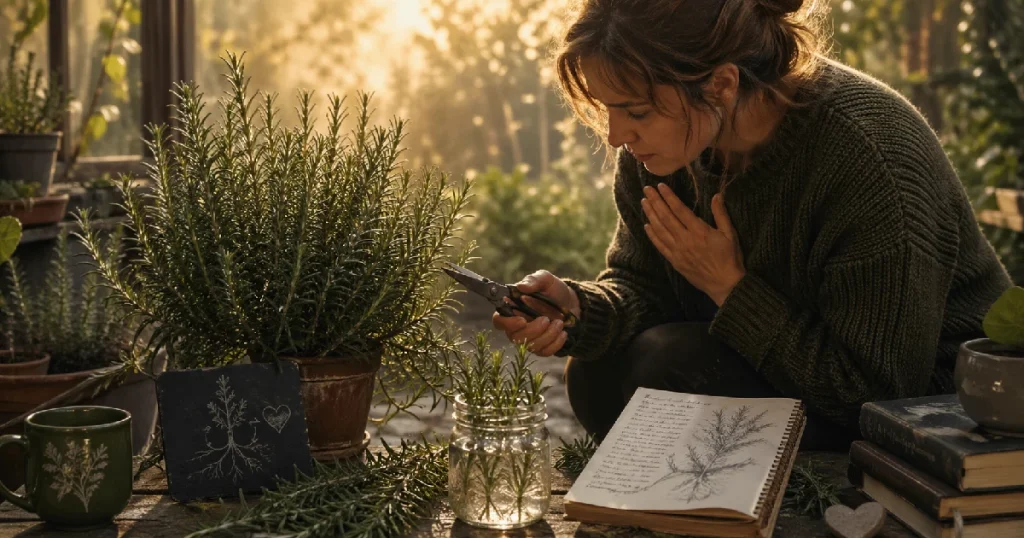
Last Tuesday, while I was taking a pair of kitchen shears to a particularly overgrown rosemary bush, I felt a sharp, sudden pang of something that felt suspiciously like guilt. It was a crisp morning, the kind where the air feels thin and metallic, and every snip of the blades sounded like a small explosion in the quiet of the yard. As the woody stems fell to the dirt, I found myself staring at the remaining stump and wondering if the plant was, in its own silent, chemical way, screaming at me. It is a thought that haunts almost everyone who spends enough time leaning over a garden bed or tending to a lonely fern on a windowsill. We want to believe our greenery loves us back, but that desire carries a heavy shadow. If they can love, if they can perceive, then the inevitable question follows. Do plants feel pain?
We are desperate to anthropomorphize everything we touch. We give our cars names and apologize to the vacuum cleaner when we bump it into the baseboard. But with plants, the connection is visceral because they are alive, they grow, and they die. When we see a leaf curl up in the heat or a vine reach desperately for a sliver of sun, we see a reflection of our own needs. Yet, the scientific reality is a strange, alien landscape that doesn’t easily translate into human emotion. We assume pain requires a brain, a central nervous system, and a face to contort in agony. Plants have none of those things. They are decentralised creatures, sprawling and fragmented.

The silent electrical storm and the question of consciousness
If you spend an afternoon reading the latest botanical papers, you start to realize that while they might not have a brain in the way we define it, they are far from being passive furniture. I remember coming across a study about how certain greens release a burst of calcium waves when they are bitten by a caterpillar. It is an electrical signal that travels through the entire organism in minutes, triggering a chemical defense system. It looks remarkably like a nervous system in action. This brings us to the murky water of whether do plants have consciousness or if they are simply very sophisticated biological machines.
I tend to believe that our definition of consciousness is far too narrow, built entirely around our own high-speed, electrical experience of the world. A tree might take eighty years to have a single thought, or perhaps its thoughts are spread across the entire forest floor through the fungal networks that connect its roots to its neighbors. When we ask can plants feel pain, we are really asking if there is someone home behind the bark. I have seen an old oak in a storm that looked more aware of its surroundings than half the people I pass on the street. It braced itself, shifted its weight, and seemed to anticipate the wind.
There is a specific kind of arrogance in assuming that because a creature doesn’t scream in a frequency we can hear, it isn’t experiencing a version of reality. We know now that they communicate. They send out distress signals into the air, warning their cousins that a predator is nearby. Is that a conscious choice or an automatic reflex? I am not sure it matters. The result is the same. The forest reacts. The garden prepares.
Why we wonder if it is cruel to trim plants in the name of beauty
This brings me back to my rosemary bush and the shears. If we accept that there is a deep, responsive intelligence at work, then we have to reconcile that with the violence of gardening. People often ask if it is cruel to trim plants or if the act of pruning is a betrayal of the care we provide. I have spent hours debating this with myself while standing over a hedge. On one hand, pruning often stimulates growth. It removes the dead weight and allows the plant to flourish in ways it couldn’t on its own. It is a partnership, a brutal sort of love that requires us to play the role of both protector and predator.
However, we cannot ignore the fact that do plants feel stress when their limbs are severed. You can see it in the way they seal their wounds and divert resources away from the injury. They don’t just sit there. They mobilize. They fight to stay upright. I have noticed that my indoor Ficus gets temperamental if I move it even three feet to the left. It drops its leaves in a fit of botanical pique that feels very much like a stress response. If we admit that they can be stressed, we are only one small step away from admitting they might suffer.
I watched a video once of a sensitive plant, the Mimosa pudica, and how it folds its leaves inward at the slightest touch. It is an incredible thing to witness. You have to ask yourself, do plants react to being touched because they are afraid, or because they have a mechanical trigger that protects them? The distinction is fine, almost invisible. My personal bias is that they are much more aware of our presence than we give them credit for. I find myself stroking the leaves of my Philodendron as I walk past, not because I think it needs the affection, but because I feel a strange obligation to acknowledge it as a fellow traveler in the room.
The problem with searching for a definitive answer is that we are trying to use a human yardstick to measure a green soul. Pain is an evolutionary tool designed to move us away from danger. Since a carrot cannot run away from a knife, what use would it have for pain? Some argue this makes the feeling unnecessary. Others suggest that the lack of an escape route makes the experience even more profound. It is an open-ended mystery that science keeps poking at without ever quite cracking. We find new receptors, new chemical pathways, and new ways that plants listen to the world, but the interior life of a dandelion remains a locked room.
I like the uncertainty. I like that when I walk into the woods, I am surrounded by billions of lives that are completely indifferent to my logic. There is a humility in not knowing. It forces a certain level of respect. If I think there is even a remote possibility that my garden feels the bite of the cold or the sting of the blade, I move a little more carefully. I wait for the right season. I sharpen my tools to ensure the cut is as clean and quick as possible.
The garden is a place of constant birth and constant quiet destruction. We compost the old to feed the new, and we pull the weeds to save the roses. It is a cycle that doesn’t care about our ethics. But as humans, we are cursed with empathy. We look at a parched leaf and feel a dry tickle in our own throats. We look at a fallen tree and feel a heaviness in our chests. Perhaps the question of whether do plants feel pain says more about us than it does about them. It shows that we are finally beginning to see ourselves as part of the tapestry rather than the masters of it.
I ended up finishing the rosemary that morning. I tucked the cuttings into a jar of water and watched them for days, waiting for the little white nubs of roots to appear. They did, eventually. The plant didn’t die; it multiplied. It took the trauma of the shears and turned it into a new beginning. That resilience is perhaps the most impressive thing about them. They don’t dwell. They don’t hold grudges. They just continue the relentless, silent work of reaching upward. Whether they are feeling every inch of that journey or simply following a code written in their cells, the beauty remains the same. I still apologize to the rosemary sometimes, though. Just in case.
As a Senior Editor at Mini Greenhouse Kits, Hannah Kinsley is a passionate supporter of small-space gardening and urban gardening. Hannah, who is currently majoring in Environmental Policy through the University of Michigan’s Environmental Studies program, infuses her writing with a solid academic foundation and a sincere enthusiasm for the environment. You can find her playing soccer or exploring the city’s green areas with friends when she’s not researching the newest trends in city gardening or creating content for minigreenhousekits.com.