
When you stand in the middle of a residential street in Phoenix or Sacramento in late July, you’re almost certain to see the same thing: sprinkler heads shooting broad arcs of water across lawns in the afternoon, much of which evaporates within minutes on driveways, sidewalks, and hot pavement. Because it’s a familiar sight, no one gave it much thought for a long time. It seemed more work than it was worth to rethink how a lawn is watered, water was cheap, and habits had formed.
The computation is evolving. It’s fast. WaterSense estimates that about half of all outdoor water use in the US is wasted due to overwatering, improper timing, and misdirected sprinkler heads. The typical American home uses more water outside in July than it does indoors. In light of steadily rising utility rates and a series of drought years that have forced some western municipalities to outright restrict outdoor watering, these figures are finally bringing homeowners’ attention to a technology that commercial growers have quietly relied upon for decades.
Drip irrigation is not a new concept. In the middle of the 1800s, agricultural experiments in Germany used a network of low-pressure tubes and emitters to deliver water slowly and directly to plants’ roots. Israel improved its water supply significantly during the second half of the 20th century, primarily due to necessity in a country where water scarcity is a permanent issue rather than a seasonal one. A combination of drip irrigation, soil moisture sensors, and weather-connected scheduling systems can now transform a relatively straightforward watering method into one that almost takes care of itself.
Since drip systems are so simple, it’s surprising more home gardeners haven’t switched to them sooner. Water is released from emitters at the base of each plant at a predetermined rate, usually expressed in gallons per hour. No mist, spray, or extensive coverage is present. Roots need a steady, gradual supply of moisture. There is less evaporation, less runoff, fewer weeds in the spaces between plants, and a lower risk of fungal disease because the foliage remains dry. A well-designed sprinkler system can surpass 95 percent water efficiency in stark contrast to conventional sprinklers, which operate between 50 and 70 percent.
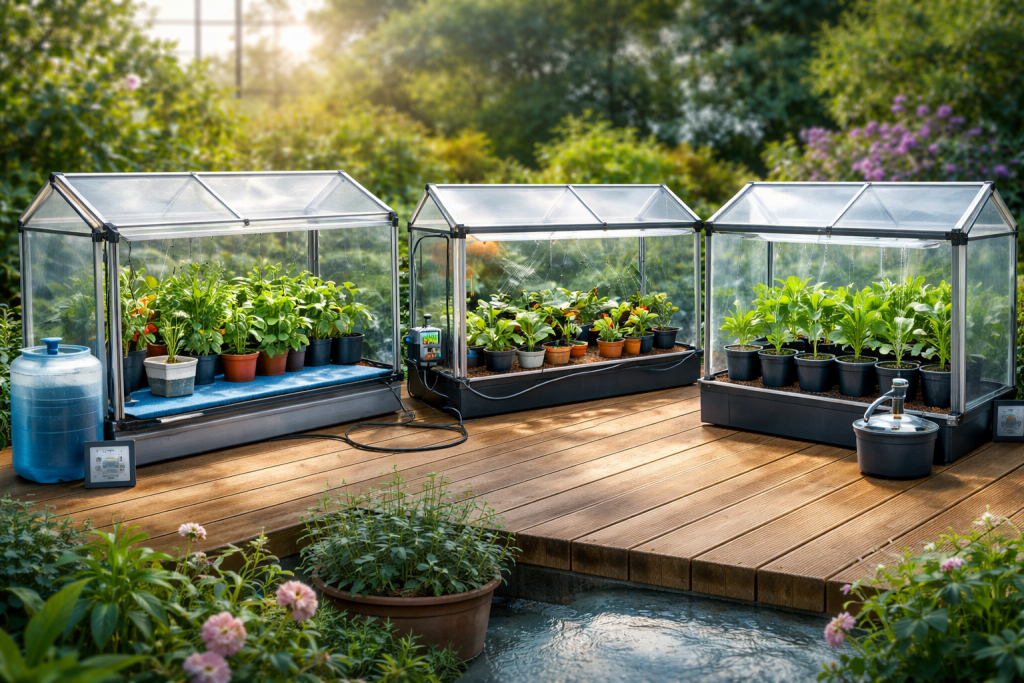
Water bill savings become tangible instead of just theoretical when smart controls are integrated. Weather-based irrigation controllers, or evapotranspiration controllers, use real-time temperature, humidity, rainfall, and forecast data to automatically adjust watering schedules. If it rained yesterday, today’s cycle is bypassed. When a heat spike is imminent, it boosts output. A good example of a controller of this type making its way into the home market is the Rain Bird ARC Series, which connects to home WiFi, can be controlled via a smartphone app, and can set distinct watering schedules for different areas of the yard. In hindsight, it seems almost obvious, but getting homeowners to install one has been a challenge.
Savings are tangible. In a dry summer, a mid-sized suburban lawn’s water bill can increase by several hundred dollars if a standard sprinkler system is used. Smart systems with drip integration can reduce outdoor water use by up to 50% in water-scarce areas with well-optimized setups. Arizona homeowners who implemented smart irrigation through a government rebate program reduced water use by 45% over three years. An Indian farmer who combined drip systems with smart sensor controls reported a 20 percent increase in tomato crop yield and a 60 percent decrease in water use. Efficiency increases are not negligible. As soon as people see these numbers, adoption tends to increase.
It is also important to consider the soil, although it is rarely discussed in the same context as water bills. When plants receive regular, targeted watering via a drip system, their roots grow deeper into the ground and follow the moisture rather than remaining shallow. Having deeper roots means more drought-resistant plants, improved mineral absorption, and a garden that can endure hot, dry spells that shallow-rooted, sprinkler-dependent lawns tend to have trouble with. Drip-irrigated beds benefit from mulching, which reduces evaporation even more, regulates soil temperature, and reduces the need for additional watering by about a quarter.
Watering timing is one of those details that a smart system takes care of automatically, and it matters more than most homeowners realize. Watering is most effective between four and ten in the morning, when the temperature is low, there is little wind, and the sun has not yet begun to dehydrate the soil. Watering in the evening leaves the foliage and surface soil damp overnight, which is conducive to fungal growth. Due to the fact that programmable controllers that default to early morning scheduling eliminate the need to remember anything, adoption tends to accelerate among homeowners who have dealt with unexplained plant disease or unusually high summer water bills.
Residential irrigation’s future direction can be best predicted by the market figures. As a result of residential adoption, agricultural investment, and government water conservation mandates, the global smart irrigation market is expected to grow at an annual compound rate of 11% to reach $3 billion by 2029, which was estimated at $1.8 billion in 2024. Previously, businesses focused almost exclusively on commercial and agricultural clients are now developing consumer-facing products that integrate smartphones and allow for DIY installation. Barriers to entry are being removed. Most of the technology is already available.
Observing all of this, it is difficult to ignore the fact that simple economics, rather than environmental ideals, are driving this change. Water prices are rising in most large urban markets. Drought restrictions are becoming more stringent in the West and spreading into previously unaffected areas. All it takes is the initial choice to break a habit in order to sell a drip irrigation system that produces healthier plants and pays for itself in one season. At noon in July, sprinklers are still soaking the sidewalks. Compared to earlier times, they are notably fewer now.