

There is something special about the quiet of a garden in the early morning. It’s cool underfoot, the light is dim, and whatever’s growing happens quietly. The first thing that doesn’t feel intimidating to those experiencing severe loss is silence. In addition to the phone calls, the well-intentioned guests, and the death paperwork, everything else comes with obligation and noise. In the end, the garden just sits there, requesting nothing more than water.
People have grown things during times of grief as long as there have been gardens. It works in subtle, steady ways, and therapists, horticulturists, and grief counselors are now paying more attention to why. Gardening lowers cortisol levels. There is less cyclical, repetitive thinking that makes loss seem inevitable. Instead of an abstract or self-help reason, it gives you a concrete reason to get up – something will wilt if it isn’t watered today. Grieving minds need that degree of specificity from time to time.
A writer and gardener, Lulah Ellender, wrote in The Guardian that she felt her mother in every petal and leaf; even six years after her mother’s death, their garden remained their strongest bond. It’s not unusual for that to happen. Instead of diverting attention from loss, grief gardening provides a place for loss to reside. Planting something with purpose, such as a rose your loved one would have chosen or rosemary for remembrance, creates a living presence rather than a static memorial. Gardening changes with the seasons. There is a need to address it. Despite appearing finished in November, it returns in spring.

Physical labor and its effects on the body
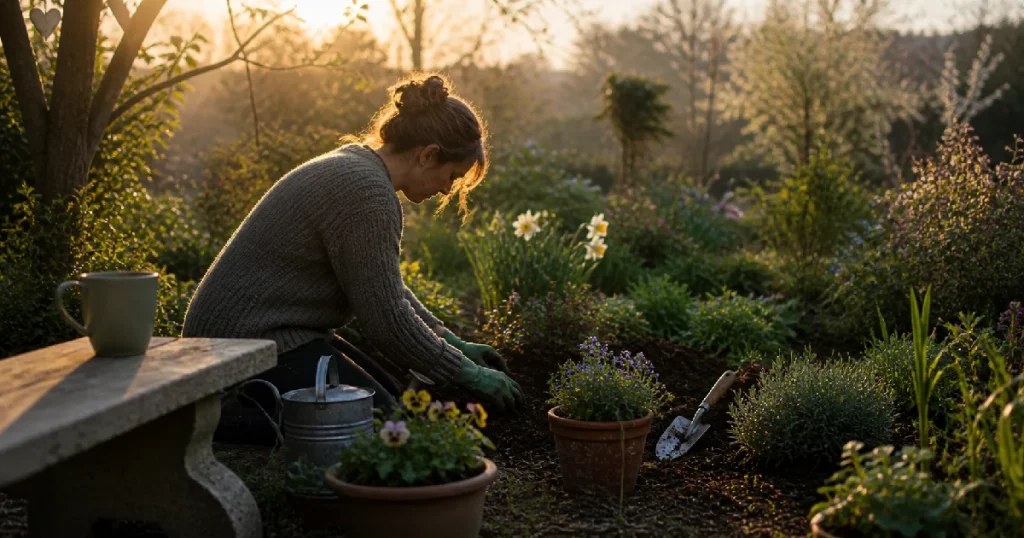
It’s important to be honest about this less poetic aspect as well. The body is heavily burdened by grief. Chest is where it is located. This causes irregular sleep and inconsistent appetites due to a restless energy that has nowhere to go. A remarkable amount of energy is absorbed by gardening. There is a lot of labor involved in digging. At two in the afternoon, when there’s nothing to do but feel grief, clearing an overgrown border demands persistent effort that leaves less room for the worst of grief.
‘Rage weeding’ describes clearing a patch of ground with an intensity that would seem out of proportion in any other setting. The garden tolerates it. In some non-metaphorical sense, the physical effort results in something tangible, such as a tidy edge, a cleared bed, or a pile of pulled roots that symbolize something released. No soil can judge the rate of labor or the tears that occasionally fall into it. That lack of judgment has a greater value than you might think. As a result, the garden offers company without any of the social pressure that makes human company so taxing in the first year-the company of growing things, birds, and insect life. It is one of the few experiences that makes people feel both watched and totally alone at the same time.
Nothing else can teach us what a garden can
In place of having it explained to them, grieving people often find a metaphor in gardening. Regrowth is possible when things are cut back. You remove the things that are crowding the roots. When you don’t know what else to do, you plant something in the ground that doesn’t seem promising and water it without knowing what will happen. Seeds sprout in the dark. For months underground, bulbs appear completely dormant before emerging in February. Instead of being comforting, the most fundamental rhythms in the garden indicate that things buried are not always gone.
Whether this is comfort or simply the mind discovering patterns it needs is unknown. It’s most likely both. As a garden recovers from a harsh winter, seemingly finished plants resurface with incredible vigor, the internal landscape is altered in unexpected ways. Loss, however, is not usually dismissed by those who have grown through it. Grief itself demands patience, repetition, and sensitivity to circumstances beyond your control. It can’t be rushed.
As a Senior Editor at Mini Greenhouse Kits, Hannah Kinsley is a passionate supporter of small-space gardening and urban gardening. Hannah, who is currently majoring in Environmental Policy through the University of Michigan’s Environmental Studies program, infuses her writing with a solid academic foundation and a sincere enthusiasm for the environment. You can find her playing soccer or exploring the city’s green areas with friends when she’s not researching the newest trends in city gardening or creating content for minigreenhousekits.com.