
A certain January morning, when you go outside to inspect the greenhouse, the zip on the door is stiff, the polycarbonate panels have turned white from condensation frozen on the outside, and the thermometer, if one remembers to put one in, displays a number that makes you wince. What separates gardeners who maintain their plants throughout the winter from those who replace them every spring and attribute losses to bad luck is what happened while you slept.
Mini greenhouses offer the promise of frost protection. To some extent, they do fulfill it. By trapping solar heat and minimizing air exchange with the outside, a small greenhouse will maintain an overnight temperature that is between 2°C and 5°C warmer than the surrounding air. In mild winters when overnight lows are only slightly below zero, that margin is often sufficient. In contrast, a cold snap occurs when temperatures fall to -5°C or -8°C for several nights in a row. As the structure alone no longer works, plants that were perfectly comfortable a week ago begin to exhibit bruised, translucent damage that indicates frozen cell walls. There is no way to reverse that harm.
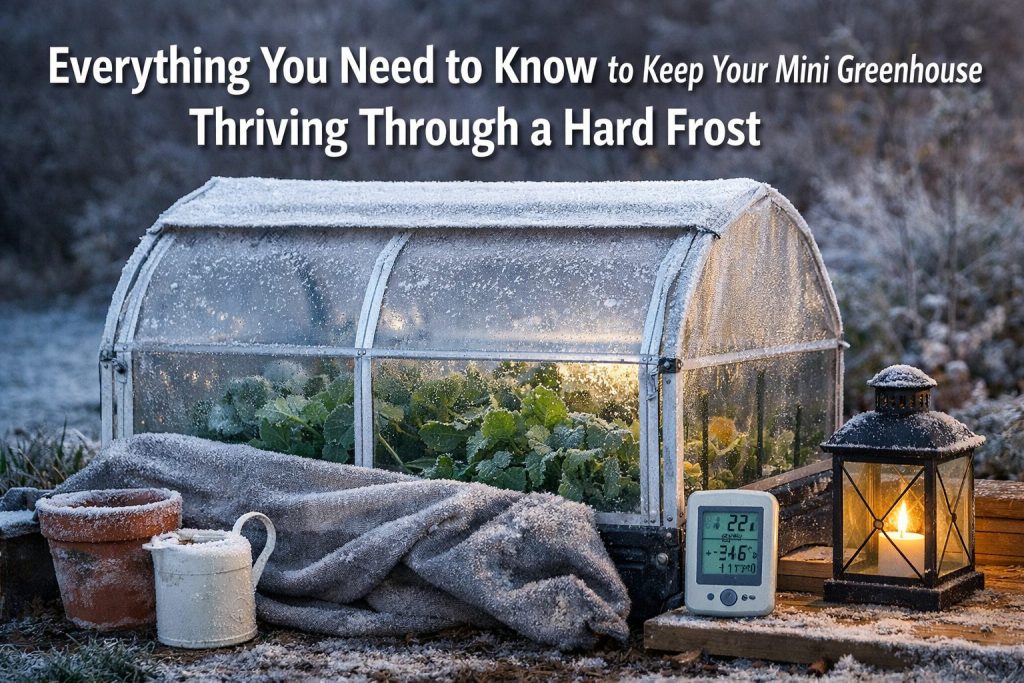
Purchasing a heater is the most common mistake made over insulation, which is the first line of defense. Although it’s a less exciting purchase, it’s more economical and efficient than constantly replacing it. Using UV-stabilized horticultural bubble wrap as opposed to regular packing wrap, which deteriorates under light, can reduce heat loss by 30 to 50 percent. Bubbles produce a layer of trapped air that is one of the best insulators available. When cold air enters and warm air exits, such as gaps around doors, joints in PVC frames, or places where zips don’t seal completely, weather stripping or waterproof tape can significantly reduce overnight minimums. In addition to cold ground, pots placed directly on concrete or bare earth lose heat through their bases at a rate that leaves cannot match. Under the trays, a wooden pallet, polystyrene sheet, or even a few old slates redirect that loss.
Heating is required when hard frost is predicted and the insulated structure cannot maintain a safe temperature on its own. In terms of price, ease of use, and security, the options vary greatly. An electric fan heater, even a small 200- to 500-watt model with an integrated thermostat, is the most dependable solution for a small greenhouse with power. The thermostat ensures that it only runs when necessary, keeping operating costs proportional to actual conditions rather than continuously running through mild nights. By circulating warm air, the fan element eliminates cold pockets near the floor and overheated areas near the element instead of concentrating them. For buildings without electricity, paraffin heaters have a long history of success in UK growing circles. Paraffin units can keep a small greenhouse frost-free down to about -6°C outside, but water vapor is released, necessitating careful ventilation management to avoid mold growth. Over the candle, the terracotta pot appears improvised, and it may be, but the clay mass absorbs heat gradually and radiates it back over several hours, providing a more gentle and long-lasting heat than an open flame.
The most significant change in plant care during hard frosts may seem counterintuitive to anyone accustomed to summer growing practices. In the winter, overwatering kills more plants than the cold. Because roots in wet, cold compost suffocate and rot in ways that resemble frost damage, gardeners often add more heat than water. You can avoid most frost-tender plants from dying by checking the compost top inch before watering and only watering in the morning so excess moisture evaporates before temperatures drop again at night by checking the compost top inch before watering. By removing dead and yellowing leaves weekly, Botrytis is prevented from colonizing the decomposing material it prefers. It may seem like a cleaning task, but it actually prevents disease.
Despite the garden outside dropping to -7°C overnight, the building maintained a temperature of 3°C on a February morning when checking the max-min thermometer. As a result, the heater was turned on when necessary, the insulation is working properly, and the plants on the shelves survived yet another challenging night. Most new greenhouse owners underestimate the amount of planning required to get there. Once the fundamentals are grasped, it is relatively easy and predictable.