
Eating something you grew yourself gives you a certain sense of satisfaction. Gardeners can relate to the feeling of pulling a tomato from the vine on a warm afternoon, still warm from the sun, and knowing exactly where it came from. Aquaponics multiplies this emotion in ways that are hard to describe until you’ve seen one up close. Fish and plants grow together and feed one another in a cycle that, once it is in equilibrium, hardly needs outside assistance.
Fundamentally, the concept is outdated. Ancient civilizations in Asia and Central America discovered centuries ago that fish and plants could be raised together in ways that were beneficial to both. Increasingly, regular homeowners are installing these systems in their backyards, balconies, and spare rooms, often for less money than they would spend on outdoor furniture.
Aquaponics is based on a simple biological principle. Waste is generated by fish. As this waste decomposes, it produces ammonia, which is then converted into nitrates by beneficial bacteria. Plants absorb these nitrates as nutrients. After being purified by the plants, the water returns to the fish. The closed loop exhibits exceptional stability once it has been established. Fish feed the plants. Plants purify water. There is very little waste, and very little needs to be added. The system uses about a tenth as much water as a traditional garden with the same level of productivity in an era of water scarcity.
Aquaponics could be justified solely by its water efficiency. People are often interrupted in the middle of a conversation by production numbers. Aquaponic systems can produce ten times more vegetables per square foot than conventional soil gardening when properly maintained. The plants grow more rapidly since their nutrient supply is steady and readily available. There is no waiting for soil biology to do its work. As the roots sit in a medium flooded with precisely what they need at precisely the right time, the growth rate reflects that. The crops that would take months to grow in a garden bed can be ready in just a few weeks.
Ignoring the learning curve would be dishonest. Aquaponics’ initial weeks are genuinely unpredictable. It takes time for fish waste to be transformed into nutrients that plants can use, and during that time, the system is delicate in ways that can be depressing. Water chemistry needs to be monitored. It is possible for ammonia concentrations to rise. Fish may die if something goes wrong before the biology settles in. It is highly unlikely that anyone who claims aquaponics is completely simple has ever tried it. It is important to understand pH, ammonia cycling, dissolved oxygen, and stocking density from the very beginning. It takes some effort at first, but it gets easier.
The fish you select will depend on what you want from the system and how much space you have. An aquarium on a covered balcony or a repurposed aquarium work well for ornamental fish like koi or goldfish, since they can withstand a range of water temperatures and provide an abundance of nutrients. In larger systems, edible species such as tilapia, trout, perch, or freshwater catfish can be grown, especially around backyard ponds or specially designed tanks. Tilapia has become the default choice for aquaponics growers because it is hardy, fast growing, tolerant of varying water conditions, and yields clean, mild flesh that can be used in nearly any recipe.
An aquaponics system’s plant side surprises most people. Leafy greens such as lettuce, spinach, kale, silverbeet, and nearly all herbs grow well in a well-balanced system. Fruiting crops such as tomatoes, cucumbers, and capsicums are feasible but require higher nutrient density and support structure. Restrictions apply. Aquaponics is not suitable for cacti, succulents, or plants that require dry conditions. Root vegetables are difficult to grow in most media-based systems. Most novices underestimate how much is actually feasible within those limitations.
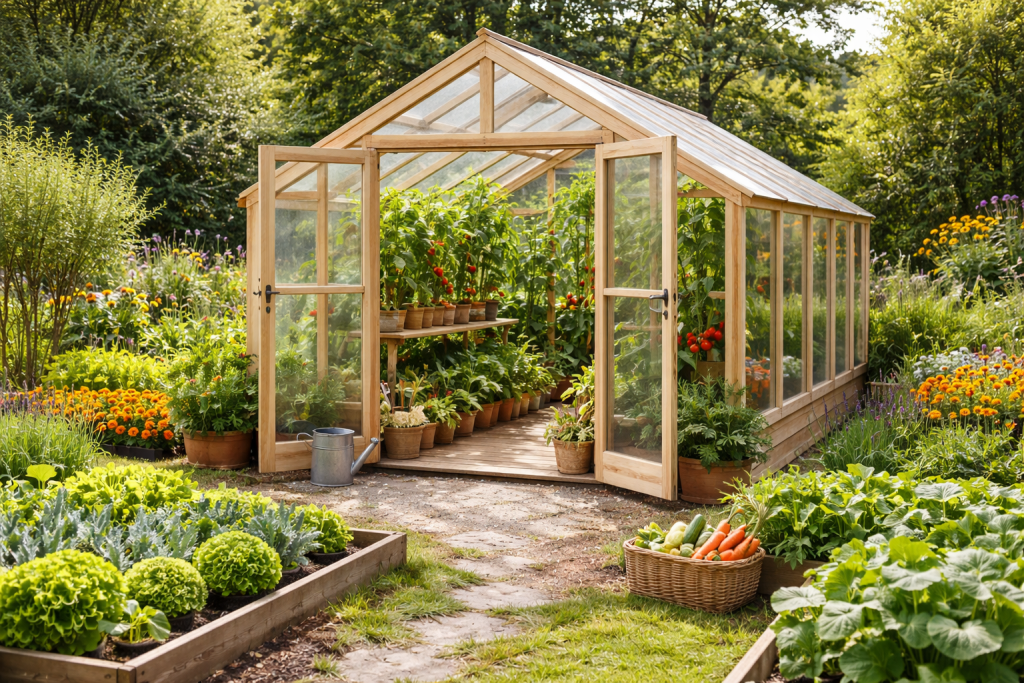
Aquaponics has quietly gained momentum over the past ten years. Originally reserved for self-sufficient enthusiasts and experimental farmers, it has become increasingly commonplace, appearing in school gardens, community gardens, urban farms, and suburban backyards. As evidenced by operations like Superior Fresh, one of the world’s largest aquaponics farms, the model appears to scale well beyond backyards. Herbs and greens supplied by small local producers to restaurants are noticeably fresher than those obtained through traditional supply chains, according to chefs. The divide between serious food production and home hobbies is narrowing in a truly novel way.
A backyard’s suitability for aquaponics depends on its priorities. As opposed to a low-maintenance raised bed, the system requires constant attention, the setup costs are substantial, and the learning period is lengthy. People who are serious about producing clean, fresh food at home, including both vegetables and protein, can’t refute the argument, especially if they use a system that uses a fraction of the water and none of the synthetic chemistry of conventional gardening. Aquaponics systems that work flawlessly, with fish swimming in crystal-clear water and dense, green plants growing above, give the impression that something truly rational is happening. This is not a fad. This is not a new concept. Effectiveness is key.