
There are some garden beds that prevent people from using the pavement. There is a sense of abundance, of deliberate color, of things growing together as if someone with genuine taste had put thought into every square foot. According to most observers, it was extremely expensive. The gardener who takes care of it knows it didn’t. Almost always, the most expensive-looking plantings are crafted from the cheapest, most generous plants available: perennials that divide, reseed, and spread their way into something that seems curated over time. This is a secret that experienced gardeners keep quiet to themselves.
It is truly strange to examine the economics of perennial gardening. A single hosta in a plastic pot might cost twelve dollars at a nursery. Divided every three or four years, the same hosta can produce a dozen plants over a decade, effectively reducing the cost per plant to almost nothing. Reseeded coneflowers can fill a space that would cost hundreds of dollars to plant from nursery stock. Catmint, purchased for eight dollars and divided every two years, becomes a sprawling, hazy-blue backdrop by the third season. There is a modest initial investment. Compounding returns are extraordinary.
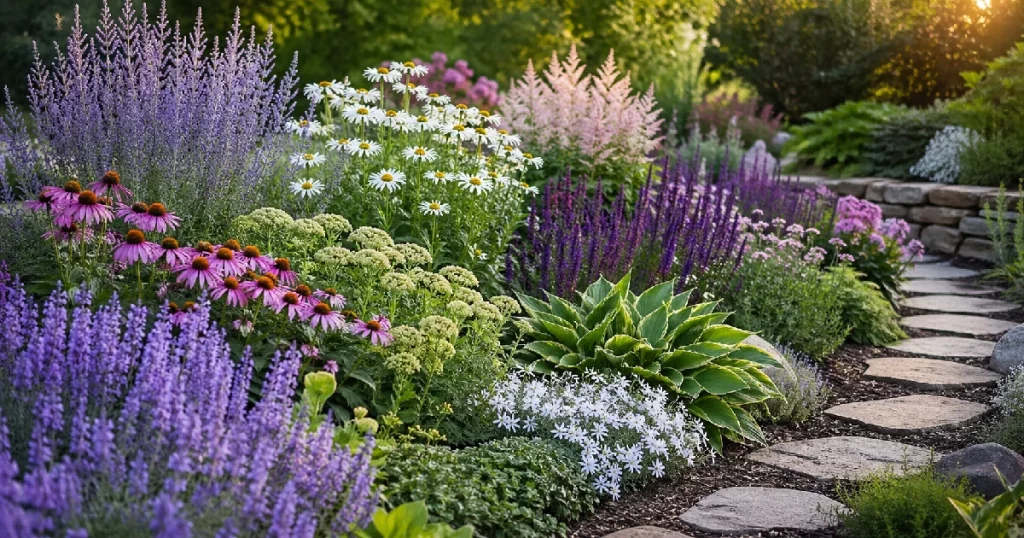
Peonies and catmint are the combination most often mentioned when experts discuss high-impact, low-cost planting. Cottage gardening has almost become a cliché, but clichés in gardening tend to become clichés for good reasons. Even if they have been growing in the same spot for twenty years from a division someone passed over the fence, peonies have massive, extravagant blooms that make people stop and actually gasp. Against the weeks-long blur of lavender-blue catmint, or Nepeta, beneath and around the peonies, the blooms appear even more lavish. Both can be divided easily. There is very little maintenance required for either. Combined, they look like the focal point of a magazine spread.
For longer seasons and sunny locations, blue sage and purple coneflower are hard to beat. Salvia’s vertical spiers and Echinacea purpurea’s striking, slightly drooping discs create a dynamic that is purposeful rather than accidental. With a three-dollar packet of coneflower seeds, you can fill a garden bed that would cost two hundred dollars at a garden center. Heat-tolerant and dependable reseeders, both are heat-tolerant. A seed-starting strategy seems almost reckless if you don’t try it.
A combination of yarrow and lavender creates a completely different atmosphere, one that is drier and more Mediterranean, evoking Provence without its climate. Its flat-topped sulfur-yellow heads create an arrangement that is both structured and wildly romantic when combined with lavender’s silvery foliage and purple spikes. Since neither plant requires very good soil-in fact, both actively seek out poor, lean conditions-no fertilizer is needed, very little watering once established, and virtually no costs beyond the first season are incurred. It is only through sporadic cutting back that material for propagation is generated. There is no doubt that lavender is one of the most economical plants on the planet when you consider all the benefits it provides, including fragrance, pollinator traffic, drought resistance, and that indescribable quality of making a garden look like it has been lovingly cared for for years.
When combined with astilbe, hostas create a woodland effect that looks truly sophisticated in shaded areas, where many gardeners feel confined by expensive solutions. Especially variegated hostas with cream or gold margins have broad, structural leaves that catch any light passing through a canopy and bounce it back into a dark corner, brightening the area without the need for additional plants. Astilbe’s feathery plumes complement them, adding a floral drama that hostas lack. Among gardening communities, both are frequently traded and freely divided. Hostas can be accumulated over a number of years without ever having to be purchased.
| Topic | Budget Perennial Plant Combinations |
| Plant Categories | Perennials, ornamental grasses, flowering shrubs |
| Best Value Combinations | Peonies + Catmint, Coneflower + Salvia, Lavender + Yarrow, Hostas + Astilbe |
| Cost-Saving Methods | Division, seed starting, bare-root buying, neighbor sharing |
| Average Seed Packet Cost | $2–$4 (produces 20+ plants vs. $10–$20 per nursery transplant) |
| Division Frequency | Every 2–4 years for most perennials |
| Ideal Garden Styles | Cottage, naturalistic, woodland, Mediterranean, prairie |
| Skill Level Required | Beginner to Intermediate |
| Reference & Source | www.bhg.com/perennial-plant-combinations |
The division and sharing economy of serious gardeners is one of the most generous subcultures in any hobby. Most perennial growers have more divisions than they know what to do with every spring and fall, and they are willing to share them with anyone who asks. Using neighborhood plant exchanges, online gardening forums, and community gardening groups, entire gardens are planted virtually for free. English cottage gardens have likely used this system in some capacity since the earliest days, when runners routinely crossed property lines and seeds crossed walls.
In a garden that has been built this way-slowly, with patience, generosity, and a willingness to wait three seasons for things to fill in properly-it is difficult not to feel something. It is rarely the plants that come from a nursery in a branded bag that make up the most attractive and plentiful beds. A neighbor may have been dividing her hostas and thought you might be interested in a clump from a seed packet that cost less than a cup of coffee. Almost always, the garden with the most expensive appearance is the cheapest. It only took a few seasons to get there.
As a Senior Editor at Mini Greenhouse Kits, Hannah Kinsley is a passionate supporter of small-space gardening and urban gardening. Hannah, who is currently majoring in Environmental Policy through the University of Michigan’s Environmental Studies program, infuses her writing with a solid academic foundation and a sincere enthusiasm for the environment. You can find her playing soccer or exploring the city’s green areas with friends when she’s not researching the newest trends in city gardening or creating content for minigreenhousekits.com.