
A seasoned greenhouse gardener does something that most novices never consider before the seed packets are distributed and the propagator is turned on in late January or early February. They keep the place tidy. Clean the bench surfaces, wash each pot and tray with hot, soapy water, remove dead plant material from corners and drainage channels, and wipe down the glazing until it’s clear enough to read through thoroughly, methodically, and leisurely. It’s not glamorous work. An entire afternoon is required. Growers who do this regularly understand that this preparation is what makes a successful season different from a disappointing one.
There is a simple explanation for this. One full growing season accumulates an impressive amount of disease risk invisibly. Powdery mildew and botrytis spores settle in the cracks of old pots. Aphid eggs spend the winter in soil left in containers from the previous fall. A spider mite colony forms in the dust along the edges of benches. The first flush of warm weather in March activates all of this, which is invisible to the unaided eye. Seedlings are already in trays by then, and the new season’s plants are exposed to conditions that should have been addressed two months earlier.
Most greenhouse diseases spread through contaminated equipment and reused growing media during the first few weeks of the season, such as damping off. The symptoms appear quickly and dramatically: seedlings that were healthy and upright one morning collapse at soil level the next, with the fungus pinching their stems. Within 48 hours, 20 seedlings can be removed from a tray. Wash pots and trays in hot, soapy water before the season begins to remove fungal material that will cause damping off. Despite the urge to use bleach, it is rarely necessary. By using fresh seed compost once and discarding it, the remaining risk is eliminated. Interventions like these are not difficult. Simply put, they are intentional.
Light is another factor that makes the cleanliness of the glazing more important than most growers realize. Algae, mineral deposits from hard water, and general dust accumulation over the course of a season can significantly reduce light transmission through polycarbonate or glass. Clean glazing can pass up to 90% more light than panels that haven’t been cleaned in a year. For seedlings started in February and March when natural light is scarce and days are short, this reduction directly results in leggy, weak growth. Plants transplant poorly and take longer to establish when their stems are stretched, reaching for light they aren’t getting. A gentle brush and warm water are used to clean the greenhouse’s exterior in late January, altering the seedlings’ experience for the next six weeks.
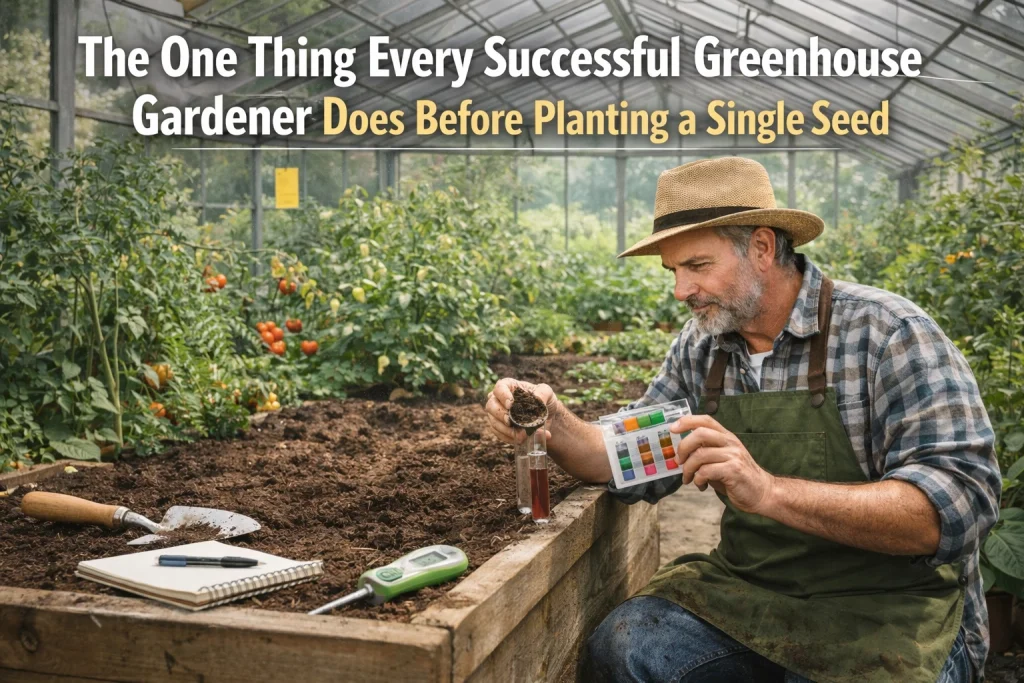
Soil testing is another step that seasoned growers typically take before the season begins, rather than mid-season when problems arise. A simple pH test establishes whether the growing medium requires sulfur to increase acidity or lime to increase alkalinity; most vegetable crops prefer a slightly acidic range between 5.8 and 6.5. It is possible to detect deficiencies in potassium, phosphorus, or nitrogen long before visible symptoms appear. In addition to being inexpensive, these tests take twenty minutes and enable amendments to be applied before roots need to be disturbed. In June, when the plants are already experiencing problems, identifying a nutrient issue is much more disruptive than treating a growing bed in January.
Prior to planting a single seed in compost, plan the layout on paper, which appears to be the least important step but ends up being crucial for the second half of the season. By drawing out where each crop will grow, how much space it will take up at maturity, and what comes before and after it in succession, we can avoid the crowding problem that arises in greenhouses every July that were run on impulse in April. In May, cucumbers that were optimistically added did not share space with tomatoes that were committed to a specific spot. succession crops, such as lettuce after French beans and spinach after cucumbers in September, have defined homes rather than improvised corners.
When observing a grower who has completed all this work by the time the seeds are planted, the growing seems incidental. There is a tidy appearance to the building. It’s time to prepare the ground. There is a predetermined distance. Timing is calculated. When the first germination occurs, that hairline of green pushing through the compost in a tray that has been sitting on a warm propagator for nine days, it emerges into an environment that has been intentionally prepared for it.