
Gardeners’ perspectives were altered by the summer of 2024. In southern Europe, crops were blistered. In some parts of Britain, the ground began to fracture in June. In August, flooding destroyed beds that had survived the drought. Farmers who had followed the same seasonal patterns for decades found that these patterns no longer applied. For forty years, the last frost date had been consistent. Rains in August were no longer reliable. Most gardeners use a mental calendar to determine when to plant, sow, and anticipate the first cold snap, which is at best approximate and, at worst, deceitful.
Rather than forecasting the future, experienced gardeners create gardens that can withstand surprises. The concept of climate resilience may seem abstract until you put it into practice. This is the difference between a garden that adapts to changing conditions and one that is designed for a particular set of conditions. It’s a simple concept. Most of them are elderly. It has become more urgent to put them into practice.
Soil plays an important role in climate-resilient agriculture, and for good reason. When compared with compacted, depleted soil, healthy soil—that is, soil with intact fungal networks, diverse microbial communities, and sufficient organic matter—acts as a buffer against extreme weather. When wet, it drains without waterlogging. In dry conditions, it retains moisture, protecting thin soil from the kind of heat that quickly dries it out. Carbon dioxide from the atmosphere is absorbed by plants and exchanged with soil fungi, which then produce compounds and proteins that bind soil particles into nutrient-rich, loose structures. By tilling and digging, these fungal networks are broken, releasing stored carbon back into the atmosphere. No-till gardening preserves what took years to build by gently loosening the surface without turning the soil and allowing the root systems of finished crops to break down naturally.
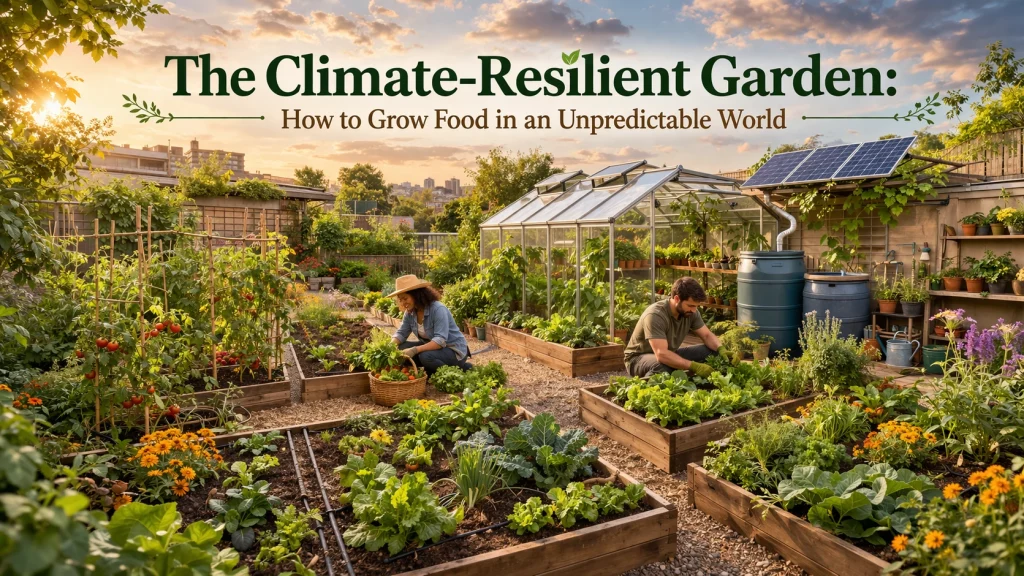
Mulching seems almost too simple to mention, but it is more important than most interventions combined. Throughout the growing season, straw, grass clippings, shredded leaves, bark, and other organic materials are spread across the soil’s surface to suppress weed growth, control temperature, lower evaporation, and gradually decompose to add more organic matter. It is possible to measure the difference in soil moisture between bare and mulched beds within a week during an extended dry spell. During periods of heavy precipitation, mulch reduces the surface impact that causes compaction and erosion. You only need a habit of application, and it is practically free.
Plant diversity is another pillar that seasoned growers return to. There is a single point of failure in a garden cultivating a single tomato variety. A single pest outbreak or unusually warm week are unlikely to destroy all six varieties in a garden with varying sizes, origins, and tolerances. Commercial cultivars often have characteristics that were bred out of heirloom and heritage varieties, such as disease resistance developed over decades of selection, tolerance to temperature fluctuations, and the ability to set fruit in environments where modern hybrids drop their flowers. Seed saving extends this further. Unlike commercial seeds, plants grown from seeds saved from the hardiest individuals in your garden gradually adapt to the unique conditions of your plot over time.
The importance of water management has increased over the years. Rainwater collection, which is stored in barrels or larger storage tanks connected to greenhouse roofs and shed roofs, serves as a buffer when municipal water restrictions tighten or natural rainfall does not match plant needs. Water is delivered directly to root zones instead of wetting foliage and evaporating. It is possible to avoid the common scenario in which thirsty cucumbers and drought-tolerant herbs are watered at the same time by grouping plants with similar water needs together, a technique known as hydrozoning.
Generally, microclimates do not receive the credit they deserve in gardening advice. The south-facing wall stores heat during the day and releases it at night, which allows plants to grow frost-free for several weeks in both directions. The same effect can be achieved by strategically placing a rock near a heat-sensitive plant. When hedges and shrubs are planted on the wind’s predominant side, the desiccating effects of spring and autumn winds are greatly reduced. In addition to extending the growing season without requiring heating, cold frames and hoop houses protect seedlings from late frosts that strike without notice. As opposed to chemical or technological interventions, physical interventions are dependable regardless of the season.
The spread of this strategy among gardening communities that have been using it for years gives one the impression that something significant is happening. As a result of local weather events, price volatility, and supply chain failures, the industrial food system is becoming more vulnerable to climate disruption. As a result, it is more difficult to deny the importance of a garden that can withstand a harsh summer and still produce food. It remains to be seen whether most people will act on that realization in time to make a difference. The soil beneath most gardens, however, is more recoverable than it appears, the methods are simple, and the knowledge is readily available.