
If you walk through a struggling home garden in the middle of summer, the diagnosis is usually the same. Despite the saturated soil, the tomatoes appear stressed. Herbs are turning yellow from the bottom up. The seedlings that were thriving a week ago now have that limpness that doesn’t go away with more water because that is the problem. When you ask the gardener what went wrong, they usually mention aphids, heat, poor soil, or bad seed luck. Watering schedules are rarely discussed. Watering schedules, however, are almost always the culprit.
Irrigation failure kills more plants than disease, pests, and bad soil combined, and it does so in ways that are difficult to notice until the damage has been done. The fact that watering is one of the most benign and manageable things a gardener can do is not widely known. Moreover, the symptoms of overwatering and underwatering can be strikingly similar, such as drooping leaves, yellowing, poor growth, and eventual collapse, making accurate diagnosis more challenging than it seems. A plant wilting in the afternoon heat has the same appearance regardless of whether it needs water or is drowning. When gardeners make that mistake, which happens to most of them at some point, they lose otherwise healthy plants.
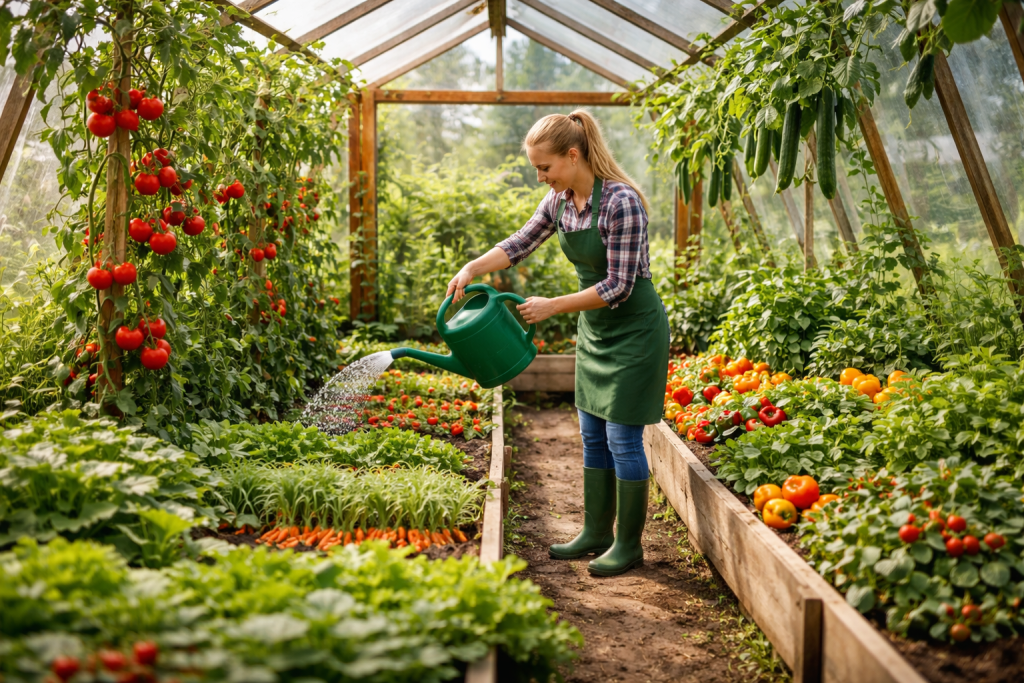
Watering on a set schedule regardless of what the soil and weather are actually doing is the most common and intuitive watering mistake. Schedules make sense because they feel structured, fit into routines, and reduce mental strain. Water is not used regularly by plants. Temperature, humidity, wind, growth stage, soil composition, and whether they are in containers or in the ground influence what they eat. A tomato plant in a terracotta pot on a balcony facing south needs daily watering in a hot July week. A tomato plant in a deep raised bed with a thick layer of mulch may need to be watered twice during a cool, cloudy week. If both scenarios are watered according to a set schedule, underwatering will occur in the first scenario and overwatering in the second, neither of which is beneficial to a healthy plant.
A finger test is one of the most straightforward and often overlooked diagnostic methods in gardening. One to two inches should be inserted into the ground with a finger. If it seems dry, water it. If it seems damp, wait. That’s all there is to it. The process takes three seconds, costs nothing, and gives more precise information than any calendar, schedule, or general guideline. With time, it also develops a more resilient ability to read soil conditions that eventually becomes automatic and applies to all new plants and growing conditions. Gardeners who are skilled do this without much thought. In general, early adopters lose fewer plants than those who don’t.
A common misconception about gardening is that people water plants from above, which involves running a hose or watering can over the foliage rather than at the base. I believe it is correct. I find it to be comprehensive. Powdery mildew, blight, botrytis, and damping-off, which collapses seedling trays overnight, thrive in warm, still air, which is ideal for fungi that cause most of the damage in home gardens. Since rain usually falls in cloudy, humid conditions where evaporation is slow and leaves dry gradually, it wets leaves without causing these problems. On a warm afternoon, watering from above can result in wet leaves, warm temperatures, and just enough residual moisture for fungal spores to establish before the foliage dries. Watering at the base of the plant, targeting the root zone rather than the canopy, has completely resolved this issue.
This gardening tip goes against the natural tendency to water a little each day and maintain constant moisture by recommending deep, infrequent watering as opposed to frequent shallow watering. That method affects root development over time in a negative way. Roots grow in the direction of water. Because daily shallow watering consistently provides water in the top two inches of soil, roots have no incentive to reach deeper. If the watering schedule is interrupted, the plant is less able to access nutrients stored deeper in the soil profile and more vulnerable to drought stress. Using deep, less frequent soaking encourages roots to follow moisture downward, creating a more robust and extensive root system that benefits the plant throughout the growing season by completely soaking the root zone.
The importance of timing is often overlooked by gardeners. Early morning watering allows leaves to dry completely before evening, provides plants with moisture before day’s heat arrives, and loses the least amount of water to evaporation. Evening watering is acceptable as a backup plan, but slugs, fungal diseases, and some pests thrive on damp foliage and soil surfaces at night. Midday watering is the least beneficial to plants and wastes water due to evaporation. The early morning habit can yield better results, and most gardeners notice the difference within a single season of switching to it. It is not a rule.
There is one intervention that simplifies all other aspects of garden watering that beginners consistently underutilize: mulch. Adding organic mulch to the soil’s surface around established plants, such as wood chips, straw, or shredded leaves, reduces evaporation, maintains a steady soil temperature, and increases water retention. The difference is noticeable. Direct sunlight can completely dry out a bare container in one day. Mulch covering the soil’s surface will keep the same container moist for a few days. Anyone managing a garden during a dry summer will benefit from less time spent watering, less water used, and healthier plants that focus on growth and fruit production rather than managing moisture stress. In a well-mulched garden, it is hard to ignore how much better plants look than those in unmulched beds a few rows away after a dry week.