
A majority of first-time hydroponic growers describe a certain moment using similar language. Within a week of planting, they check their setup, which consists of lettuce seedlings in a small counter unit with roots hanging into a nutrient solution reservoir under a low-profile LED panel. It is faster than anything they have observed in soil. Not a little faster. The speed has increased noticeably, almost frighteningly. The leaves have a deeper shade of green than expected. Translucent panels reveal that the roots have more than doubled in length. As a result, the entire process feels different from traditional gardening because of the white, clean root system that reaches into clear water instead of being buried in dirt. Farming-like. A more thoughtful approach.
Hydroponics is not a new concept. Growing plants without soil in nutrient-enriched water has been known for centuries and has been applied commercially for decades. What has changed is the size and accessibility of home-growing technology, as well as the emergence of a generation of urban residents who desire fresh food, but lack outdoor space and growing season to produce it. As a result, the market has reacted appropriately. Apartments, kitchens, spare rooms, and balconies have been equipped with countertop hydroponic units, vertical tower gardens, basic bucket systems, and complex multi-pod setups with smartphone connectivity. Hydroponics clearly works at home, but the question now is which method is best for a given growing environment.
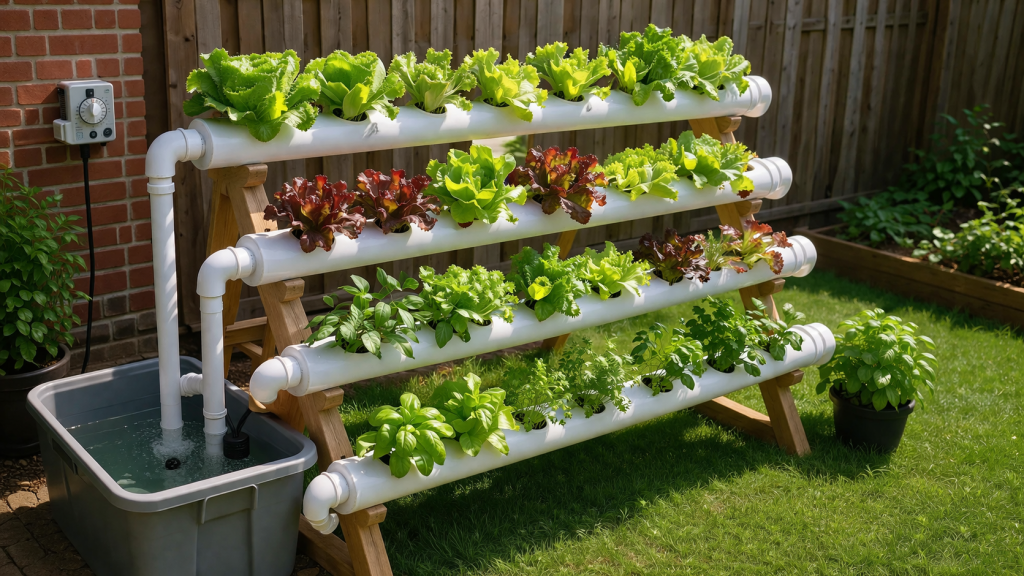
A fundamental advantage of hydroponics over soil cultivation lies in what plant roots do with their energy. The root system of a plant searches for nutrients and water in the growing medium with the help of its metabolic resources in soil. Due to the uneven and irregular distribution of both, this process is inefficient by design. In a hydroponic system, water and dissolved nutrients are continuously and directly supplied to the root zone. There is no need for the plant to look. Hydroponic crops grow significantly faster than soil-grown crops because they can reroute that energy into above-ground growth. Hydroponic systems allow lettuce to be harvested in three to four weeks, compared to six to eight weeks in a garden bed. With less effort, the plant gets what it needs.
A space efficiency argument is just as compelling and perhaps even more relevant to urban home growers. A garden’s yield is roughly proportional to its square footage in conventional soil gardening; plants require space on the ground. Hydroponics breaks that relationship. Vertical tower gardens, which stack growing positions upward, can fit twenty or thirty plants per square foot of floor space. Counter-top pod systems produce significant amounts of fresh herbs and greens in the same space as a coffee maker. In a spare room equipped with full-spectrum LED lighting and movable shelving, you can grow year-round plants that would require a large outdoor plot. Perhaps even more important than the growth rate advantages of hydroponics is the ability to produce in a vertical, space-decoupled manner.
Beginners shouldn’t put too much emphasis on the type of system they choose when choosing where to begin, but it is still worthwhile to consider it carefully. Pod-based systems like the AeroGarden or iDOO units remove the majority of variables from the grower’s control, including nutrient ratios, pH balance, and light duration, which reduces learning curves and failure risks. These systems are good for someone who wants to start with confidence and fresh herbs. Kratky, on the other hand, is a passive deep water culture method that requires little equipment, no electricity, and no pump. A grower must manually adjust the pH and concentration of the nutrient solution, but it is almost free to set up. In terms of automation level and grower attention requirements, most home hydroponic systems fall in between these two extremes.
When people first see the numbers for hydroponics, they are often surprised by the water consumption. Even in carefully maintained garden beds with drip irrigation, conventional soil gardening loses a lot of water to evaporation, runoff, and absorption by soil organisms that don’t benefit the crop. Since hydroponic systems recycle their water in a closed loop, they lose very little to any of these mechanisms. Most research publications mention that hydroponic production uses about 90% less water than equivalent soil-based production. For a home grower in a water-limited area or for anyone who keeps an eye on household resource consumption, this is a significant practical benefit.
Hydroponic gardening differs significantly from outdoor gardening in terms of pest control. By creating an enclosed, soil-free environment, many of the organisms that cause problems in traditional gardens are eliminated, including soil-borne fungi, root-attacking insects, slugs, and the entire spectrum of ground-level pests. In spite of the fact that aphids, whiteflies, and fungus gnats infest indoor growing areas with disheartening consistency, hydroponic systems are not pest-free, but they are less severe and easier to control than most novice growers anticipate, and chemical treatments are rarely necessary. An indoor growing area with sufficient air circulation and ventilation prevents the majority of fungal disease issues.
Often, the variety of crops available for home hydroponic growers is misrepresented in the marketing for entry-level systems. Beginners should start with leafy greens and herbs, such as lettuce, spinach, kale, basil, mint, cilantro, and parsley, as they are the easiest and fastest crops to grow. Cherry tomatoes, cucumbers, and peppers can be grown in larger systems with adequate light and vertical support, but they require more nutrient solution and more attention to pollination. It’s surprising how well strawberries work. Microgreens can be harvested seven to fourteen days after sowing and grow more rapidly in hydroponic conditions than in nearly any other way. An effective home hydroponic setup over the course of a season reveals that the grower’s willingness to understand what each crop requires is what limits what can be grown rather than the system itself.
A broader shift in home food production has made hydroponics more relevant than it was ten years ago. This shift has been driven by rising grocery costs, a growing interest in food provenance, and a growing number of people who want a degree of self-sufficiency in their food supply. It is now possible for a novice grower to set up on a kitchen counter on a Saturday afternoon and begin harvesting within a month, once thought to be a specialized pastime or a commercial agricultural technology. Learning curves exist. Initial setup costs are actual. Nevertheless, the food that is produced — grown without soil in a controlled environment that allows the grower to observe and modify it — tastes very different from food that has spent days in a supply chain. When most people encounter that difference once, it usually marks the beginning of something more serious.