
Upon first glance, a mini greenhouse appears to have a small price tag. On the internet, it costs 80 dollars. Perhaps one-fifty for something more durable. While standing in a garden center or browsing through listings on a quiet Sunday morning, it’s easy to convince yourself that this is a low-stakes choice – a small experiment that can be disassembled if it doesn’t work. Instead, you usually fill it within a week, look into a second one before the month is out, and wonder why you waited so long to buy it during the winter. The math is more fascinating than the price tag suggests.
Every greenhouse, no matter how large or small, begins with time. Gardeners lose weeks at either end of a growing season due to cold climates. A simple unheated mini greenhouse that can be assembled in an afternoon and costs less than $100 can extend the growing season by four to six weeks in the spring and a similar amount in the fall. For home gardeners who grow tomatoes, peppers, cucumbers, or any other warm-season vegetable that requires heat to thrive, that extension is not insignificant. The difference is between pulling the last tomatoes in October rather than September and transplanting seedlings in late March rather than mid-May. It is equivalent to the amount of food that would otherwise have to be purchased at the grocery store if those extra weeks were translated into actual produce.
Directly examining the numbers is worthwhile. Approximately 400 kg of fruits and vegetables can be produced by a 22-square-meter family greenhouse, which is sufficient to meet 60–80% of a family’s produce needs. In a mini greenhouse, the productivity-per-square-foot principle does not apply. Small, protected areas are ideal for growing cool-season crops, herbs, leafy greens, and seedlings. With three shelving levels, the footprint of a walk-in mini greenhouse is essentially tripled. An urban gardener with a small space needs that vertical capacity.
It is still unclear whether the cheapest mini greenhouses on the market are a true value or just a postponed disappointment. Evidence supports the concerns. If you live in a windy area, you have probably experienced the frustration of living in low-cost PVC-framed buildings with flimsy polyethylene covers. There is a tear in the covers. As a result of the weight of the heavier pots, the shelving flexes. In most cases, the anchoring systems included in the box aren’t adequate for anything but a still day. It took a gardener in a northern climate five-foot stakes, heavy-duty cable ties, and a ring of pots before she trusted her $80 structure through the winter. Three years passed before her system failed. Almost. Nevertheless, it persevered and continued to produce food.
Many people regret not making a certain type of gardening purchase sooner rather than later. For the majority of serious home gardeners, a mini greenhouse fits that description—not because it’s ideal, but rather because otherwise, plants will be lost to late frosts, weeks will be lost to cold soil, and the extended season that virtually every gardener in the north wishes they had. It can be very frustrating to have a flimsy cover. On a morning when the rest of the garden is frozen solid, pulling kale from a covered structure is equally satisfying.
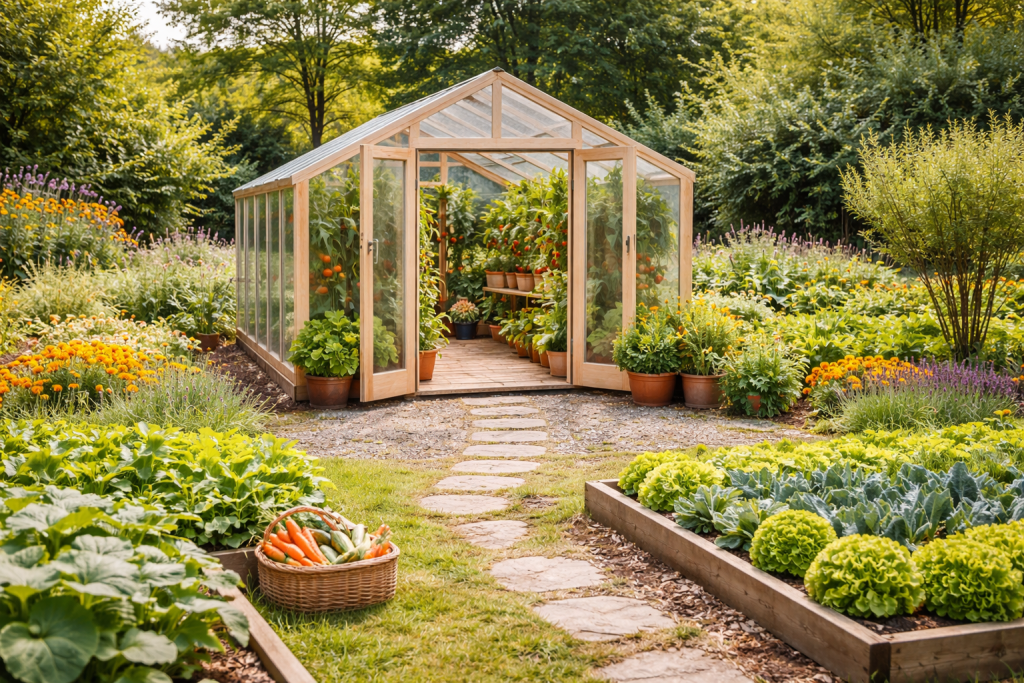
In order to calculate an accurate price, it is important to know what a gardener actually grows and how they grow it. If you start your own seeds in February, grow cool-season greens throughout the winter, and use a mini greenhouse as a hardening station before you transplant them outside, you will benefit more from it than if you buy seedlings from a garden center in May and grow tomatoes all summer. A single physical object can serve a variety of purposes, which affects its return on investment. Frequently, gardeners who use mini greenhouses the least ambitiously are the ones who discount them as unworthy investments.
Here’s where the math gets tricky: quality is more important than the entry-level price tag suggests. For most climates, a $150 mini greenhouse with polycarbonate panels will last several years longer, retain heat more consistently, and require fewer modifications to operate reliably. Up front, it is more expensive. Taking structural repairs, replacement covers, and lost growing time into account, the total cost over a five-year period often goes in the opposite direction. As anyone who has replaced a garden tool or a pair of boots using the same reasoning knows, buying cheap twice usually ends up costing more than buying adequate once.
Also, it’s worth mentioning what a miniature greenhouse can’t do. For those who overwinter many delicate plants or run a serious seed production business, it won’t replace a large-scale walk-in greenhouse. Through sheer air volume, larger greenhouses mitigate this issue, but smaller structures experience more severe temperature swings during the day and night. Many mini greenhouse designs are either fixed or hardly adjustable, so they can cook their contents alarmingly quickly on a warm spring day. Rather than being objections to ownership, these are design constraints. The conditions of the compromise are merely the terms of the agreement.
It has been observed that gardeners who treat a mini greenhouse as infrastructure rather than equipment, something that transforms the garden’s potential rather than just something that sits in a corner and is occasionally used, get the most out of it. In the first season, when seedlings emerge under a simple grow light in late winter and the tiny greenhouse is waiting outside to receive them weeks before the open garden is ready, that perspective usually changes fairly quickly. This is when the math is more about what the growing season has subtly become than about dollars.