
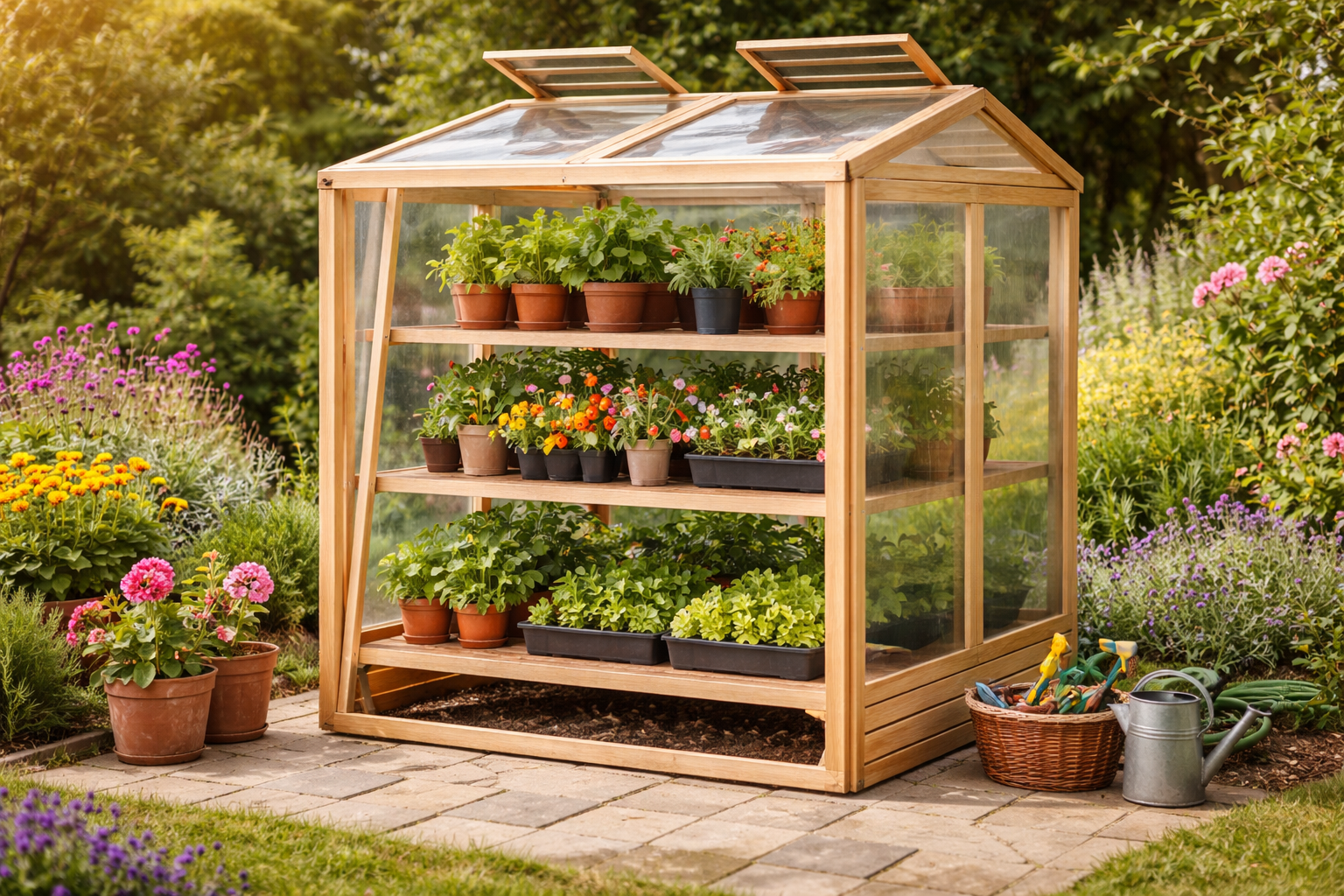
A tiny greenhouse has a subtle allure. Not in the grand, glass-palace sense of the expansive Victorian buildings you might find on old estates, but in a more intimate, smaller sense. Tucked into a patio corner is a frame covered in plastic. Just outside a kitchen door is a zippered enclosure. It feels more like an experiment than a project.
It’s difficult to ignore how these small structures seem to retain warmth on a chilly early spring morning. When you open one, you’ll frequently notice a slight humidity and a gentle fogging on the interior panels. Almost expectantly, seedlings sit erect. Although the difference from the outside air is slight, it appears to be significant.
Retailers such as Greenhouse Megastore have capitalized on this increasing demand by providing everything from basic plastic-wrapped shelving units to more robust polycarbonate constructions. In the meantime, producers like Palram’s Canopia are promoting designs that, despite their small size, appear more permanent and almost architectural. Although it’s unclear how far the category will go, there is a sense that it is changing.
Maybe control is part of the appeal. Patience—and frustration—have always been key components of gardening. Weather shifts, unexpected frost, too much rain. These risks are mitigated but not completely eliminated by a small greenhouse. It establishes a buffer. Additionally, that buffer feels like confidence, especially for novices.
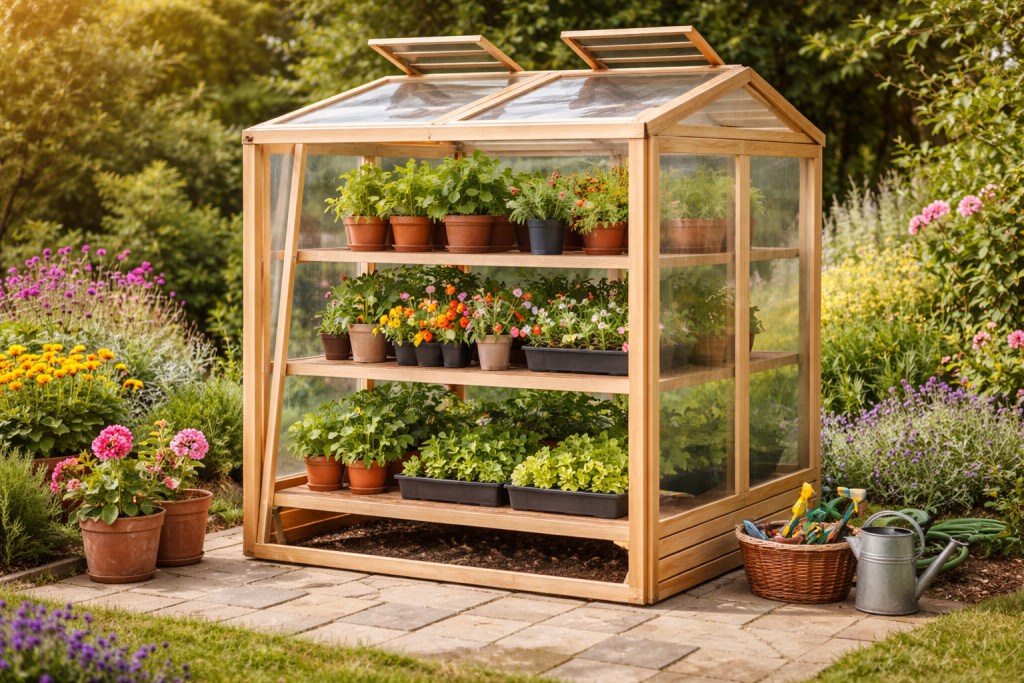
However, not all kits live up to expectations. After just one season, some of the less expensive models—which are frequently constructed with thin PVC covers—tend to sag or tear. The zippers fasten. The shelves sway. It’s the kind of detail you only become aware of after it’s assembled, usually on a windy afternoon when the entire structure trembles a little. This discrepancy may contribute to the skepticism of more seasoned gardeners.
The issue of scale is another. By definition, a mini greenhouse is constrained. You’re not developing sufficiently to support a household, at least not in a significant way. A tray of seedlings, a few herbs, and possibly some experimental vegetables are what you’re actually growing. That’s sufficient for some people. Others see it as a stepping stone.
The increase in interest has undoubtedly been influenced by urban living. Rooftops, balconies, and even small alleyways that were previously thought to be useless are now being reevaluated. Where a conventional garden cannot, a small greenhouse can. As this change takes place, it seems as though gardening is being redefined, contracting to meet contemporary limitations rather than growing beyond them.
And there’s the aesthetic aspect, which isn’t always acknowledged. There is a certain visual order to a well-organized mini greenhouse with rows of green against a translucent backdrop. It implies purpose. Take care. even self-control. This hasn’t been overlooked by social media; on the contrary, it has intensified it, transforming what was once a purely functional tool into something more akin to a lifestyle item.
However, there is a subtle paradox here. Although these kits claim to be simple—”easy assembly,” “beginner-friendly,” and “all-season growing”—the truth frequently entails trial and error. The ventilation system needs to be adjusted. Watering becomes more accurate. Surprisingly quickly, too much sun can cause the enclosure to overheat. Gardening is still done, but it’s done in a smaller area.
Some seasoned growers liken this period to the early days of indoor exercise equipment or home coffee makers. A wave of initial enthusiasm and adoption is followed by a more measured comprehension of the capabilities and limitations of the product. Kits for miniature greenhouses might be going in a similar direction.
| Category | Details |
|---|---|
| Industry | Gardening & Home Cultivation |
| Key Companies | Greenhouse Megastore, Canopia by Palram |
| Product Type | Mini greenhouse kits (compact plant-growing structures) |
| Typical Users | Urban gardeners, hobbyists, beginners, seasonal growers |
| Materials | Polycarbonate panels, PVC covers, aluminum or steel frames |
| Price Range | ~$20 – $200+ depending on size and quality |
| Key Benefit | Controlled environment for plants in limited space |
| Reference Website | https://www.greenhousemegastore.com |
Nevertheless, there doesn’t seem to be a decline in demand. It is, if anything, becoming more diverse. Nowadays, there are kits made especially for starting seeds, herbs, and even ornamental miniature constructions that blur the boundaries between crafts and gardening. The final category, which consists of small, elaborate greenhouse models, seems more about escape than practicality.
Whether mini greenhouse kits will continue to be a specialty or become a commonplace aspect of small-space living is still up in the air. However, it’s easy to see the appeal when you stand next to one and feel that tiny pocket of warmth on an otherwise chilly day. Growing plants is only one aspect of it. The goal is to create a controlled, manageable piece of nature, which is becoming more and more uncommon.