
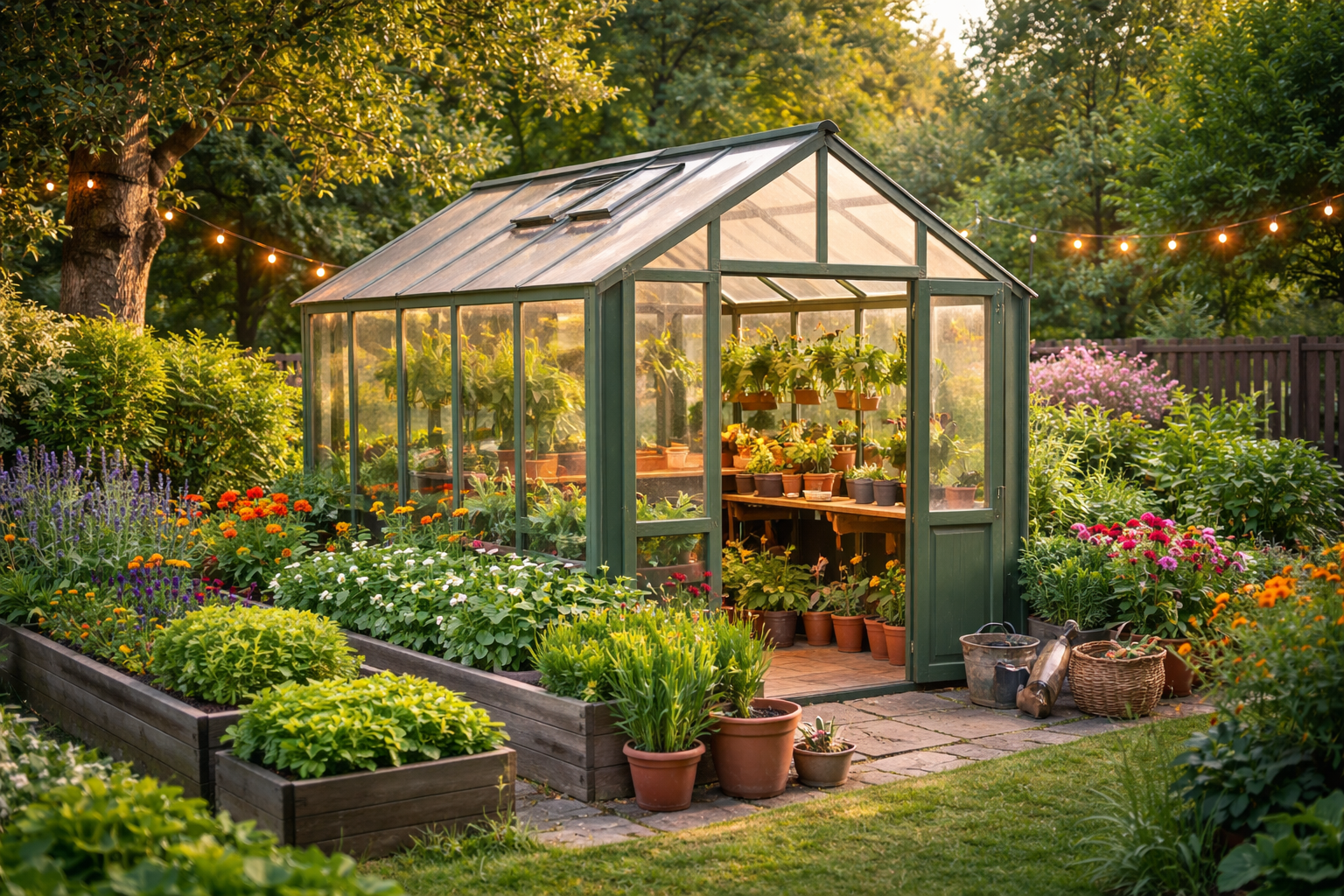
A certain type of backyard has been appearing more frequently lately; it’s modest, a little uneven, and occasionally surrounded by old fences. A small greenhouse is located in the corner, almost hidden away. Something more subdued, not the opulent, glass-paneled building associated with botanical gardens or estates. A small frame with shelves filled with seedlings, possibly covered in plastic. These days, it’s difficult to ignore how frequently these structures appear; it seems like they’ve quietly crept into gardens.
By definition, mini greenhouses are just scaled-down versions of conventional greenhouses. The technical explanation is that. However, spending time with them implies something a little different. They feel more like intentional decisions than like scaled-down tools; they are useful, to be sure, but they also show how people are rethinking space. These structures are able to create a sort of contained climate in smaller yards, on patios, and even along apartment balconies. By retaining humidity and trapping warmth, they allow plants to flourish beyond the constraints of the local climate.
They are obviously appealing in part. They are less expensive. simpler to put together. less frightening. A miniature greenhouse falls somewhere between furniture and infrastructure, whereas a full-sized greenhouse can feel like a commitment, almost architectural in scale. They may have gained a lot of popularity due to this middle ground, particularly among novice gardeners. Although there is less risk, there is still enough reward to justify the effort.
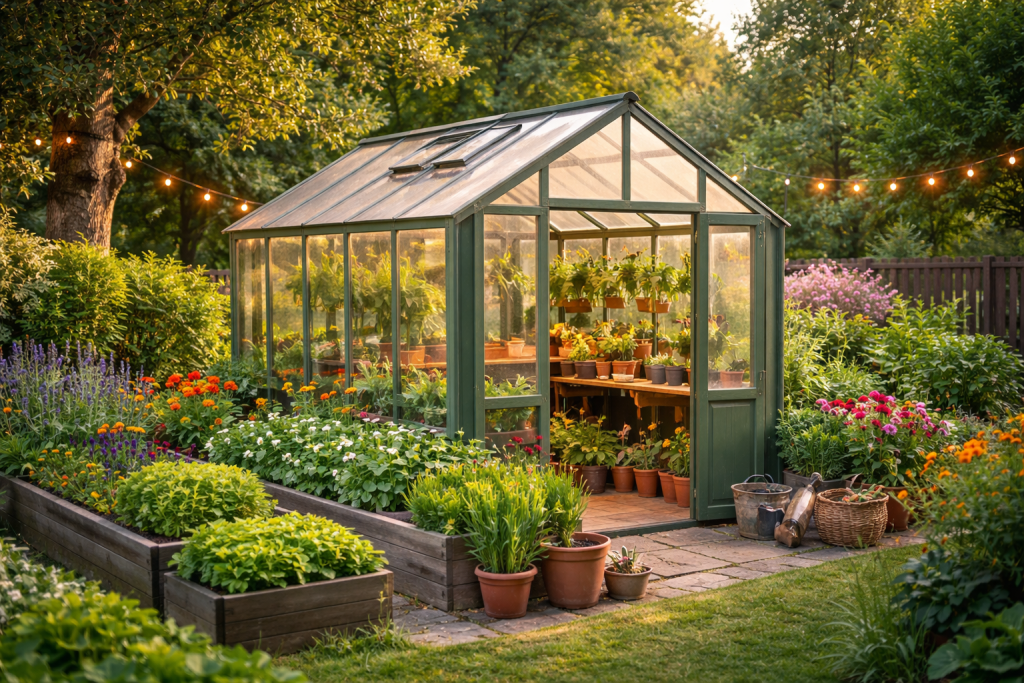
However, there’s also another, less obvious thing going on. Control seems to be more important these days, whether you’re talking to gardeners or simply watching neighbors lean over their raised beds. The seasons become less distinct, weather patterns become less predictable, and cultivating anything outdoors begins to feel like a compromise. A minor but significant benefit is provided by mini greenhouses. They lessen uncertainty but do not completely eradicate it.
The difference is immediately apparent within one of these structures, even a simple model. It smells like a familiar greenhouse—a blend of soil, leaves, and moisture—and the air is warmer and slightly humid. Here, seedlings that might have trouble outdoors appear to stand more erect, their leaves absorbing filtered light. It’s not overly dramatic. It doesn’t feel like it was designed to impress. However, it is effective.
Hobby gardeners frequently share a tale about starting seeds earlier than anticipated—February rather than March, and occasionally even January—using nothing more than a small greenhouse pressed up against a wall for additional warmth. It may seem insignificant, but that head start makes a big difference over the course of a season. Tomatoes ripen more quickly. Herbs are more durable. The expanding calendar stretches almost silently and doesn’t need much more room.
However, it’s not completely simple. Mini greenhouses have drawbacks that aren’t always immediately apparent. In such a small volume, temperature can fluctuate rapidly, rising excessively on sunny afternoons and falling just as quickly at night. Ventilation—opening doors, adjusting flaps, and occasionally coming up with creative solutions—becomes second nature. Whether most novices expect this degree of attention is still up for debate. Although it’s not effortless, the simplicity is genuine.
Perhaps more than anticipated, design also has an impact. Some models use the heat from the building to stabilize conditions while leaning against existing walls. Others are lightweight and portable, stand alone, and, if improperly anchored, move slightly with the wind. It is evident from observing these configurations over time that placement—sun exposure, wind direction, even closeness to the house—can influence results just as much as the greenhouse itself.
All of this is entwined with a subtle cultural shift. In recent years, growing food—even on a small scale—has taken on new significance. Time and money savings are no longer the only priorities. People seem to want some level of independence, no matter how tiny. A small greenhouse with a few trays of vegetables or herbs is included in the narrative. Something more akin to involvement than self-sufficiency in the broadest sense.
The way this reflects patterns found elsewhere is intriguing. Larger farming operations have historically depended on controlled settings, such as hydroponic systems, industrial greenhouses, and closely monitored climates. Mini greenhouses, in a sense, introduce a scaled-down version of that concept into typical backyards. Not precisely as technology, but rather as the notion that conditions for growth can be influenced rather than merely tolerated.
Despite all the practical benefits, such as longer seasons, better pest control, and more efficient water usage, there is still a personal component that is more difficult to quantify.
The fact that these modest buildings become focal points and places where people stay longer than they should is difficult to ignore. Vent modification. Analyzing the moisture content.
Trays need to be rearranged. The repetition of small actions creates a routine over time.
As this develops, it seems that tiny greenhouses have found their niche by being adequate rather than revolutionary. Just enough room. Just enough self-control. Just enough advancement over conventional gardening to be discernible. It’s still unclear if this trend will keep growing or settle into something more stable. However, for the time being, these small structures are subtly altering how people grow—and perhaps even how they think about growing at all—in backyards that formerly contained little more than grass and a few strewn pots.